

High altitude brewing: How altitude affects your Turkish coffee
The ritual of preparing Turkish coffee is an art form steeped in tradition. From the ultra-fine grind to the iconic foam, or kaymak, every step is deliberate. But what happens when you take this time-honored practice to a higher elevation? Suddenly, the rules change. Water boils differently, and the familiar cues you rely on can be misleading. This article explores the fascinating science behind how altitude impacts the boiling point of water and, consequently, the entire extraction profile of your Turkish coffee. We will delve into why your coffee might taste weak or sour in the mountains and provide practical adjustments to help you brew the perfect cup, no matter how high you are.
The science of boiling water at different altitudes
To understand why your coffee tastes different at high altitude, we first need to look at basic physics. The boiling point of a liquid is the temperature at which its vapor pressure equals the pressure of the gas above it. At sea level, the weight of the air column above us creates an atmospheric pressure of about 14.7 pounds per square inch (psi). To boil, water must be heated to 100°C (212°F) to generate enough steam pressure to overcome this atmospheric pressure.
As you ascend in altitude, the column of air above you becomes shorter, meaning there is less atmospheric pressure. With less pressure pushing down on the surface of the water, it requires less energy—and therefore a lower temperature—to boil. For every 300 meters (or roughly 1,000 feet) you climb, the boiling point of water drops by approximately 1°C (1.8°F). This might not seem like much, but in the precise world of coffee extraction, it makes a world of difference.
| Altitude | Approximate boiling point of water |
|---|---|
| Sea Level (0 m / 0 ft) | 100°C / 212°F |
| 1,500 m / 5,000 ft | 95°C / 203°F |
| 2,400 m / 8,000 ft | 92°C / 198°F |
| 3,000 m / 10,000 ft | 90°C / 194°F |
How lower boiling points impact coffee extraction
Now that we know water boils at a lower temperature at altitude, let’s connect that to coffee. Brewing coffee is essentially an act of extraction: using hot water to dissolve soluble solids and oils from roasted coffee grounds. This process is highly dependent on temperature. Different compounds extract at different rates and temperatures.
Generally, acidic and fruity flavors are the first to extract, followed by sugars and sweeter notes, and finally, the heavier, more bitter compounds. The ideal temperature range for balanced coffee extraction is typically between 90°C and 96°C (195°F and 205°F). When your brewing water can’t even reach the upper end of this range—or in very high altitudes, struggles to even reach the lower end—you face a significant problem. The lower temperature results in a slower, less efficient extraction, a phenomenon known as under-extraction. An under-extracted coffee will often taste sour, thin, and lack the sweetness and body you’d expect.
The unique challenge for Turkish coffee
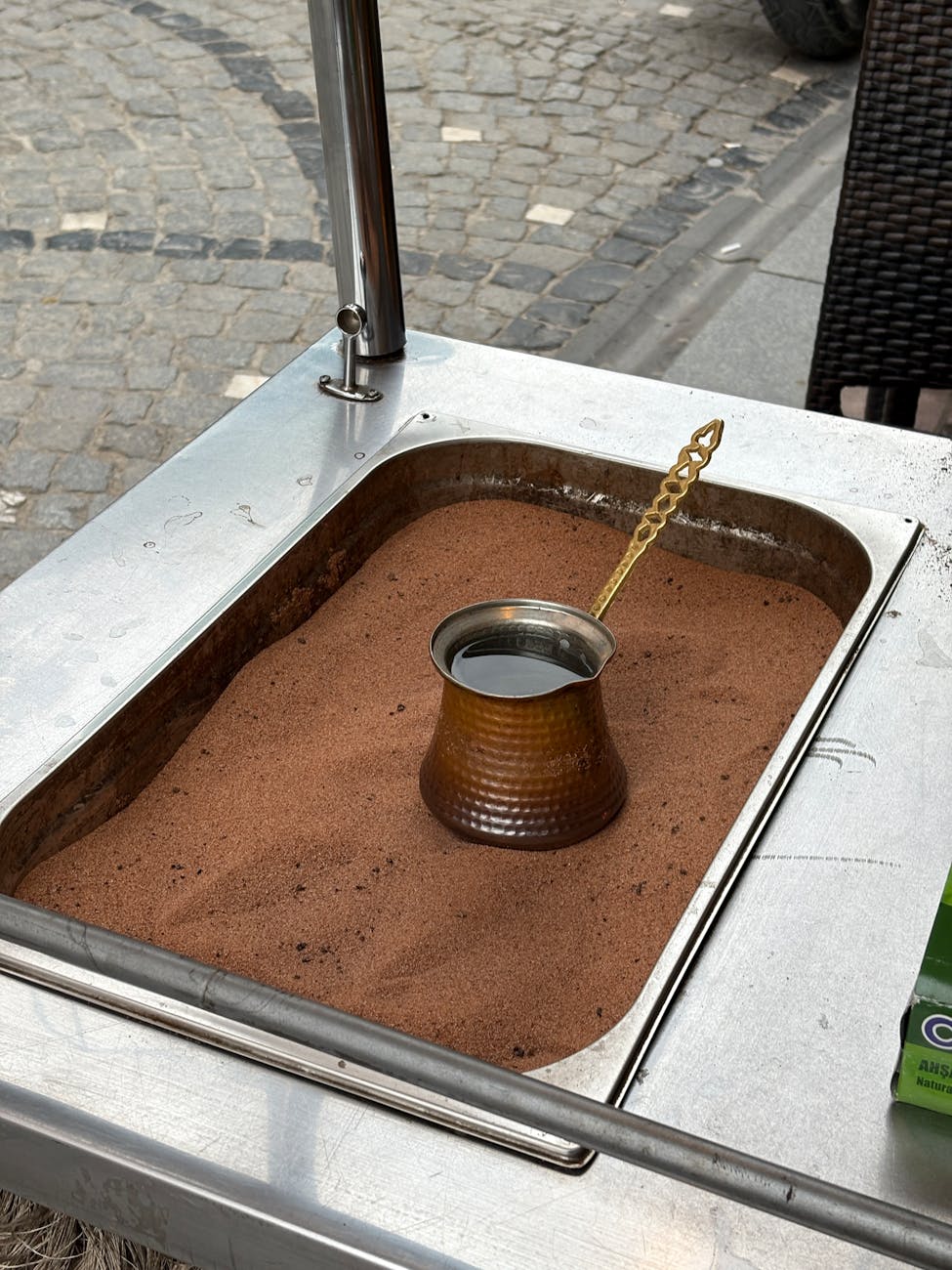
The Turkish coffee method, using a cezve or ibrik, presents a unique set of challenges at high altitude. This brewing style relies on a very fine, powder-like grind and a quick, intense infusion where the water is brought right to the edge of boiling. The characteristic rise of the coffee, which creates the prized foam, is the key visual cue that the brew is ready.
At high altitude, this “boil” happens at a much cooler temperature. While the coffee will still rise in the cezve due to the release of carbon dioxide, it’s happening at, say, 92°C instead of 100°C. This means the coffee grounds are never exposed to the heat necessary for a full, balanced extraction. You get the visual theater of the rise, but the chemical process of extraction is incomplete. The resulting cup is often disappointingly acidic and weak, lacking the rich, syrupy body that makes Turkish coffee so beloved.
Adjusting your technique for a perfect high-altitude brew
Don’t despair; brewing delicious Turkish coffee at high altitude is entirely possible with a few key adjustments to your technique. It’s all about compensating for the lower temperature to achieve proper extraction. Here are some strategies to try:
- Extend the brewing time: Since the water is cooler, the grounds need more contact time. Instead of removing the cezve from the heat the moment the coffee starts to rise, lower the heat significantly and allow it to simmer gently for an extra 30-60 seconds. Be very careful not to let it boil over, as this will incorporate bitter compounds and ruin the flavor.
- Consider a finer grind: If you grind your own beans, try going one step finer than usual. A finer grind increases the surface area of the coffee particles, allowing the cooler water to extract flavors more efficiently in a shorter amount of time.
- Adjust your coffee-to-water ratio: To compensate for the less efficient extraction, you may need to use slightly more coffee grounds than you would at sea level. Experiment by adding an extra half-teaspoon of coffee to your usual recipe to see if it helps build the body and strength you’re missing.
- Trust your senses, not just the rise: At altitude, the dramatic rise might happen before sufficient extraction has occurred. Pay closer attention to the aroma. When the coffee begins to smell rich and fragrant, not just grassy or sour, you are getting closer to a balanced extraction.
Brewing Turkish coffee is a sensory experience, and at higher altitudes, your senses of smell and taste become even more critical than the visual cue of the boil. Through mindful adjustments and a bit of experimentation, you can easily overcome the scientific hurdles of elevation. Mastering this challenge not only results in a delicious cup but also deepens your understanding of the intricate dance between heat, time, and coffee. What you learn from adapting your high-altitude technique can make you a better brewer, no matter where you are. Remember that the lower boiling point is your main obstacle, and every adjustment should be aimed at achieving a fuller extraction within this new temperature constraint.


 No products in the cart.