



Exploring flow-driven vs. pressure-driven espresso extraction
For the dedicated manual espresso enthusiast, the pursuit of the perfect shot is a journey of constant refinement. We obsess over grind size, tamping pressure, and temperature stability. Yet, a more fundamental variable often governs the entire process: the core philosophy of extraction itself. Are we controlling the pressure applied to the coffee bed, or are we controlling the rate of water flowing through it? This distinction marks the difference between pressure-driven and flow-driven extraction. Understanding this concept is not merely academic; it unlocks a more profound level of control over the final cup, allowing the barista to manipulate body, clarity, and flavor in ways that pressure-centric methods alone cannot achieve.
The foundation: Understanding pressure-driven extraction
Most semi-automatic and automatic espresso machines operate on a pressure-driven model. The machine’s pump is designed to deliver water at a specific pressure, which we typically aim for around 9 bars. In this scenario, pressure is the primary independent variable. The barista prepares the coffee puck, locks in the portafilter, and the machine applies a relatively constant force.
The resulting flow rate becomes the dependent variable. It is dictated entirely by the resistance of the coffee puck. A finer grind or a denser puck will provide more resistance, resulting in a slower flow of espresso. Conversely, a coarser grind allows water to pass through more easily, leading to a faster flow. The barista’s main job is to adjust the grind size to achieve a target shot time and volume, essentially manipulating puck resistance to manage the flow rate indirectly.
The alternative approach: An introduction to flow control
Flow-driven extraction inverts this relationship. Here, the flow rate is the primary independent variable, and pressure becomes the dependent one. Instead of targeting a set pressure, the barista targets a specific flow rate, for example, 2 milliliters per second. The machine, or the operator in the case of manual levers, modulates the water delivery to maintain this rate.
The pressure reading is now simply feedback. It tells us how much resistance the puck is providing against our constant flow. If the pressure climbs very high, it indicates a finely ground or tightly packed coffee bed. If it remains low, the puck is offering little resistance. This approach offers a more direct way to manage contact time and extraction velocity, as you are controlling the literal speed at which water passes through the coffee grounds, independent of puck resistance.
Comparing the two extraction philosophies
The practical differences in how a barista dials in a shot are significant. With pressure as the constant, any change to the grind has a direct and immediate impact on flow and shot time. With flow as the constant, adjusting the grind primarily changes the pressure required to maintain that flow, which in turn influences the puck’s integrity and the extraction’s character.
This table illustrates the core differences in managing the key variables:
| Variable | Pressure-Driven Approach | Flow-Driven Approach |
|---|---|---|
| Primary Control | Pressure (e.g., set to 9 bar) | Flow Rate (e.g., set to 2 ml/s) |
| Resulting Variable | Flow Rate (determined by puck resistance) | Pressure (determined by puck resistance) |
| Adjusting Grind Size | Directly alters the flow rate and shot time. | Alters the pressure needed to maintain the target flow. |
| Goal of Dialing In | Find a grind size that produces the desired flow and time at a fixed pressure. | Find a grind size that produces the desired pressure profile and taste at a fixed flow. |
Impact on the final cup
Neither method is inherently superior, but they can produce different results in the cup. Pressure-driven extractions, especially with the classic 9-bar pump profile, are known for producing rich, heavy-bodied espresso with significant crema. This is the profile many have come to expect from traditional espresso.
Flow-driven extractions offer a different path. By maintaining a gentle, consistent flow, especially in the pre-infusion and initial extraction phases, it is often possible to reduce the risk of channeling. This can lead to shots with greater clarity, sweetness, and more nuanced acidity. Because the pressure is allowed to ramp up and down organically in response to the puck’s state, the extraction can be less aggressive. This technique allows for exploration of lighter roasts and finer grind settings that might otherwise be difficult to manage without creating astringency.
Impact on the coffee puck and extraction dynamics
The choice between a pressure-driven and flow-driven approach has profound implications for the coffee puck’s integrity and the resulting extraction. A pressure-driven extraction, especially one with an aggressive pre-infusion, rapidly applies force to the puck. If the puck is not perfectly prepared, this can fracture its structure and create channels, leading to an uneven extraction where some parts of the coffee are over-extracted and others are under-extracted. In contrast, a flow-driven approach allows for a much gentler saturation. By starting with a very low flow rate, the barista can ensure the entire puck is wet and expands uniformly before any significant pressure builds. This minimizes the risk of channeling and promotes a more even erosion of coffee particles. As the extraction progresses, manipulating the flow allows the barista to gently increase or decrease pressure, targeting specific flavor profiles and textures in the final cup.
Practical application and dialing in your shot
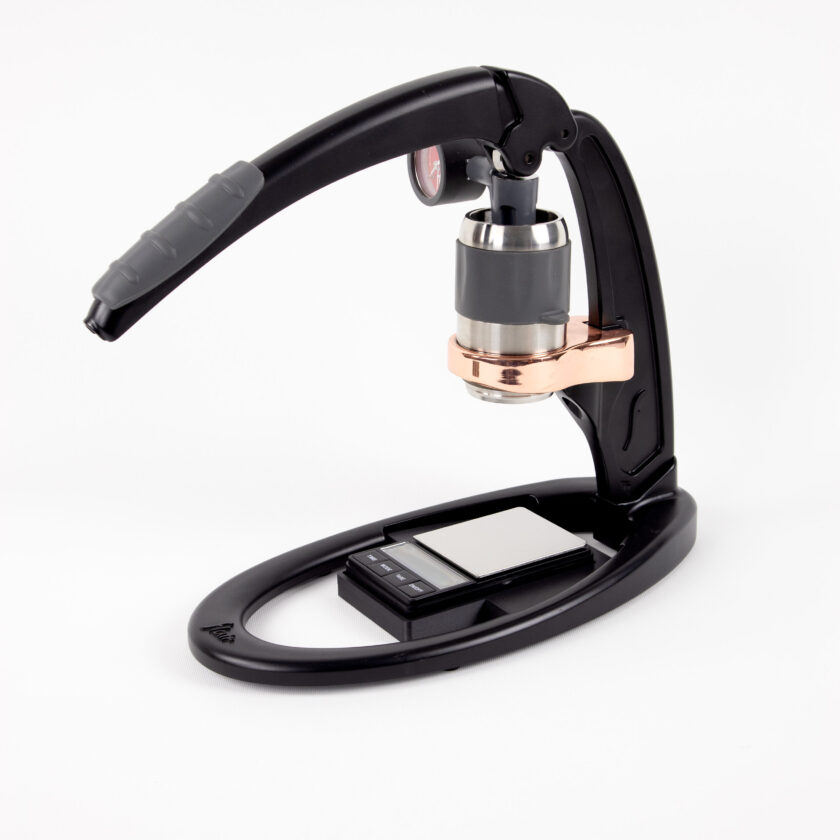
In practice, dialing in a shot differs significantly between the two methodologies. With a pressure-driven mindset, the primary adjustment is grind size. The goal is to create a specific resistance to achieve a desired output weight in a set time at a fixed pressure. For example, a common recipe is 9 bars of pressure for a 1:2 ratio in 25–30 seconds. For a flow-driven extraction, the barista might think in terms of milliliters per second. A common technique involves starting with a low flow rate (e.g., 2 ml/s) for pre-infusion until the first drops appear, then increasing the flow (e.g., to 4 ml/s) for the main extraction phase, and finally tapering it off. The resulting pressure is observed but not directly targeted. This method provides more granular control over each stage of the shot, from pre-infusion to the final drops, allowing the barista to adapt the extraction profile to the specific coffee being used.
In conclusion, the distinction between flow-driven and pressure-driven espresso extraction is more than just a technicality. It represents two different philosophies of control. The pressure-driven model offers simplicity and repeatability by fixing a key variable, while the flow-driven approach provides a more hands-on, adaptable method for manipulating the extraction process. For the advanced home barista, particularly those using manual machines, understanding and embracing flow control opens up a vast new landscape for experimentation and refinement. It allows for a more nuanced dialogue with the coffee, promoting evenness and unlocking subtle flavors that a rigid pressure profile might obscure. Mastering this concept is a significant step toward achieving ultimate command over the final cup. Relevant tools to explore these techniques are available from retailers who specialize in manual espresso equipment.
Conclusion
The distinction between flow-driven and pressure-driven extraction is more than just a technical curiosity. It represents a fundamental choice in how we interact with our coffee. The pressure-driven model sets a force and works with the resulting flow, while the flow-driven model sets a speed and works with the resulting pressure. For the manual espresso user, understanding this difference opens up new avenues for experimentation. By shifting focus from a fixed pressure target to a deliberate flow rate, a barista can gain a more direct and intuitive handle on extraction dynamics, ultimately leading to a more consistent and expressive cup. Experimenting with these techniques is part of the craft, and sourcing the right equipment is a foundational step. For those looking to refine their setup, tools designed for precision are available from retailers like papelespresso.com.