

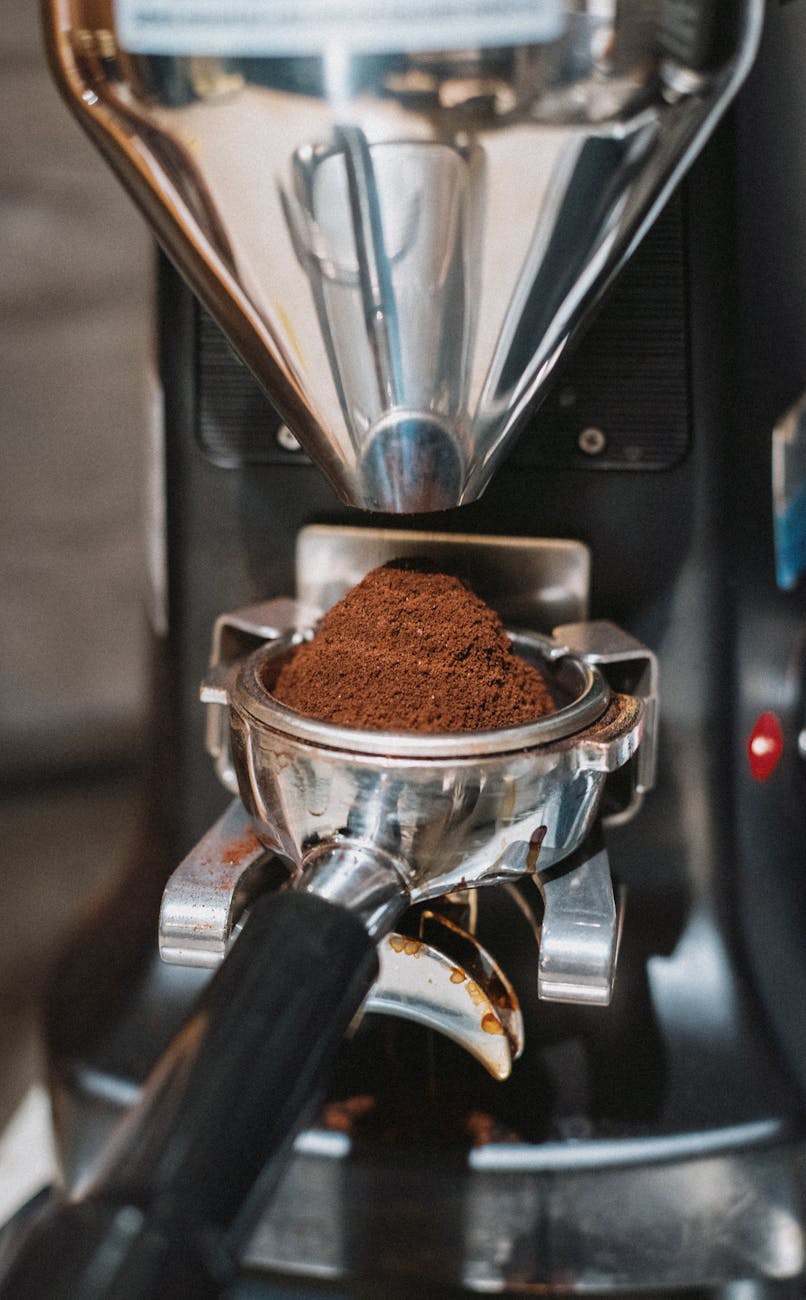
Dialing in light roasts with the Eureka Mignon: Advanced techniques for performance control
Light roast coffee represents the pinnacle of flavor exploration for many espresso lovers. These beans, dense and packed with delicate, acidic notes, offer a bright and complex cup. However, they also present a significant challenge for any grinder. The Eureka Mignon series, known for its precision and build quality, is more than capable of handling these demanding beans, but it requires a deeper understanding and a more nuanced approach than a standard medium or dark roast. This article moves beyond the basics of dialing in. We will explore advanced techniques for achieving true performance control (性能控制), transforming your Mignon from a simple grinder into a precision instrument for unlocking the vibrant potential of light roast espresso.
Understanding the unique challenge of light roasts
Before you can master grinding light roasts, you must first understand why they are so different. Unlike their darker counterparts, light roast beans are significantly harder and less brittle. During the roasting process, they retain more moisture and their cellular structure remains more intact. This has two major implications for grinding.
First, the density requires more torque and power from the grinder’s motor. This is why some grinders may stall or struggle. Second, when these hard beans shatter, they tend to produce a less uniform particle distribution. This often means creating an excess of both very fine particles (fines) and larger particles (boulders). This bimodal distribution is the enemy of a good espresso shot. The fines can easily clog the filter basket, leading to a slow, over-extracted, and bitter shot. Simultaneously, the boulders allow water to pass through too quickly (channeling), resulting in a weak, sour, and under-extracted shot. Your goal is to use the Mignon’s features to narrow this particle distribution and produce a more uniform grind.
Mastering the Mignon’s stepless adjustment dial
The Eureka Mignon’s signature feature is its stepless micrometric adjustment system. This gives you virtually infinite control over the grind size, which is essential for the tiny changes needed for light roasts. However, this freedom can also be a source of frustration. Without fixed “steps,” how do you make precise, repeatable adjustments?
The key is a methodical approach. Always make adjustments while the grinder is running, even if it’s empty. This prevents the burrs from binding together and ensures the adjustment is seated correctly. When dialing in a new light roast, don’t be afraid to make a larger initial adjustment to find the general range. Once you pull a shot that is close—perhaps running a bit too fast or too slow—your subsequent changes should be minuscule. Think in terms of millimeters of movement on the dial. A common technique is to place a small piece of tape on the dial to serve as a visual marker, allowing you to track these tiny adjustments more effectively. Remember, with light roasts, a change you can barely see on the dial can easily alter your shot time by five or more seconds.
Optimizing your workflow with RDT and WDT
Controlling the grinder is only half the battle; controlling the grounds is the other. Light roasts, being very dry on the surface, are highly susceptible to static electricity during grinding. This causes grounds to spray out of the chute, stick to the grinder, and clump together. This clumping leads directly to channeling in your puck. Two simple techniques can virtually eliminate this problem: the Ross Droplet Technique (RDT) and the Weiss Distribution Technique (WDT).
- Ross Droplet Technique (RDT): Before pouring your beans into the grinder (especially if you are single dosing), lightly spritz them with a fine mist of water. One or two sprays is all you need. This tiny amount of moisture dramatically reduces static electricity. The result is a fluffier, less clumpy stream of grounds and significantly less mess. For the Mignon, this means a more manageable mound in your portafilter and less retained coffee in the grinding chamber.
- Weiss Distribution Technique (WDT): Even with RDT, the Mignon’s grounds can benefit from distribution. Using a WDT tool—a set of fine needles—to stir the grounds in your portafilter breaks up any remaining clumps and evenly distributes the coffee. This creates a uniform density throughout the puck, forcing the water to flow through it evenly and preventing channeling. This step is non-negotiable for achieving consistent, high-extraction shots with light roasts.
Diagnosing your shot and closing the loop
The final step in achieving performance control is learning to read your espresso shot and translate its behavior back into a specific grinder adjustment. Your senses—sight, smell, and taste—are your most important diagnostic tools. Is the shot blonding too early? Is it flowing from one side of the portafilter? Does it taste overwhelmingly sour or unpleasantly bitter? Each of these signs points to a specific problem that can often be traced back to your grind size and puck preparation.
Use the following table as a guide to connect the problem with a solution:
| Shot Problem | Likely Cause | Recommended Mignon Adjustment |
|---|---|---|
| Shot flows very fast (e.g., <20 seconds); tastes sour, thin, and weak. | Grind is too coarse. Water is passing through the puck too easily (channeling). | Make a small adjustment on the dial toward the finer setting. |
| Shot chokes the machine or flows very slowly (e.g., >40 seconds); tastes bitter, harsh, and burnt. | Grind is too fine. Water cannot penetrate the puck properly, leading to over-extraction. | Make a small adjustment on the dial toward the coarser setting. |
| Shot starts okay but quickly gushes from one spot; tastes both sour and bitter. | Uneven puck density (channeling). Likely caused by clumps or poor distribution. | Grind may be okay. Focus on improving your WDT technique. Ensure RDT is used to reduce clumping. |
By systematically observing your shot and making one single, informed adjustment at a time, you close the feedback loop and move progressively closer to the perfect extraction.
Conclusion
Dialing in light roasts on a Eureka Mignon is a journey of precision and patience. It requires moving beyond basic adjustments and embracing a holistic workflow. By understanding the physical properties of light roast beans, you can appreciate why they demand more from your grinder. Mastering the Mignon’s stepless dial with small, deliberate changes is the foundational skill. Augmenting this with techniques like RDT and WDT will elevate your puck preparation, ensuring a uniform extraction. Finally, by learning to diagnose your shots, you can make intelligent adjustments, turning a frustrating process into a rewarding one. The Eureka Mignon is a formidable tool, and with these advanced techniques, you can achieve true performance control and consistently pull bright, sweet, and complex espresso shots from the most challenging beans.

 No products in the cart.