

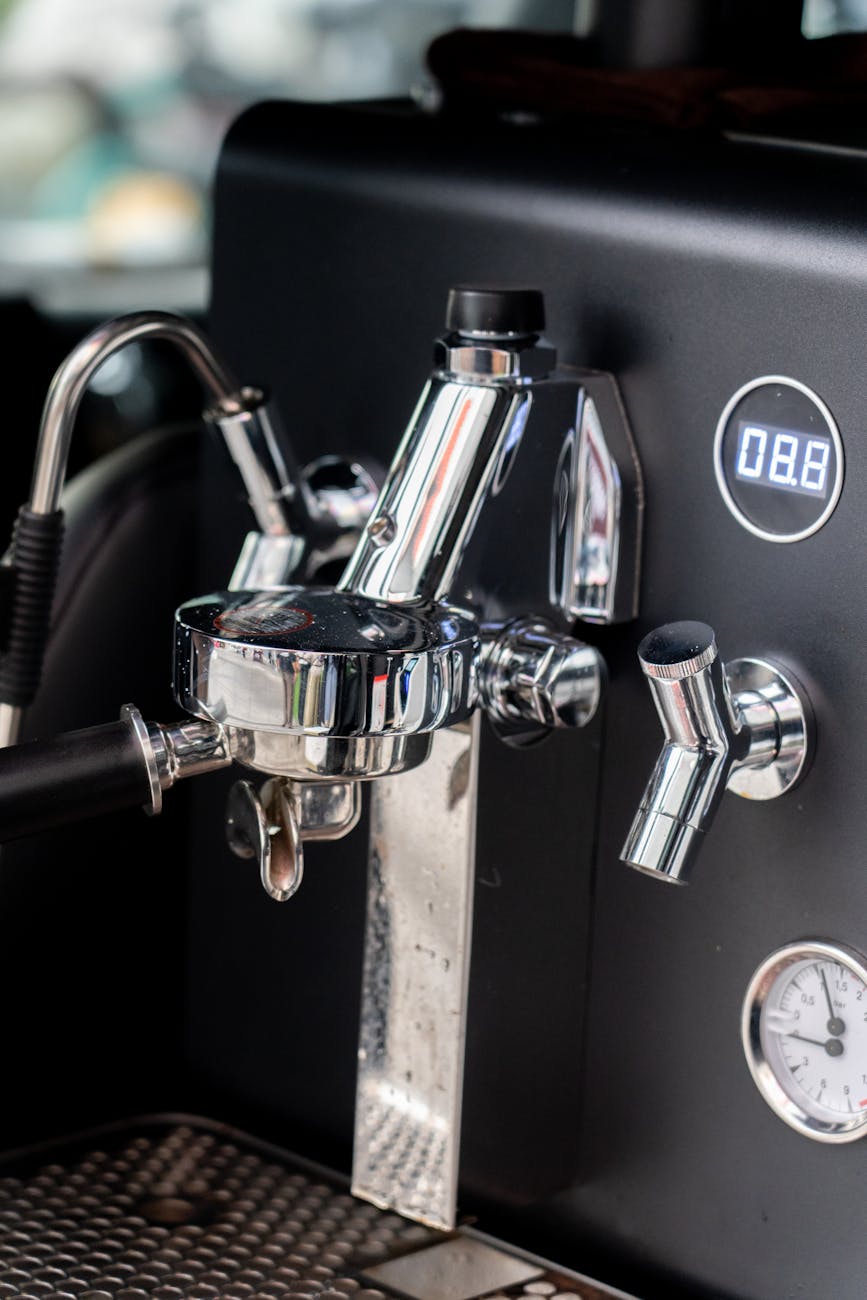
The Olympia Cremina is a legendary manual lever espresso machine, celebrated for its robust build quality and the exceptional control it offers the barista. However, out of the box, its pressure stat is often set for traditional, darker Italian roasts, resulting in a boiler pressure that produces water too hot for the delicate nature of modern, lighter roasts. This can lead to bitter, astringent, and disappointing shots, masking the nuanced floral and fruit notes that make these coffees special. Mastering your Cremina for these roasts isn’t about complex modifications, but about a single, crucial adjustment. This article will serve as your comprehensive guide to adjusting the pressure stat on your Olympia Cremina, unlocking its full potential for extracting sweet, balanced, and vibrant light roast espresso.
Why adjust the pressure for lighter roasts?
To truly understand the need for this adjustment, it’s essential to grasp the relationship between pressure and temperature in a single-boiler machine like the Cremina. The pressure stat, or PSTAT, doesn’t directly measure temperature; it measures steam pressure. However, because water boils at a specific temperature for a given pressure, controlling one effectively controls the other. A higher boiler pressure means a higher water temperature, and vice versa. Traditional espresso roasts are more soluble and benefit from these higher temperatures to extract their deep, chocolatey, and caramel notes.
Light roasts are fundamentally different. They are denser, less porous, and retain more of the bean’s original complex acids and aromatic compounds. Hitting these beans with water that’s too hot, often in the 94-96°C (201-205°F) range produced by a high PSTAT setting, instantly scorches these delicate compounds. This results in an unbalanced cup dominated by bitterness and astringency, completely obscuring the subtle flavors you paid a premium for. By lowering the boiler pressure, you lower the entire thermal system’s temperature, allowing for a gentler extraction that preserves these delicate notes and promotes sweetness and clarity in the final cup.
Getting to know your Cremina’s pressure stat
Before you grab a screwdriver, it’s important to know what you’re working with. The pressure stat in your Olympia Cremina is a small but vital component. It acts as a mechanical switch, sensing the pressure inside the boiler. When the pressure drops below a certain point, it closes an electrical circuit, turning the heating element on. Once the pressure reaches its target, the PSTAT opens the circuit, turning the heater off. This on-and-off cycle is what maintains the boiler within a specific pressure range, often called the “deadband”.
Important safety note: Before attempting any adjustments, you must unplug your machine from the wall and ensure it is completely cool to the touch. You will be working with internal components, and safety is paramount.
To access the PSTAT, you will need to carefully place your Cremina on its side (on a soft towel to avoid scratches) and remove the bottom plate, which is typically held in place by four screws. Inside, you will see the PSTAT, usually a boxy component with wires and a central adjustment screw. This screw is your key. Turning it counter-clockwise decreases the pressure setting, while turning it clockwise increases it. The golden rule here is to make very small, incremental adjustments. A mere quarter-turn can have a significant impact on the final pressure.
A step-by-step guide to the adjustment
Adjusting the PSTAT is an iterative process of fine-tuning. It’s not about getting it perfect on the first try, but about methodically dialing it in. Here is a clear process to follow:
- Preparation and safety: Confirm your machine is unplugged and fully cool. Gather your tools: a correctly sized flathead screwdriver and a pressure gauge that can be fitted to your steam wand (this is highly recommended for accuracy).
- Access the PSTAT: Lay the machine on its side on a protective surface and remove the screws holding the bottom cover. Set the cover and screws aside safely.
- Make the initial adjustment: Locate the adjustment screw on the PSTAT. To lower the temperature for light roasts, make a small counter-clockwise turn. We recommend starting with just a quarter-turn.
- Reassemble and test: Securely screw the bottom plate back on. Place the machine upright, fill the boiler, and plug it in. Turn it on and let it heat up completely. Purge any false pressure by opening the steam wand until the hissing sound is strong and steady.
- Measure the pressure: Attach your pressure gauge to the steam wand and open the valve. Watch the gauge to see where the pressure peaks before the heating element clicks off. Note this reading. This is your new maximum boiler pressure.
- Dial it in: If the pressure is still too high, repeat the entire process (unplug, cool down, adjust, reassemble, test). If you’ve gone too low, make a tiny clockwise adjustment. This process may take a few cycles to hit your target.
Finding your ideal pressure and temperature
The goal of this adjustment is to find the pressure setting that produces the ideal brewing temperature for the coffees you enjoy. While taste is the ultimate judge, having target numbers is incredibly helpful. The stock Cremina often idles between 1.1 and 1.3 bar, which is great for dark roasts but too high for anything else. For light roasts, you are aiming for a significantly lower range.
Most enthusiasts find the sweet spot for light roasts to be when the PSTAT is set to turn off between 0.7 and 0.9 bar. This lower pressure keeps the grouphead from overheating during idle periods and provides a more forgiving starting temperature for your brew. Keep in mind that a lower boiler pressure also means slightly less powerful steam for milk, potentially increasing steaming time by a few seconds, a worthwhile trade-off for superior espresso.
The table below provides a general guide to the relationship between boiler pressure and the resulting approximate brew water temperature. Use this as a starting point for your experiments.
| Boiler Pressure (bar) | Approximate Brew Temperature | Recommended Roast Level |
|---|---|---|
| 1.1 – 1.3 bar | 94°C – 96°C (201°F – 205°F) | Dark / Traditional Italian |
| 0.9 – 1.0 bar | 92°C – 94°C (198°F – 201°F) | Medium / Blends |
| 0.7 – 0.8 bar | 88°C – 91°C (190°F – 196°F) | Light / Specialty Single Origin |
By adjusting your PSTAT into that 0.7-0.9 bar range, you give yourself the thermal headroom needed to properly extract the complex, sweet, and acidic flavors of a high-quality light roast without scorching it.
In conclusion, the Olympia Cremina is a truly magnificent machine, capable of producing world-class espresso. Its one major limitation for the modern coffee enthusiast, its high factory temperature setting, is thankfully easy to remedy. By carefully and methodically adjusting the internal pressure stat, you take direct command of the machine’s most critical brewing variable: temperature. Lowering the boiler pressure from the stock 1.2 bar down to a more suitable 0.8 bar range transforms the Cremina into a light roast champion. This simple, reversible adjustment unlocks a new dimension of flavor, allowing you to extract the bright, nuanced, and sweet notes that define today’s best specialty coffees. It’s a rewarding process that elevates your skill and connection to the machine.


 No products in the cart.