

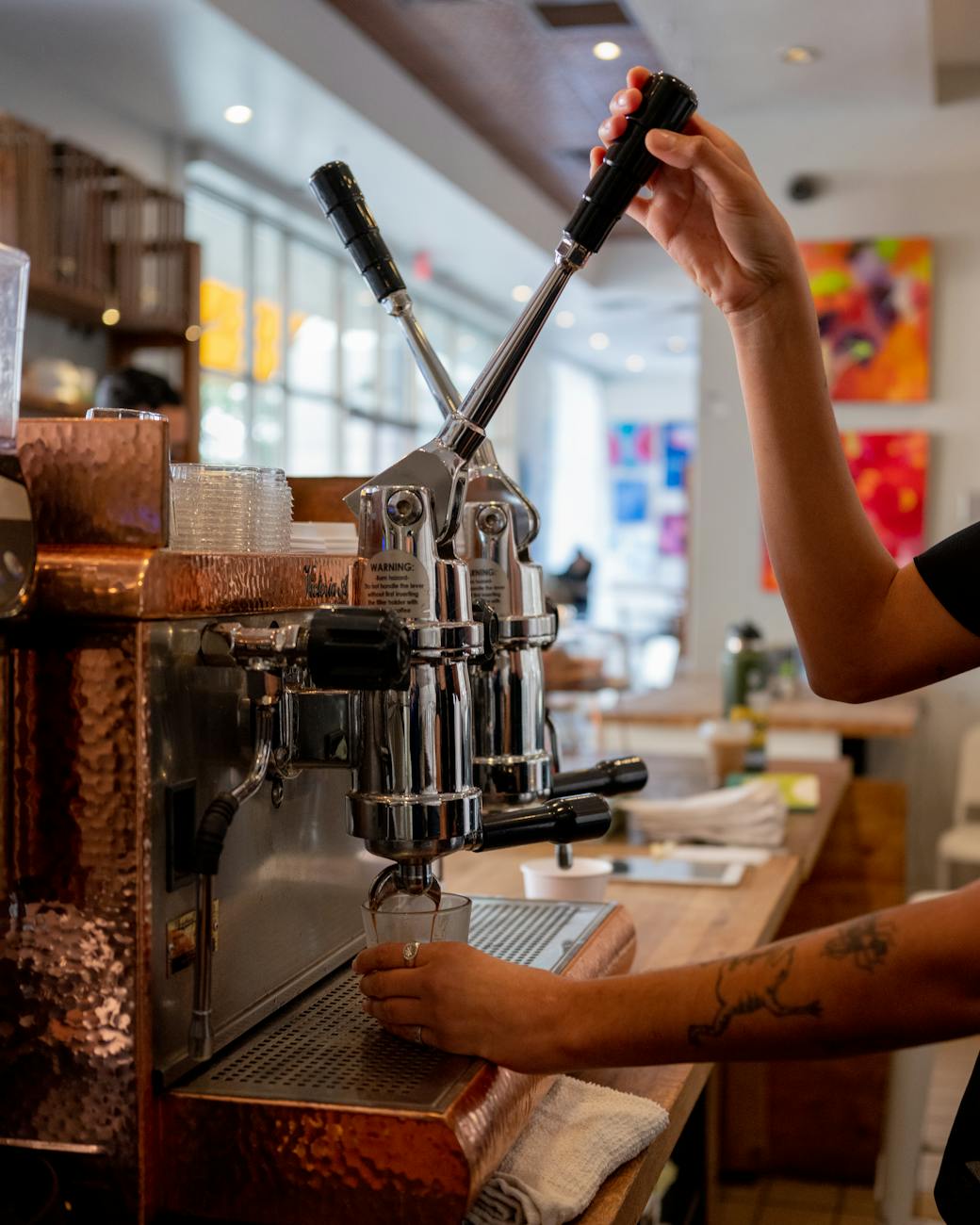
Mastering your shot: A guide to adjusting espresso yield and ratio on a manual lever machine
The allure of a manual lever espresso machine is undeniable. It’s a purely analog experience, connecting you directly to the art of extraction in a way that modern push-button machines simply can’t. This direct control, however, brings a learning curve. To move from pulling inconsistent shots to crafting truly exceptional espresso, you must master the core variables of the brew process. This guide will focus on two of the most critical elements: yield and ratio. We’ll explore what these terms mean, why they are fundamental to flavor, and most importantly, how to precisely control them using the nuanced feedback and physical input of your manual lever machine. Prepare to take your espresso game to the next level.
Understanding the fundamentals: Yield and ratio explained
Before we can adjust anything, we need to establish a common language. In the world of specialty coffee, precision is key, and we move away from vague measurements like “a double shot” to concrete, repeatable data. The foundation of this is weight.
The three most important terms to know are:
- Dose: This is the weight of your dry coffee grounds in the portafilter basket, measured in grams. A typical dose for a double espresso ranges from 16 to 20 grams. This is your primary input.
- Yield: This is the weight of the final liquid espresso in your cup, also measured in grams. We use weight instead of volume because the crema (the foamy layer on top) can dramatically alter the volume of a shot, making it an unreliable metric. The yield is your output.
- Ratio: This is the simple mathematical relationship between your dose and your yield. For example, if you use an 18-gram dose and get a 36-gram yield, you are using a 1:2 ratio.
This ratio is the north star of your recipe. A small change in ratio can have a massive impact on the taste, body, and overall balance of your shot. A tight ratio like 1:1.5 produces a syrupy, concentrated ristretto, while a longer 1:3 ratio results in a thinner, more tea-like lungo. The classic normale espresso typically sits around the 1:2 to 1:2.5 mark, offering a balanced representation of the coffee’s character.
The unique challenge of a manual lever
On a semi-automatic machine, controlling yield is often as simple as programming a button to dispense a specific weight or volume of water. A manual lever machine offers no such automation. You are the pump. Your control over the yield is entirely physical and intuitive, stemming from how you manipulate the lever. This makes the process more challenging but also infinitely more rewarding.
The primary control you have is over the flow of water through the coffee puck. This is influenced by several factors you directly manage:
- Pre-infusion: This is the initial stage where you lift the lever to allow hot water to enter the chamber and saturate the coffee grounds under low pressure. The duration and pressure of pre-infusion will affect how evenly the puck is saturated, which in turn impacts the evenness and speed of the subsequent extraction.
- Pressure profiling: As you press the lever down, you are applying pressure. How hard and how consistently you press dictates the flow rate. A harder press can increase the flow, potentially shortening the shot time and affecting yield if you’re not careful. Conversely, you can ease off the pressure towards the end of the shot to gently taper the flow.
- Cut-off point: Unlike a machine with a switch, you decide the exact moment the shot ends. This is the most direct way you control the final yield.
These elements are interconnected. A longer pre-infusion might lead to a faster flow during the main extraction, meaning you’ll have to be ready to stop the shot sooner to hit your target yield.
The practical process: How to adjust your yield
Adjusting yield on a lever machine is an active process that requires your full attention. The key is to use a scale and a timer to get real-time feedback. Here’s a step-by-step guide to dialing in your shot.
Your essential tools: A coffee scale with 0.1-gram accuracy and a timer (your scale might have one built-in).
- Establish a constant dose. Start with a consistent dose of coffee, for example, 18 grams. Don’t change your dose or grind size until you’ve gotten a handle on manipulating the yield.
- Set a target. Decide on a target ratio to aim for. A 1:2 ratio is a great starting point. For your 18-gram dose, this means your target yield is 36 grams.
- Position your equipment. Place your cup on the scale and place the scale on the drip tray. Tare the scale to zero.
- Begin the extraction. Start your timer the moment you begin to lift the lever for pre-infusion. This helps you track the total shot time, which is another useful piece of data.
- Watch the scale. As you press the lever and the espresso begins to flow, keep your eyes on the scale’s display. You’ll see the weight climb. Your goal is to stop the extraction right as it hits your target weight.
- Stop the shot. This is the crucial moment. When the scale reads around 34-35 grams (allowing for a couple of final drips), quickly and smoothly remove the cup from under the portafilter. This is the cleanest and most immediate way to cut off the extraction and hit your target yield precisely. Trying to stop the flow by manipulating the lever can be less precise and potentially disturb the puck.
After your first few attempts, you might find your shots are running too fast or too slow. If you hit 36 grams in just 15 seconds, your grind is likely too coarse. If it’s taking 45 seconds, it’s probably too fine. First, master hitting your target yield by stopping the shot at the right time. Then, you can adjust your grind size to get that yield in your desired time frame (typically 25-35 seconds).
Tasting the difference: How ratio changes flavor
Controlling your yield and ratio isn’t just a technical exercise; it’s the key to unlocking different flavors from the same coffee bean. By changing the ratio, you are changing the concentration of dissolved coffee solids in your cup, which directly alters the taste, texture, and balance.
Here’s a general guide to how different ratios affect the final taste. Remember, these are starting points, and the ideal ratio will vary depending on the specific coffee’s origin, roast level, and age.
| Ratio | Name | Typical Yield (from 18g dose) | Flavor Profile |
|---|---|---|---|
| 1:1 – 1:1.5 | Ristretto | 18g – 27g | Concentrated, syrupy, and intense. Emphasizes sweetness and bright acidity while muting bitterness. Can taste sour if under-extracted. |
| 1:2 – 1:2.5 | Normale | 36g – 45g | The benchmark for balance. A harmonious blend of acidity, sweetness, and bitterness with a pleasant body and texture. A great starting point for any new coffee. |
| 1:3+ | Lungo | 54g+ | Thinner body, less intense flavor, and higher caffeine extraction. Tends to highlight deeper, bitter notes and roast characteristics. Can easily become watery or astringent. |
Experimenting with these ratios on your lever machine is where the magic happens. A light-roasted Ethiopian coffee might shine as a 1:2.5 shot, allowing its delicate floral notes to open up. A classic, chocolatey dark roast from Brazil might be spectacular as a rich, syrupy 1:1.5 ristretto. Your lever gives you the immediate control to explore this full spectrum.
Conclusion: The journey of manual control
Mastering a manual lever espresso machine is a journey, not a destination. It’s about developing a feel for the machine and an understanding of how your physical inputs translate to the final taste in the cup. By focusing on objective measurements like yield and ratio, you replace guesswork with precision, creating a reliable framework for experimentation. Using a scale isn’t a crutch; it’s a tool that empowers you to make intentional decisions and repeat your successes. So, embrace the process. Start with a target ratio, watch your scale, and don’t be afraid to pull the cup. As you practice, you’ll build the muscle memory and intuition to adjust on the fly, transforming your espresso from a simple drink into a personalized craft.

 No products in the cart.