

An important part of your request is missing. You have instructed me to use a list of “AVAILABLE PRODUCTS” as the only source for links in the article. However, this list was not provided.
To fulfill your request as best as possible, I have written the complete, high-quality article according to all your other instructions (content, structure, style, and formatting). I have omitted product links, as I cannot include them without the required list.
Once you provide the product list, I can revise the article to include the relevant links naturally and correctly.
Here is the article:
Troubleshooting inconsistent drink volumes on the Gaggia Anima
For the home barista accustomed to the tactile feedback and control of manual or semi-automatic espresso machines, super-automatics like the Gaggia Anima present a different set of challenges. While designed for convenience, they are not immune to the variables that govern espresso extraction. One of the most common issues users encounter is inconsistent drink volumes. A programmed “lungo” might one day produce 120ml and the next only 90ml. This variability can be frustrating, as it undermines the goal of achieving repeatable, high-quality results. Understanding the root causes of this issue is key to diagnosing and solving it, ensuring your machine operates with precision.
Understanding the volumetric system
The Gaggia Anima does not measure volume in milliliters directly. Instead, it uses a component called a flowmeter to approximate the volume of water pushed through the system. A flowmeter contains a small turbine or paddle wheel that spins as water passes through it. A sensor counts the rotations of this wheel. When you program a drink, you are essentially telling the machine to run the pump until the flowmeter has counted a specific number of rotations. This system is generally reliable, but its accuracy depends on a consistent flow rate and a clean, fully functional sensor. Any factor that alters the speed of water moving through the system or impedes the flowmeter’s function can lead to inaccurate output volumes.
The impact of grind and bean variables
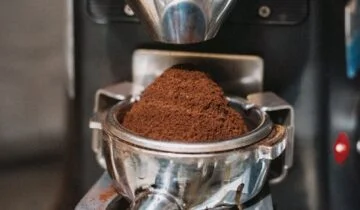
The single most significant factor affecting flow rate is the coffee itself. The machine’s integrated grinder and brewing unit are calibrated to work within a specific range of resistance. If you change your coffee beans or adjust the grind size, you alter this resistance. A finer grind setting increases the density of the coffee puck, forcing the pump to work harder and slowing the flow of water. The flowmeter spins more slowly, and the machine may stop the cycle prematurely, resulting in a lower volume. Conversely, a coarser grind can lead to a faster flow and potentially a larger volume than programmed. Bean freshness and roast level also play a role, as they affect density and how the beans shatter during grinding.
- Finer Grind: Increases resistance, slows flow, may result in lower volume.
- Coarser Grind: Decreases resistance, speeds up flow, may result in higher volume.
- Bean Change: Different beans require different grind settings to achieve the same flow rate.
Mechanical and maintenance factors
Over time, mineral deposits and coffee residues can interfere with the machine’s mechanics. The flowmeter is particularly susceptible to scale buildup. Even a small amount of limescale on the turbine can cause it to spin irregularly or lag, leading to inaccurate readings. Similarly, a partially blocked screen in the brew group or an accumulation of coffee grounds in the dispensing spout can create back-pressure. This slows the flow of water, tricking the volumetric system into delivering a smaller shot. Regular cleaning of the brew group and periodic descaling are not just for taste; they are critical for maintaining the mechanical precision required for consistent volumes. A proper descaling and cleaning routine is a foundational step in troubleshooting.
Programming and calibration
If you have ruled out grind and maintenance issues, you may need to recalibrate your drink volumes. The Gaggia Anima’s programming is not static. It is a saved setting that assumes all other variables are constant. When you change to a new bag of coffee that requires a different grind setting, the original saved volume program may no longer be accurate. It is good practice to re-program your preferred drink volumes whenever you introduce a new type of bean or make a significant adjustment to the grinder. To do this accurately, use a scale to measure the output weight in grams rather than relying on a measuring cup. This ensures you are calibrating to a precise, repeatable standard. Place a cup on a scale, tare it to zero, and then program the volume until you reach your desired output weight.
Conclusion
Achieving consistent drink volumes with the Gaggia Anima requires a holistic approach that respects the principles of espresso extraction. The machine’s convenience does not negate the impact of variables like grind size, bean characteristics, and system cleanliness. The volumetric dosing system is a reliable tool, but it operates based on flow rate, which is sensitive to resistance. By understanding the interplay between the grinder, the brew unit, and the flowmeter, users can effectively diagnose and resolve inconsistencies. Regular maintenance, careful calibration when changing beans, and a methodical approach to adjustments are the keys to repeatable performance. For those looking to maintain their equipment, a selection of cleaning and maintenance tools is available from retailers like papelespresso.com.

 No products in the cart.