


Why your espresso flow rate changes mid-shot: Common causes and fixes
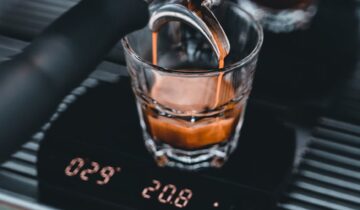
You’ve done everything right. You’ve weighed your beans, dialed in your grind, and prepared your puck with care. The shot starts beautifully, a syrupy, dark stream promising a delicious espresso. Then, halfway through, everything changes. The flow either speeds up into a gushing, blond mess or slows to a crawl, choking the machine. This frustrating inconsistency, where the flow rate changes dramatically mid-shot, is a common problem for home baristas. It’s a clear sign that something in your process is breaking down under pressure. Understanding why this happens is the first step toward pulling consistently balanced and repeatable shots. This article will explore the primary culprits behind erratic flow rates and provide practical, actionable solutions to fix them.
The puck’s internal struggle: Channeling and degradation
The most frequent cause of a shot suddenly speeding up is channeling. Think of your coffee puck as a tightly packed filter. Ideally, water should pass through it evenly, extracting flavor uniformly. Channeling occurs when the water finds a path of least resistance—a crack, a fissure, or a less dense area—and rushes through it. This water bypasses most of the coffee, leading to a weak, under-extracted, and sour shot. The flow rate will increase dramatically as the channel forms and widens.
What causes these weak spots? It almost always comes down to puck preparation.
- Clumps in the grounds: Clumps create dense pockets and empty spaces, leading to uneven water flow from the start.
- Uneven tamping: Tamping at an angle creates one side of the puck that is less compressed than the other, inviting water to rush through the weaker side.
– Uneven distribution: If coffee grounds are mounded in the center or pushed to one side of the basket, the water will naturally flow through the thinner areas more quickly.
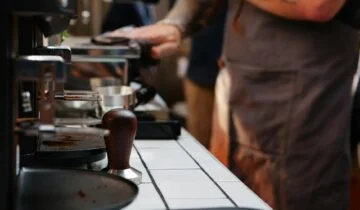
Related to this is puck degradation. As the shot progresses, the high pressure and hot water can cause the puck’s structure to break down. If the puck wasn’t prepared well, this degradation can worsen existing weak spots, causing a channel to form late in the shot. To combat this, focus on a meticulous puck prep routine: use a Weiss Distribution Technique (WDT) tool to break up clumps, a leveling tool to ensure an even surface, and apply firm, level tamping pressure.
The grind size dilemma: Fines migration
While channeling causes a shot to speed up, the opposite problem—a shot that slows down or chokes mid-pull—is often caused by fines migration. When you grind coffee, you create particles of varying sizes. The smallest of these are called “fines.” While some fines are necessary for building body and creating crema, an excessive amount can ruin a shot.
Here’s what happens: as the extraction begins, the water pressure pushes these tiny particles downward. They travel through the puck and accumulate at the bottom, clogging the small holes of your filter basket. As more and more holes get blocked, the water flow is severely restricted. You’ll see the flow rate slow to a trickle, even if it started at a perfect pace. This is a common issue with grinders that have dull or poorly aligned burrs, as they tend to shatter beans rather than cut them, creating more fines.
If you suspect fines are your issue, consider these fixes:
- Assess your grinder: A high-quality burr grinder is the single most important investment for espresso. If your grinder produces an inconsistent grind, it may be time for an upgrade or a burr replacement.
- Use a paper filter: Placing a paper filter at the bottom of the basket before adding coffee can help prevent fines from clogging the basket holes, promoting a more even flow.
- Adjust your grind: Grinding slightly coarser can reduce the total amount of fines produced. You may need to increase your dose to compensate and maintain a similar shot time.
Pressure and temperature: The machine’s influence
Sometimes, the problem isn’t the coffee; it’s the machine. Your espresso machine’s ability to deliver stable pressure and temperature is critical for a consistent flow rate. A change in pressure mid-shot will directly impact how quickly water moves through the puck.
Many modern machines use pressure profiling, intentionally altering the pressure during a shot. For example, a low-pressure pre-infusion phase will have a slow flow, which then increases as the machine ramps up to full pressure. This is a controlled and desirable change. However, an unintentional pressure drop is a problem. This can be caused by a failing pump or, more commonly, a significant scale buildup in the machine’s water paths. If the machine cannot maintain its target pressure, the flow rate will likely decrease.
Temperature instability can also play a role. If your machine’s brew temperature drops during extraction, it can slightly change the water’s viscosity and how effectively it extracts soluble compounds from the coffee, which can subtly alter the flow. Regular descaling and maintenance are key to ensuring your machine is performing as it should. Understanding if your machine has built-in profiling features will also help you distinguish between a planned change and a potential problem.
Troubleshooting summary
Here is a quick reference table to help you diagnose your flow rate issues.
| Problem | Symptom (Flow…) | Common Cause | Solution |
|---|---|---|---|
| Channeling | Speeds up suddenly | Uneven puck density, clumps, poor distribution | Use a WDT tool, level grounds, tamp evenly |
| Fines migration | Slows down significantly or chokes | Grinder producing too many fines, grinding too fine | Improve grinder, use paper filter, grind coarser |
| Machine pressure drop | Slows down or becomes erratic | Scale buildup, failing pump | Regularly descale and maintain your machine |
| Puck degradation | Can speed up (channeling) or slow down (compaction) | Poor initial puck structure, very fine grind | Improve puck prep, ensure proper dose for basket |
Conclusion
An espresso shot with a changing flow rate is a message from your brewing process, telling you that an variable has become unstable. More often than not, the issue lies in the foundation of the shot: the coffee puck. By focusing on a consistent and thorough puck preparation routine—eliminating clumps and ensuring even density—you can solve the most common cause, which is channeling. If your shot is slowing down instead, it’s time to investigate your grind quality and the potential for fines clogging your basket. Finally, don’t neglect your machine; its health is crucial for providing the stable pressure your coffee needs. By systematically diagnosing the cause, you can move past the frustration of inconsistent shots and gain greater control over your espresso, ensuring each pull is as delicious as the last.

 No products in the cart.