


Understanding the thermal mass of the E61 group head
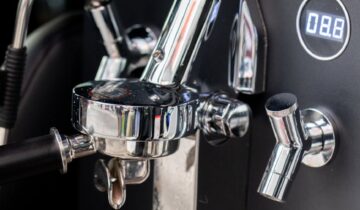
The Faema E61 group head is more than just a component; it’s an icon in the world of espresso. Patented in 1961, its brilliant design revolutionized espresso extraction and continues to be a benchmark for prosumer and commercial machines today. At the heart of its enduring success is a simple, yet profound, physical principle: thermal mass. This massive, chrome-plated brass component is engineered to absorb, store, and maintain heat with incredible stability. In this article, we will delve into the concept of thermal mass as it relates to the E61 group head. We will explore how its design leverages this principle, the significant advantages it offers for shot consistency, and the practical trade-offs every E61 owner must learn to manage.
What is thermal mass and why it matters in espresso
In simple terms, thermal mass is the ability of a material to store heat. Think of a heavy cast-iron skillet; it takes a while to heat up, but once it’s hot, it stays hot for a long time and cooks food evenly. Materials with high thermal mass, like the brass used in an E61, resist changes in temperature. This property is absolutely critical in brewing espresso, where precision is paramount.
The temperature of the water as it hits the coffee grounds is one of the most important variables in extraction. Even a fluctuation of one or two degrees can dramatically change the taste of your shot, turning a balanced, sweet espresso into something sour or bitter. The primary goal of an espresso machine’s design is to deliver water to the coffee puck at a consistent and predictable temperature, shot after shot. This is where the E61’s substantial thermal mass becomes its greatest asset, acting as a thermal fortress that stabilizes the brew water temperature.
The E61’s design: A marriage of mass and circulation
The E61 group head is not just a passive chunk of metal. Its brilliance lies in how its physical mass is integrated with a clever water circulation system known as a thermosyphon loop. The group head itself is a hefty component, typically weighing around 4 kilograms (or 9 pounds) and is mounted externally on the machine.
This design allows for two copper pipes to connect the group head directly to the machine’s boiler. Here’s how it works:
- Hot water from the boiler rises through the top pipe and flows into chambers within the group head.
- As this water transfers its heat to the surrounding brass, it cools slightly, becomes denser, and sinks.
- The cooler water then flows back to the boiler through the bottom pipe to be reheated.
This continuous, passive cycle constantly circulates hot water, bringing the entire mass of the group head up to a stable operating temperature. The thermosyphon actively heats the group, and the group’s high thermal mass acts as a massive heat reservoir, ensuring that when you pull a shot, the brewing environment is perfectly stable and ready.
The advantages of high thermal mass in the E61
The direct result of the E61’s design is exceptional shot-to-shot temperature stability. When the brew pump engages, cooler water is introduced into the system. In a machine with low thermal mass, this could cause a significant temperature drop during the extraction. In an E61, the massive, pre-heated brass group acts as a buffer, quickly transferring its stored energy to the brew water and minimizing any temperature decline. This ensures the entire coffee puck is extracted at a consistent temperature, leading to a more balanced and repeatable flavor profile.
Furthermore, this stability enhances the E61’s famed mechanical pre-infusion. By lifting the lever part-way, a valve opens to allow hot water to gently saturate the coffee puck at low pressure before the full force of the pump is engaged. The thermal stability of the group ensures this crucial first stage of extraction happens at the correct temperature, promoting an even extraction and reducing the risk of channeling.
The practical trade-offs: Heat-up time and temperature surfing
For all its benefits, the high thermal mass of the E61 group head is not without its drawbacks. The most significant is the long heat-up time. Just like that cast-iron skillet, all that metal needs a considerable amount of time to become fully heat-saturated. For most E61 machines, this means a warm-up period of at least 30 to 45 minutes before it’s truly ready to pull a stable shot. For home baristas, this requires planning and patience.
Another consideration, particularly on Heat Exchanger (HX) machines, is managing excess heat. The water in a thermosyphon loop can sometimes become superheated, making the group head too hot for ideal brewing. This necessitates a cooling flush—running a small amount of water through the group to bring the temperature down into the target range just before pulling a shot. While experienced baristas use this technique to “temperature surf” and dial in specific coffees, it adds a layer of complexity compared to more modern, digitally controlled systems.
This table illustrates the different thermal management considerations:
| Machine Type | Thermal Management | Key Consideration |
|---|---|---|
| E61 Heat Exchanger (HX) | Requires cooling flushes to manage idle temperature. | Mastering the flush routine is key to consistency. |
| E61 Dual Boiler (DB) | More stable; brew boiler is set to the desired temperature. | Still requires a long heat-up time for the group head mass. |
In conclusion, the thermal mass of the E61 group head is its defining characteristic—the very source of its legendary performance and its most demanding quirk. This substantial block of heated brass, maintained by a thermosyphon loop, provides the unparalleled temperature stability that baristas cherish for producing consistent, well-extracted espresso. It creates a forgiving brewing environment where the water temperature remains locked in during the crucial seconds of extraction. However, this mass is also responsible for the machine’s lengthy warm-up times and, on some models, the need for a cooling flush ritual. Understanding and respecting this thermal behavior is the key to unlocking the full potential of any E61 machine, proving that this 60-year-old design remains a heavyweight champion in the world of coffee.


 No products in the cart.