

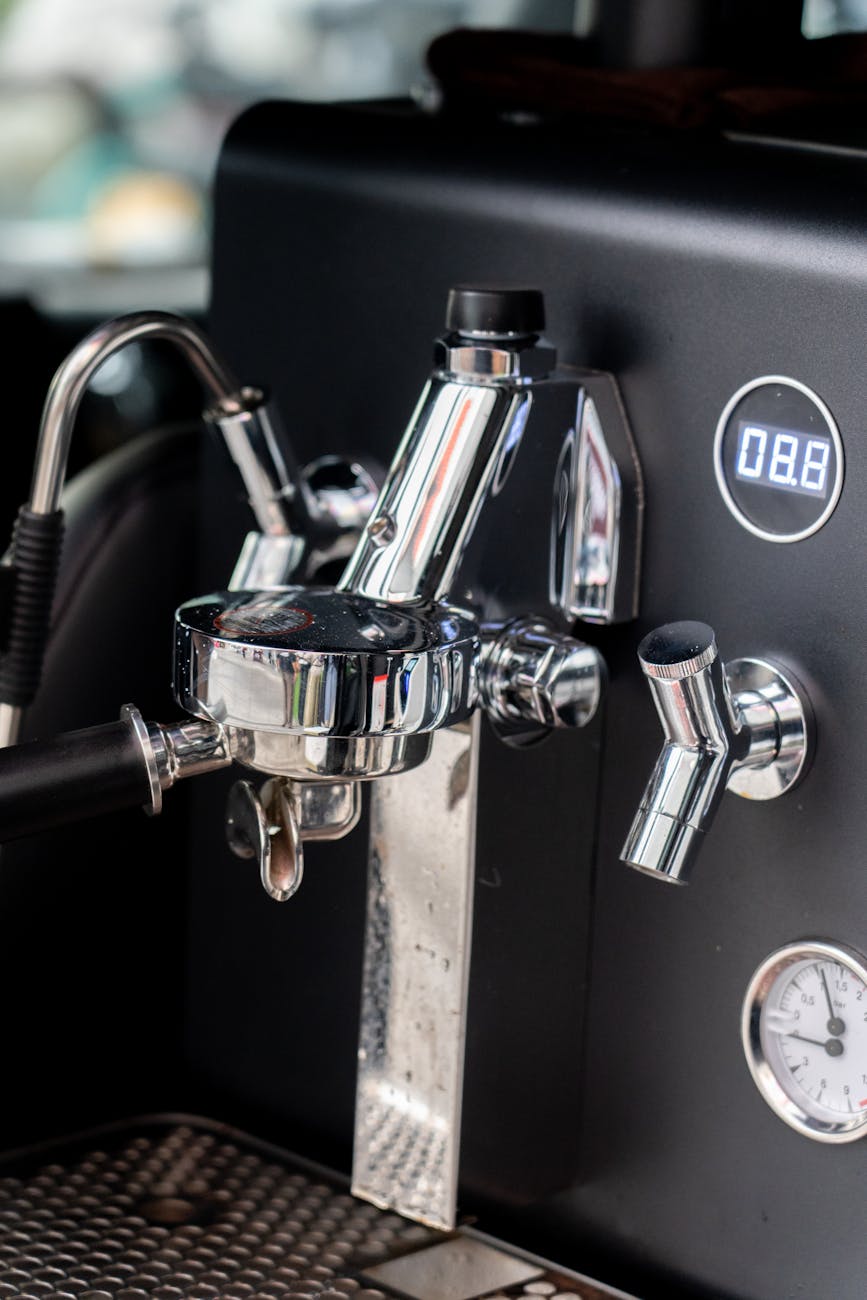
How E61 pre-infusion creates a better espresso shot
The iconic E61 group head is more than just a beautiful piece of chrome; it’s a marvel of mid-century engineering that fundamentally changed espresso. While often praised for its thermal stability, its most celebrated feature is the subtle, mechanical pre-infusion it provides. When brewing espresso, slamming a dry, compressed puck of coffee with nine bars of pressure is a recipe for disaster, often leading to a flawed extraction. This article will delve into the brilliant mechanics of the E61 group head, exploring exactly how its design allows for a gentle, low-pressure pre-infusion. We will uncover how this initial phase softens and saturates the coffee puck, preparing it for full pressure and paving the way for a more balanced, delicious, and consistent shot of espresso.
The challenge of high pressure extraction
To understand the genius of the E61, we must first appreciate the problem it solves: channeling. An espresso puck is a densely packed bed of finely ground coffee. The goal of extraction is to force hot water through it evenly, dissolving the desired flavor compounds. However, when the full nine bars of pressure from the pump hit this dry puck instantaneously, the water will aggressively seek the path of least resistance. If there are any imperfections in the puck—a tiny crack from a slightly uneven tamp, a less dense area from clumpy grounds, or a microscopic fissure—the water will exploit them. This creates a “channel,” a small pathway where water flows much faster than through the rest of the puck. The coffee in this channel becomes over-extracted, leading to bitter and harsh flavors. Meanwhile, the denser, surrounding areas are under-extracted, contributing sour and weak notes to the final cup. The result is an unbalanced and often unpleasant shot that fails to represent the coffee’s true potential.
Introducing the E61 group head’s genius
The E61 group head, patented in 1961, was designed with a clever mechanical solution to the problem of channeling. Its operation is controlled by a camshaft activated by the familiar brew lever. Inside this heavy brass component is a system of valves and a small chamber known as the pre-infusion chamber. Unlike modern machines that might use electronic controls or flow profiling, the E61’s pre-infusion is entirely mechanical, relying on the physical movement of water and the time it takes to fill this internal chamber. When the barista lifts the lever, the pump is activated, but the design ensures that full pressure isn’t immediately applied to the coffee. Instead, a gentler, preliminary phase begins, setting the stage for a more uniform and forgiving extraction process. This built-in feature is the key to the E61’s enduring legacy and its reputation for producing smooth, rich espresso.
The mechanics of softening the puck
The magic happens in the first few seconds after lifting the E61’s brew lever. Here is a step-by-step breakdown of how the puck is softened:
- Initial water flow: As the lever is raised, it opens a valve that allows water from the boiler or heat exchanger to enter the group head. However, the brew valve that leads directly to the shower screen is not yet fully open.
- Slow pressure build-up: The water first flows into the pre-infusion chamber within the group head. During this time, only a low level of pressure—often just the static line pressure from your water supply (around 3-4 bars) or a slowly ramping pressure from the pump—reaches the coffee puck.
- Gentle saturation: This low-pressure water gently seeps into the dry coffee grounds. Instead of violently forcing its way through, it allows the puck to become slowly and evenly saturated from top to bottom. As the coffee grounds absorb this water, they begin to swell.
- Creating uniformity: This swelling is crucial. It helps to fill any micro-fissures or less dense spots within the puck, effectively healing the imperfections from puck preparation. This creates a more uniform and stable structure that is better prepared to withstand the intense pressure to come.
Only after this pre-infusion chamber is completely filled does the internal mechanism allow full pump pressure to build and be applied to the now-saturated and softened coffee puck. This entire process typically lasts between 4 to 8 seconds, providing a critical buffer that transforms the extraction.
The tangible results in the cup
A properly softened and saturated coffee puck directly translates to a superior espresso shot. By eliminating the primary cause of channeling, the E61’s mechanical pre-infusion ensures a much more even extraction. Water flows uniformly through the entire bed of coffee, extracting sugars, oils, and acids at a more controlled rate. This prevents the simultaneous over-extraction and under-extraction that plagues shots with channeling. The result in the cup is immediately noticeable: the harsh edges of bitterness and sourness are rounded off, replaced by a more pronounced sweetness and a fuller, richer body. The flavors are more integrated and complex, and the overall shot is significantly more consistent from one brew to the next. This forgiving nature makes the E61 a favorite among both home enthusiasts and professional baristas, as it provides a robust foundation for delicious espresso.
Pressure stages of a typical E61 shot
| Stage | Approximate Pressure | Puck State | Typical Duration |
|---|---|---|---|
| Pre-infusion | 1-4 bars | Dry -> Saturating & Swelling | 4-8 seconds |
| Full Extraction | 9 bars | Fully Saturated & Compacted | 20-30 seconds |
| Pressure Release | 0 bars | Drained | N/A |
As the table illustrates, the dedicated low-pressure pre-infusion stage is a distinct and vital part of the E61 brewing process, fundamentally changing the condition of the puck before the main extraction even begins.
In conclusion, the E61’s pre-infusion system is a testament to elegant and effective mechanical design. By addressing the fundamental challenge of applying high pressure to dry coffee, it creates a more forgiving brewing environment. The article detailed how channeling can ruin a shot by causing uneven extraction, leading to a mix of bitter and sour flavors. We then explored the E61’s mechanical solution: a pre-infusion chamber that allows low-pressure water to gently saturate and swell the coffee puck. This softening process seals imperfections and creates a uniform bed for extraction. The final, tangible result is a more balanced, sweet, and consistent espresso shot. This simple yet profound feature is a primary reason why the E61 group head remains a benchmark for quality and a beloved component in the world of specialty coffee.
 No products in the cart.