

The simplest trick for better espresso: Why your portafilter needs to warm up
Every home barista dreams of pulling that perfect, syrupy shot of espresso—the kind that rivals your favorite café. You invest in a quality machine, a capable grinder, and fresh beans. You meticulously weigh your dose and time your shot. Yet, inconsistency can still be a frustrating reality. Often, the culprit isn’t your technique or your gear, but a simple, overlooked step in your preparation ritual: preheating your portafilter. Many of us leave it sitting on the counter or drip tray while the machine warms up, unaware that this cold, heavy piece of metal is silently sabotaging our shots. This article will delve into the science of thermal stability and explain why locking your portafilter into the group head during warm-up is a non-negotiable step for achieving consistently delicious espresso.
The science of heat and extraction
At its core, pulling a shot of espresso is a process of controlled extraction. We use hot, pressurized water to dissolve specific flavor compounds from finely-ground coffee. The single most important variable in this process, after the coffee itself, is temperature. Even a change of one or two degrees Celsius can dramatically alter which compounds are dissolved, and therefore, how the final shot tastes.
This is where the concept of thermal stability comes in. A thermally stable espresso machine is one that can maintain a consistent water temperature from the boiler all the way to the coffee puck. If the temperature fluctuates, your extraction becomes a guessing game. A cold portafilter is the biggest enemy of thermal stability. It’s a massive, dense piece of brass or stainless steel that acts like a heat sink, instantly robbing the brew water of its critical thermal energy the moment it leaves the group head. This sudden temperature drop is a recipe for a bad shot.
How a cold portafilter ruins your coffee
Imagine trying to sear a steak in a cold frying pan. No matter how hot the stove is, the cold metal will instantly cool down, preventing a proper sear and resulting in a grey, steamed piece of meat. The exact same principle applies to your espresso. When the 93°C (200°F) water from your machine hits a room-temperature portafilter, its temperature can plummet by as much as 10°C (18°F) before it even reaches the coffee grounds.
This drastic temperature drop has one primary effect: under-extraction. The water is no longer hot enough to effectively dissolve the desirable sugars and oils that create a sweet, balanced, and rich espresso. Instead, it primarily extracts the acids, which dissolve more easily at lower temperatures. The result is a shot that tastes overwhelmingly sour, thin, and hollow. You lose all the potential complexity, sweetness, and body of the beans you so carefully selected.
The correct way to preheat your equipment
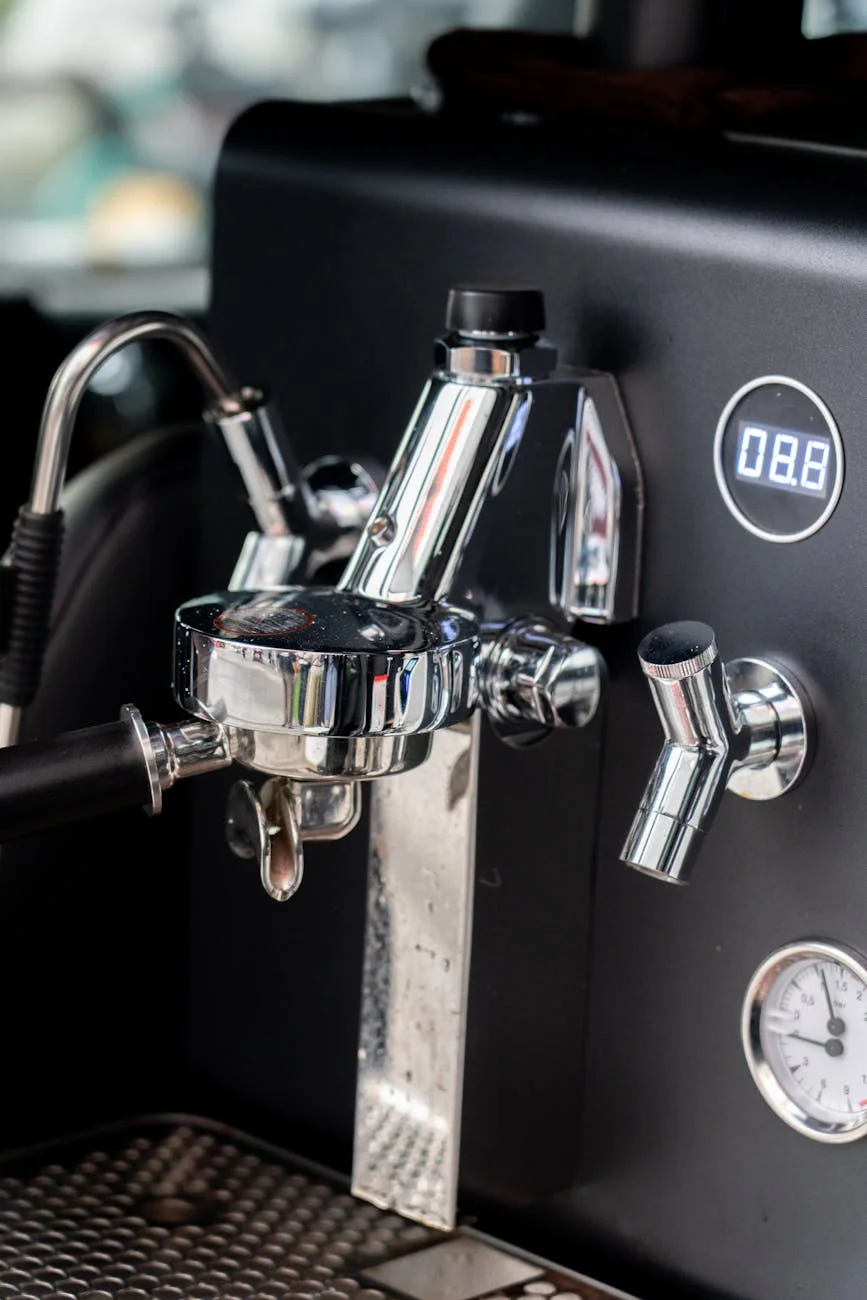
So, how do you combat this thermal shock? The solution is simple and elegant: use the machine to heat the portafilter for you. As soon as you turn your espresso machine on, lock the empty portafilter firmly into the group head. Don’t just rest it on top; lock it in as if you were about to pull a shot. The group head is designed to be the most temperature-stable part of the machine, and by making direct metal-to-metal contact, the portafilter will slowly and thoroughly absorb its heat.
Some people try a shortcut by running a “blank shot” of hot water through a cold portafilter right before dosing. While this is better than nothing, it’s a superficial fix. It only heats the very surface of the metal and the basket, leaving the deep mass of the portafilter cold. A full warm-up of at least 15-20 minutes with the portafilter locked in ensures that the entire assembly—from the handle lugs to the spout—reaches a stable, uniform temperature, ready to brew.
The tangible results: Consistency and flavor
Integrating this one simple step into your routine elevates your espresso from a game of chance to a repeatable craft. By preheating your portafilter correctly, you eliminate one of the biggest variables that causes shot-to-shot inconsistency. Every time you brew, you can be confident that your water temperature is what it’s supposed to be. This allows you to more accurately dial in your grind size and dose, as you are no longer fighting a moving target.
The difference in the cup is immediate and profound. Shots become sweeter, more balanced, and express the true flavor profile of the bean. The unpleasant sourness disappears, replaced by a richer body and a more satisfying aftertaste. The following table illustrates the clear difference this technique makes.
| Feature | Cold Portafilter | Preheated Portafilter |
|---|---|---|
| Initial Brew Temperature | Significant drop (up to 10°C) | Stable, close to target |
| Extraction Result | Under-extracted | Balanced and complete |
| Dominant Flavor Profile | Sour, acidic, thin body | Sweet, complex, rich body |
| Shot Consistency | Inconsistent and unpredictable | Repeatable and reliable |
In the pursuit of perfect espresso, we often focus on complex variables like pressure profiling and water chemistry. However, the foundation of any great shot is proper thermal management. Leaving your portafilter to warm up in the group head is the easiest, most impactful change you can make to your workflow. This single, zero-cost adjustment ensures that your meticulously prepared coffee puck meets water at the correct temperature, unlocking a new level of flavor and consistency. It transforms the portafilter from an instrument of thermal chaos into a stable part of the brewing system. Make it a habit, and you’ll find that your daily espresso ritual becomes far more rewarding and, most importantly, delicious.


 No products in the cart.