

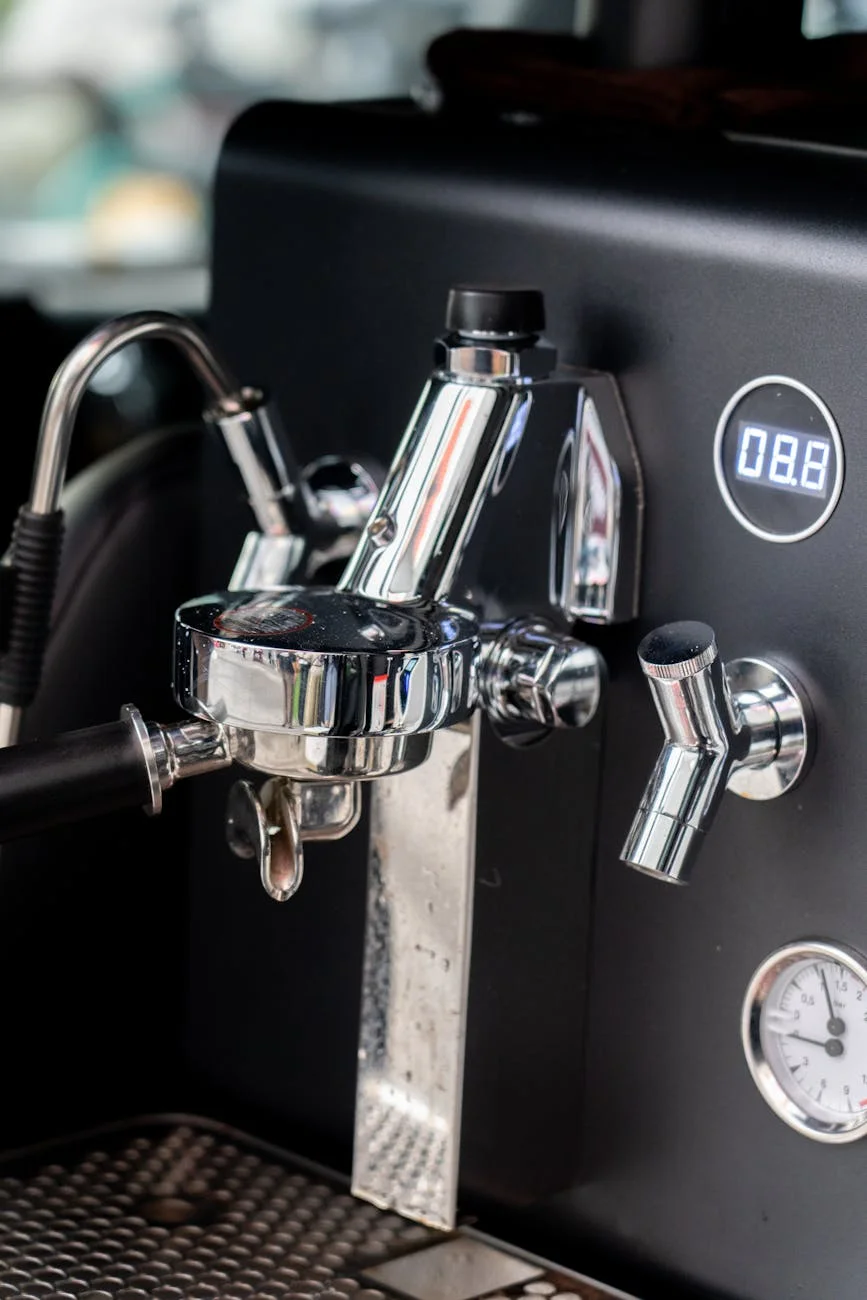
Understanding the E61 thermosyphon: How it controls brew temperature
For many coffee enthusiasts, the sight of a gleaming E61 group head is a hallmark of a serious espresso machine. Patented by Faema in 1961, this iconic piece of engineering is more than just a beautiful chrome-plated fixture; it’s a masterclass in thermal management. At the heart of its legendary performance lies a clever, passive system known as the thermosyphon. While it may sound complex, this system is the key to the temperature stability that allows baristas to pull consistent, delicious shots of espresso time after time. In this article, we’ll demystify the E61 thermosyphon, exploring its mechanics, its crucial role in the brewing process, and how understanding it can help you master your machine.
The anatomy of an icon: The E61 group head
Before we can dive into the fluid dynamics of the thermosyphon, it’s essential to understand the stage on which it performs: the E61 group head itself. Far from being a simple spout for water, the E61 is a substantial component, typically cast from over nine pounds (or four kilograms) of solid brass. This sheer mass is its first secret weapon. Brass is an excellent material for retaining heat, and this heavy block acts as a powerful thermal sink, designed to hold a stable temperature and resist fluctuations. When you lock your portafilter into an E61, you’re connecting it to a huge, pre-heated mass, which is the first step in avoiding temperature loss during extraction.
Internally, the group head features a complex maze of chambers and valves, operated by the familiar side lever. This mechanism controls water flow and enables a unique form of passive pre-infusion. But most importantly for our topic, it’s connected to the machine’s boiler by two distinct copper pipes: one positioned higher and one lower. These two pipes are the entry and exit points for the thermosyphon loop, creating a dedicated circulatory system designed with one primary goal: to keep that massive block of brass perpetually hot and ready to brew.
The physics of flow: How the thermosyphon works
The thermosyphon is a brilliant example of passive engineering, relying on a fundamental principle of physics: convection. It operates without any pumps or moving parts, using the natural behavior of water at different temperatures. We all know that hot air rises, and the same is true for water. When water is heated, it becomes less dense and will naturally rise above the cooler, denser water around it.
The E61 thermosyphon leverages this simple fact to create a continuous loop:
- Super-heated water at the top of the espresso machine’s boiler is less dense, causing it to rise into the upper copper tube connected to the group head.
- This hot water flows through the internal chambers of the massive E61 group, transferring its thermal energy and heating the surrounding brass.
- As the water loses heat to the group head, it becomes slightly cooler and denser.
- Gravity then takes over, and this cooler, denser water sinks down and flows through the lower copper tube, returning to the bottom of the boiler.
- Once back in the boiler, the water is reheated, becomes less dense again, and rises to repeat the cycle.
This endless, silent circulation ensures that the group head is constantly being replenished with hot water, keeping it at a stable idle temperature that’s closely related to the temperature inside the boiler.
From stable to precise: The impact on brew temperature
So, why is this constant heating so critical? Imagine trying to brew espresso with a cold group head. The moment the 200°F (93°C) water from the boiler hits that cold metal, its temperature would plummet, leading to a sour, under-extracted shot. The thermosyphon’s primary job is to eliminate this “temperature shock.” By keeping the group head hot, it ensures that the water loses minimal heat on its journey from the boiler to the coffee puck.
However, this constant circulation can make the group head too hot when left idle, with water temperature creeping above the ideal brewing range. This is where a key barista technique comes into play: the cooling flush. Before pulling a shot, the barista will run the pump for a few seconds without the portafilter locked in. You’ll often see sputtering, steaming water at first—this is the super-heated water exiting the group. The flush purges this overly hot water and draws fresh, brew-temperature water from the boiler, stabilizing the group at the perfect temperature for extraction. Mastering the cooling flush is a rite of passage for any E61 owner and is the active part of managing this otherwise passive system.
Variations and control: Fine-tuning the flow
While the principle of the thermosyphon is universal across all E61 machines, manufacturers can implement subtle variations to alter its behavior. One of the most common modifications is the inclusion of a flow restrictor (also known as a gicleur or jet) within the thermosyphon circuit, usually in the upper tube. This component is a small plug with a precisely drilled hole that narrows the pathway for the water.
By slowing down the rate of water circulation in the loop, a restrictor causes the group head to idle at a lower, more stable temperature. This significantly reduces the amount of super-heating that occurs, making the machine more forgiving and requiring a much shorter cooling flush. This modification is particularly popular in home-barista machines, as it offers greater temperature stability and repeatability without demanding the constant attention required by a wide-open, commercial-style thermosyphon.
| Feature | Standard thermosyphon (no restrictor) | Restricted thermosyphon |
|---|---|---|
| Water flow rate | High | Low |
| Idle group temperature | Very hot (often super-heated) | Hot, but closer to brew temp |
| Cooling flush required | Longer (5-10 seconds) | Shorter (2-4 seconds) |
| Recovery time | Faster | Slower |
| Best for | Commercial environments; back-to-back shots | Home use; consistency and ease of use |
Conclusion: The genius of passive stability
The E61 thermosyphon is a testament to timeless engineering, a system that solves one of espresso’s greatest challenges—temperature stability—with elegant simplicity. By harnessing the natural principles of convection, it creates a self-regulating heating loop that keeps the massive brass group head at an optimal temperature for brewing. This passive circulation prevents the catastrophic temperature loss that would otherwise ruin a shot, laying the foundation for consistent and repeatable extraction. While it requires a degree of user skill, particularly in managing the cooling flush, understanding the thermosyphon transforms the E61 from a mysterious chrome relic into a precise tool. It’s this blend of passive stability and active control that has cemented the E61’s legacy and ensures its relevance decades after its invention.


 No products in the cart.