

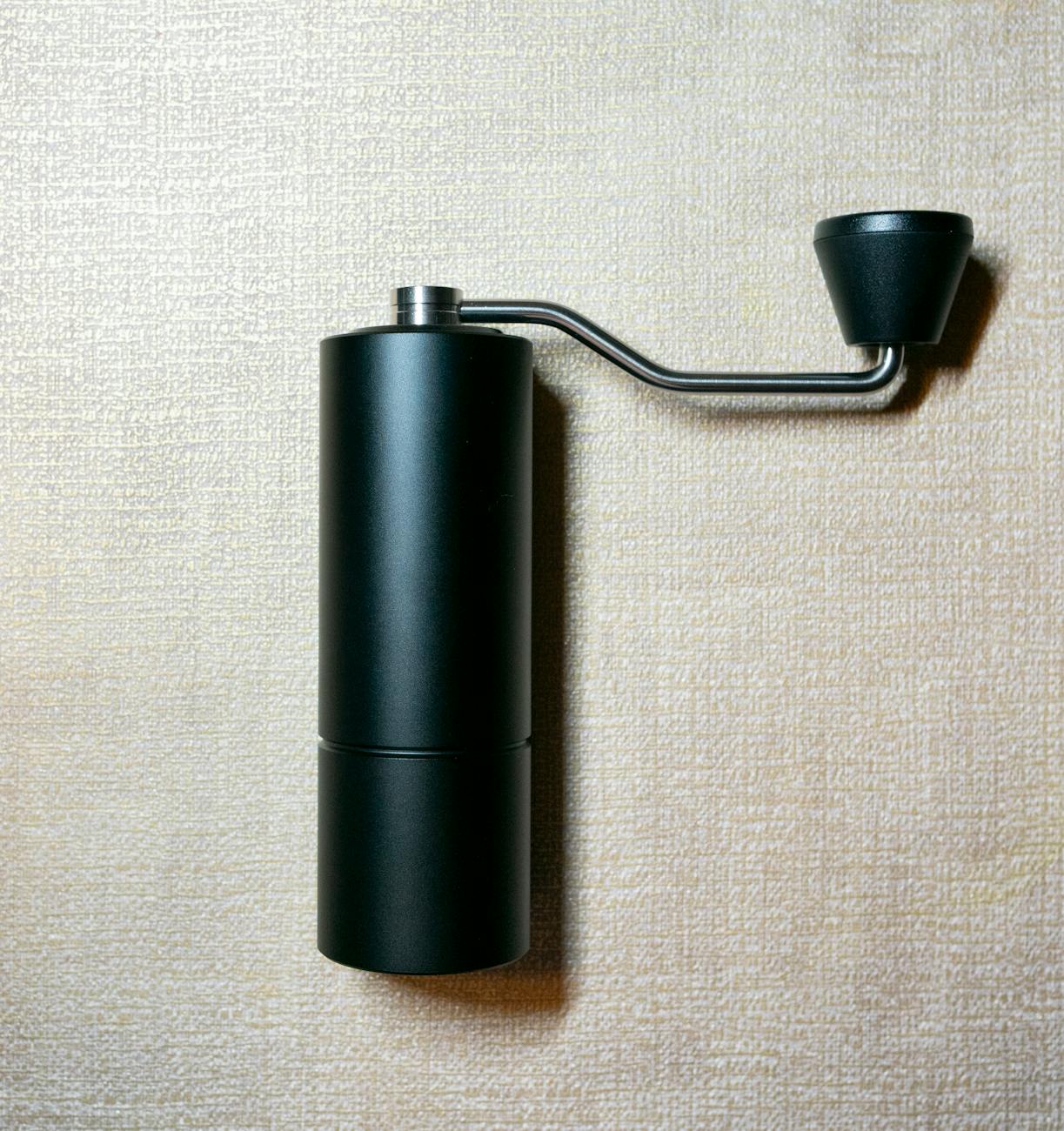
The journey to brewing exceptional espresso at home is filled with variables, from the freshness of your beans to the temperature of your water. However, seasoned baristas agree that the single most important piece of equipment for mastering espresso is a high-quality grinder. Your espresso machine can only work with what it’s given, and the grinder’s job is to provide a consistent and precise coffee ground. A critical, yet often overlooked, feature of any grinder is its adjustment mechanism. This choice boils down to a fundamental debate: stepless vs. stepped adjustments. Understanding this difference is not just technical jargon; it’s the key to unlocking your coffee’s full potential and gaining ultimate control over your extraction.
What are stepped adjustments?
A stepped grinder, as the name implies, operates with a series of predefined settings or “steps.” When you adjust the grind size, you’ll feel a distinct click as you move from one setting to the next. Think of it like a gear shifter on a bicycle; you have a fixed number of gears, and you can’t be in between them. These grinders typically have a numbered dial, making it incredibly easy to remember your settings and switch between them with perfect repeatability. For example, you might know that setting 8 is for your espresso, while setting 20 is perfect for your French press.
The primary advantage of this system is its simplicity and ease of use. It’s fantastic for beginners who are just starting to dial in their shots. The ability to switch between different brew methods and return to the exact same espresso setting is a major convenience. However, this simplicity comes with a significant trade-off. The perfect grind size for a particular coffee bean might lie between two of the grinder’s available steps. You may find that setting 8 is slightly too fine, causing your shot to choke, while setting 9 is too coarse, resulting in a fast, sour extraction. You are forced to compromise, leaving potential flavor locked inside the bean.
The world of stepless adjustments
Stepless grinders exist on the opposite end of the spectrum. Instead of fixed clicks, their adjustment mechanism is continuous, much like a volume knob or a dimmer switch. There are no predefined steps, offering a virtually infinite number of grind settings between the coarsest and finest points. This design gives the user unparalleled control over the final particle size of the coffee grounds. You are no longer limited by the manufacturer’s chosen settings; you have the power to make minuscule, micro-adjustments to find the absolute sweet spot for your espresso.
This level of precision is the main reason why stepless grinders are the preferred choice for espresso purists and specialty coffee shops. When dialing in a shot, tiny changes in grind size can have a massive impact on extraction time and flavor. A stepless grinder allows you to tweak the grind to perfectly nail your target shot time, compensating for variables like bean age, ambient humidity, or a change in dose. The downside is a steeper learning curve. Without distinct numbers, it can be harder to remember a precise setting, and switching between drastically different grind sizes (like from espresso to filter) can be more tedious and less repeatable.
How this choice impacts your daily espresso
The difference between these two systems becomes crystal clear when you’re standing in front of your espresso machine. Let’s imagine you’re dialing in a new bag of beans. Your goal is a shot that runs for about 28 seconds.
- With a stepped grinder, your first shot at setting 10 runs in 35 seconds (too fine). You click to setting 11, and the next shot runs in just 20 seconds (too coarse). You’re stuck. To fix this, you now have to change other variables, like adding more coffee to the basket (adjusting the dose) or tamping harder. You are compensating for the grinder’s limitation, not truly optimizing the grind.
- With a stepless grinder, you have a different experience. Your first shot runs in 35 seconds. Instead of a large click to the next setting, you make a tiny turn on the adjustment collar. Your next shot runs in 31 seconds. Another tiny nudge, and the next one hits a perfect 28 seconds. You have used the grind size as your primary, most effective tool for dialing in, leading to a more balanced and delicious extraction.
Ultimately, a stepless system empowers you to make the grind the central variable in your recipe, while a stepped system can sometimes force the grind into a supporting role where you have to adjust other factors around it.
Stepped vs. stepless: A direct comparison
Choosing the right grinder depends entirely on your goals, habits, and budget. There is no single “best” option, only the best option for you. To simplify the decision, let’s break down the key characteristics of each system in a table.
| Feature | Stepped Grinder | Stepless Grinder |
|---|---|---|
| Precision | Limited to predefined settings. | Infinite. Allows for micro-adjustments. |
| Ease of use | Very high. Simple to understand and operate. | Moderate. Requires more practice to master. |
| Repeatability | Excellent. Easy to return to a previous setting. | Lower. Can be difficult to find the exact same spot. |
| Versatility | Great for switching between different brew methods. | Best for dedicating to a single brew method, like espresso. |
| Ideal user | Beginners, multi-brew users, those who value convenience. | Espresso enthusiasts, perfectionists, home baristas. |
If you are new to home espresso or you know you’ll be frequently switching between espresso and pour-over, a stepped grinder offers a forgiving and straightforward experience. If your passion is solely focused on pulling the perfect espresso shot and you relish the process of fine-tuning every variable, a stepless grinder is an indispensable tool that will grow with your skills.
In conclusion, the debate between stepless and stepped grinders is a classic case of precision versus convenience. Stepped grinders provide a user-friendly experience with their fixed, repeatable settings, making them an excellent choice for beginners or those who enjoy multiple brewing methods. Their main drawback is the potential inability to find that perfect “in-between” grind size. On the other hand, stepless grinders offer the infinite control required for espresso perfection, allowing for micro-adjustments that can transform a good shot into a great one. This precision comes at the cost of a steeper learning curve and less convenience for switching settings. The right choice is personal; it hinges on whether you prioritize a simple, repeatable workflow or the ultimate control to chase the perfect extraction.
 No products in the cart.