

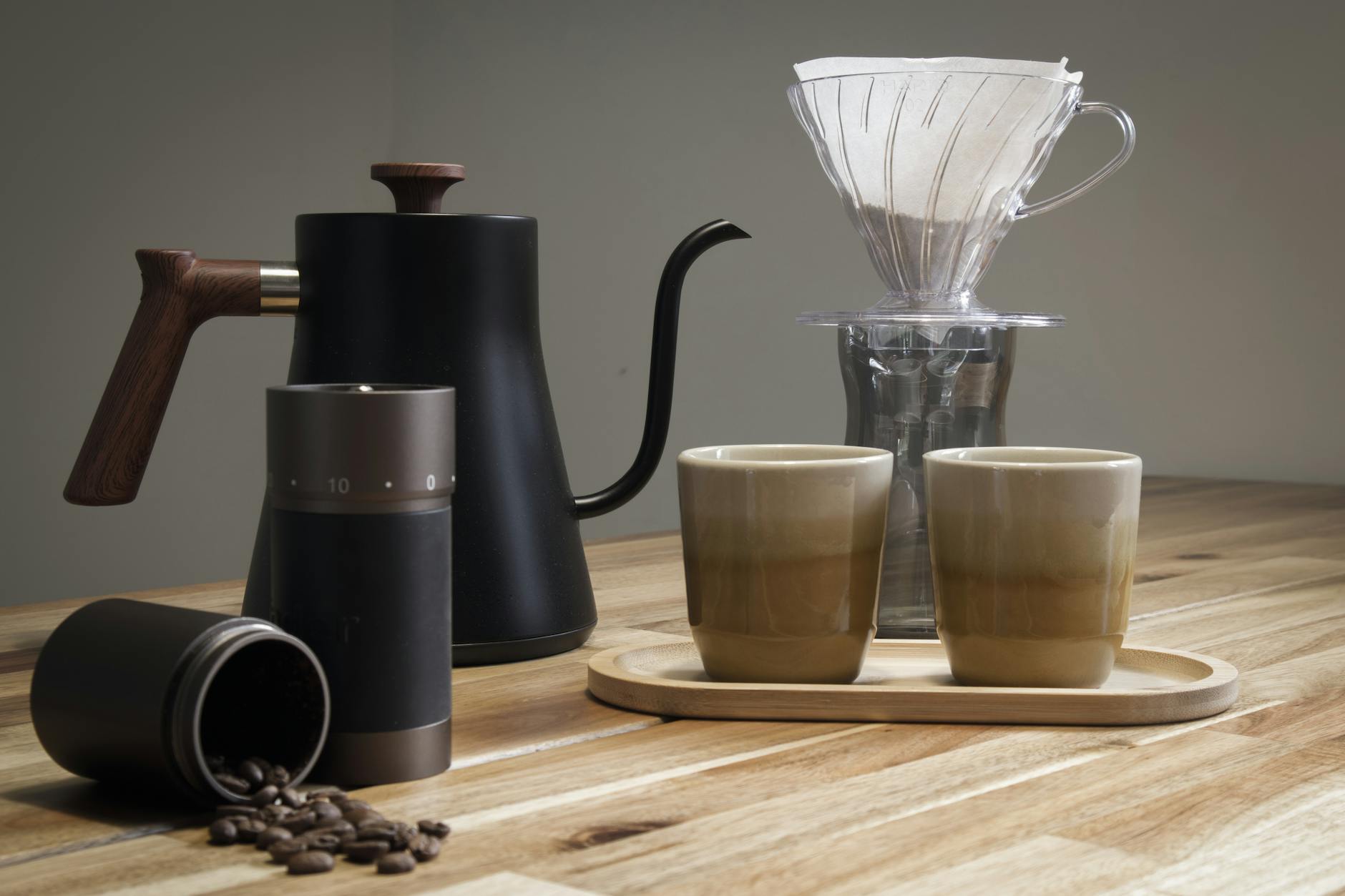
The secret to perfect espresso: Why your grinder matters more than your machine
Many aspiring home baristas dream of the gleaming chrome centerpiece: a high-end espresso machine. It’s easy to believe that this powerful machine is the key to unlocking café-quality coffee at home. However, seasoned coffee professionals know a different truth. The most critical component in your espresso setup isn’t the machine that pushes the water, but the grinder that prepares the coffee. An exceptional grinder paired with a modest machine will consistently outperform a top-of-the-line machine hobbled by a poor grinder. This article will delve into why your grinder is the unsung hero of your espresso, controlling the very foundation of extraction, from particle consistency to pressure dynamics, ultimately defining the flavor in your cup.
The foundation of extraction: Grind consistency
At its core, making espresso is an act of extraction. Hot, pressurized water flows through a tightly packed bed of ground coffee, dissolving solids and oils that create the final beverage. The success of this process hinges on one word: consistency. A quality espresso grinder produces coffee particles that are remarkably uniform in size. A cheap or inadequate grinder, on the other hand, creates a chaotic mix of large particles (often called “boulders”) and fine, dust-like particles (called “fines”).
This inconsistency is a recipe for a bad-tasting shot. During extraction, the water will over-extract the tiny fines, pulling out bitter and astringent compounds. Simultaneously, it will flow right past the large boulders, under-extracting them and leaving behind their sweet, acidic flavors. The result is a cup that is somehow both sour and bitter at the same time, with no balance or clarity. No matter how stable the temperature or pressure of your espresso machine, it cannot fix an uneven extraction caused by an inconsistent grind.
Controlling the flow: Surface area and brew time
Espresso is unique because it happens incredibly fast, typically in just 25-30 seconds. To extract a full range of flavor in such a short window, you need to maximize the surface area of the coffee that the water can interact with. This is achieved by grinding the coffee very finely.
Herein lies the second critical job of the grinder: precision. Dialing in an espresso shot involves making tiny adjustments to the grind size to control how fast the water flows through the coffee puck. A slightly finer grind increases the surface area and packs more tightly, slowing the shot down. A slightly coarser grind does the opposite, speeding it up. A good espresso grinder allows for micro-adjustments, either through a “stepless” mechanism or one with very small, incremental steps. This fine control is impossible with entry-level grinders, which often have large, clunky steps. You might find that one setting chokes the machine (too slow) and the very next setting produces a watery “gusher” (too fast), with no way to find the sweet spot in between.
Building pressure: The puck is the gatekeeper
It’s a common misconception that the espresso machine’s pump creates all the pressure for extraction. While the pump provides the force (typically 9 bars), the pressure itself is built by the resistance from the puck of coffee. Think of it like putting your thumb over the end of a garden hose. The water supply is constant, but the pressure builds behind your thumb.
In espresso, the finely ground, evenly distributed, and well-tamped coffee puck is your thumb. If the grind is inconsistent or too coarse, the water will exploit weak spots and carve “channels” through the puck, avoiding most of the coffee. This channeling results in a fast, blond, and severely under-extracted shot, no matter how much power your machine has. A quality grinder provides the uniform particles necessary to create a dense, homogenous puck that can withstand the machine’s pressure, forcing the water to saturate the grounds evenly. This synergy between the machine’s force and the puck’s resistance is what produces a rich, syrupy, and delicious espresso.
Choosing your weapon: What makes a good espresso grinder
Understanding the “why” naturally leads to the “what.” So, what separates a capable espresso grinder from a basic coffee grinder? It starts with the mechanism. Blade grinders, which smash beans with a spinning blade, are out of the question for espresso due to their complete lack of consistency. The gold standard is a burr grinder, which uses two revolving abrasive surfaces to crush beans into a uniform size.
Within burr grinders, you’ll find different types (like conical and flat burrs, which can subtly affect flavor) and, more importantly, different levels of quality. A true espresso grinder is built with precision-engineered burrs, a powerful motor, and a fine-threaded adjustment mechanism for dialing in the perfect shot. It is an investment in control and repeatability.
| Feature | Entry-level grinder | Espresso-capable grinder |
|---|---|---|
| Grinding mechanism | Blade or low-quality ceramic/steel burrs | High-quality hardened steel or ceramic burrs |
| Grind consistency | Poor to fair (high variance in particle size) | Excellent (uniform particle size) |
| Adjustment type | Stepped (large jumps between settings) | Stepless or micro-stepped (infinite or very fine control) |
| Impact on shot | Unpredictable, channeling, sour and bitter taste | Consistent, balanced, and repeatable results |
Conclusion: Invest in the cause, not the effect
In the world of espresso, the grinder is the cause and the shot in the cup is the effect. A great grinder gives you precise control over the key variables that define extraction: the uniformity of the coffee particles, the total surface area available to the water, and the puck’s ability to create resistance and build pressure. It transforms your coffee beans into a predictable medium that your espresso machine can work with. While a high-end machine offers benefits like temperature stability and steam power, these features are rendered useless if the foundation—the ground coffee—is flawed. Therefore, when building your home espresso setup, prioritize your budget on the grinder. It is the single most impactful piece of equipment that will elevate your coffee journey.
 No products in the cart.