

Have you ever pulled a perfect-looking espresso shot, only to find it tastes wildly different from what you expected? The answer might lie not in your technique, but much further back in the coffee’s journey: at the farm. The way a coffee cherry is processed—the method used to remove the fruit from the bean inside—fundamentally changes the bean’s density, solubility, and sugar content. This initial step has a massive ripple effect, directly influencing how that coffee behaves under the intense pressure and heat of an espresso machine. Understanding these processing methods is the key to unlocking a coffee’s true potential and mastering your espresso extraction, transforming confusing shots into consistently delicious ones.
The foundation: What is coffee processing?
Before a coffee bean can be roasted, it must be removed from the fruit it grows inside, called a coffee cherry. This is the core of coffee processing. The goal is to strip away the outer skin, the fruity pulp, the sticky mucilage, and a papery layer called parchment, leaving only the green bean. More importantly, the process must dry the bean to a stable moisture level of around 11%. How this is accomplished has a profound impact on the final flavor.
The three primary methods you’ll encounter are Washed, Natural, and Honey. Each one interacts with the bean differently:
- Washed process beans are scrubbed clean of their fruit before drying.
- Natural process beans are dried with the entire fruit still intact.
- Honey process beans are dried with some of the sticky fruit mucilage left on.
These choices aren’t just for flavor; they dramatically alter the physical structure of the bean. A washed bean is typically denser and has a cleaner surface, while a natural bean is more porous and infused with fruit sugars. This directly affects how water flows through the coffee puck during an espresso extraction, dictating the grind size, shot time, and temperature you’ll need to use.
The clean cup: Washed process and its impact on espresso
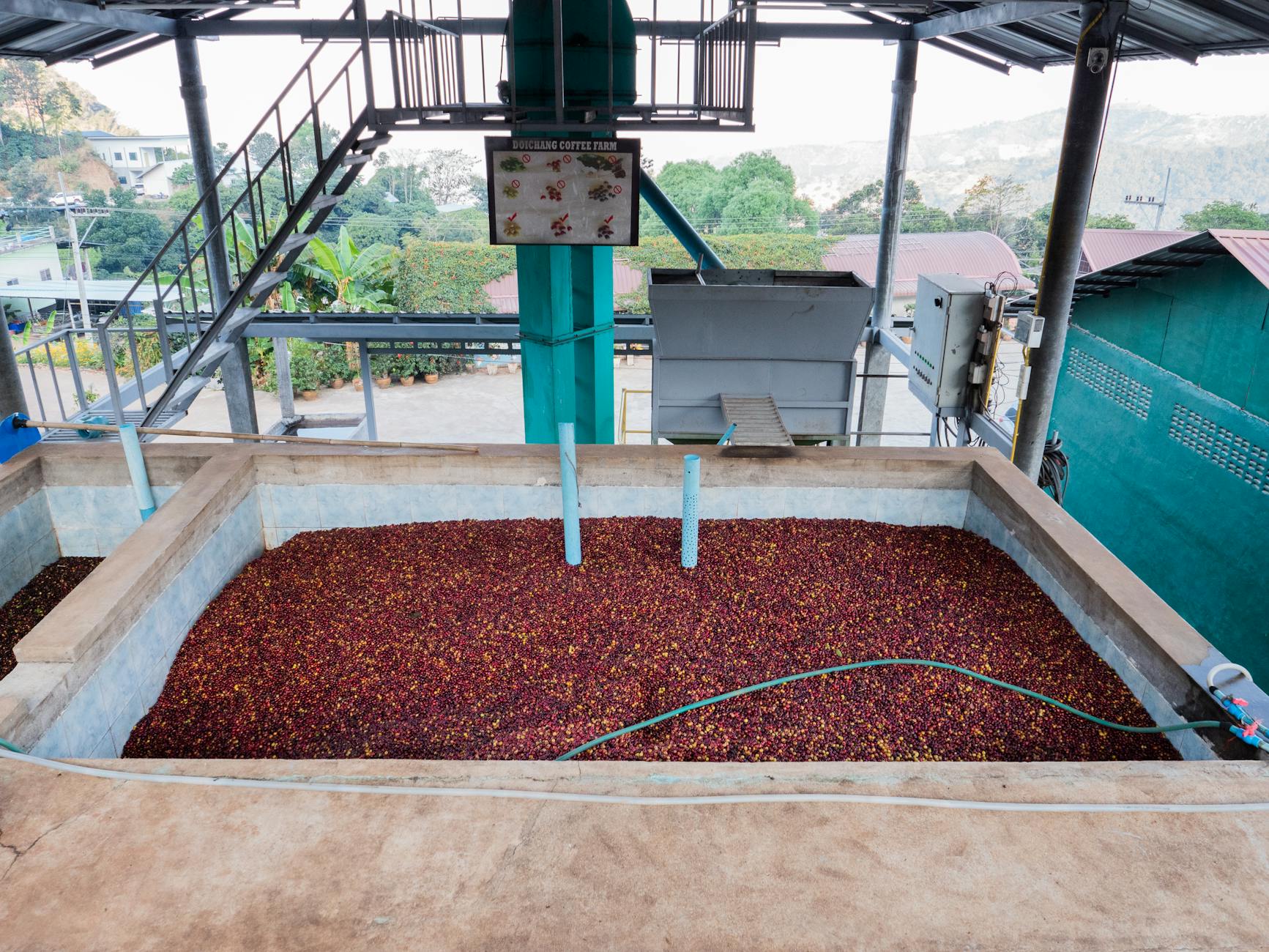
The washed, or wet, process is all about clarity and precision. In this method, the skin and pulp of the coffee cherry are scrubbed off by a machine called a depulper. The beans, still coated in a sticky mucilage layer, are then submerged in fermentation tanks for 12 to 48 hours. This fermentation breaks down the mucilage, which is then washed away with clean water. The result is a squeaky-clean bean that is dried on patios or raised beds.
This “clean” start makes the bean’s inherent qualities shine. Without the influence of the fermenting fruit, the flavors you taste are those of the coffee variety itself and the terroir—the soil, climate, and altitude where it was grown. This leads to beans that are physically denser and have a higher solubility, making them relatively straightforward to extract.
For espresso, this means:
- Grind Size: You can typically grind washed coffees finer without choking your machine. Their high density and solubility allow for an even extraction.
- Extraction: They are forgiving. A standard recipe of a 1:2 ratio (e.g., 18g of coffee in, 36g of liquid out) in 25-30 seconds is a great starting point.
- Flavor: Expect a bright, clean, and crisp shot with vibrant acidity. The body is often lighter, and the flavors lean towards citrus, floral notes, and stone fruit. It’s the perfect process for highlighting a delicate single origin.
The fruit bomb: Natural process and its challenges for extraction
The natural, or dry, process is the oldest and most traditional method. Here, the entire coffee cherry is picked and laid out to dry in the sun, fruit and all. For weeks, the bean inside soaks up the sugars and compounds from the fermenting fruit pulp as it dries. This creates an entirely different set of characteristics compared to a washed coffee.
The prolonged contact with the fruit makes the bean less dense and more porous. It also leaves behind a higher concentration of fruit sugars and fine particles, or chaff. While this creates an explosion of flavor, it makes for a much trickier and more volatile espresso extraction.
When dialing in a natural coffee for espresso:
- Grind Size: You almost always need to grind coarser. The bean’s softer structure and extra chaff can easily compact, causing channeling or completely choking the shot if ground too fine.
- Extraction: Naturals are prone to extracting very quickly. To compensate, baristas often use lower brew temperatures (around 90-92°C or 194-198°F) to avoid pulling out harsh, overly fermented flavors. Longer pre-infusion can also help saturate the puck evenly.
- Flavor: The reward for navigating these challenges is an espresso with a heavy, syrupy body, a thick and stable crema, and intense flavors of ripe berries, tropical fruit, and even wine or chocolate.
The sweet spot: Honey process and finding the balance
The honey process is a hybrid method that aims to capture the best of both worlds. Like a washed coffee, the skin of the cherry is removed. However, like a natural, some or all of the sticky mucilage—the “honey”—is left on the bean as it dries. The amount of mucilage determines the type of honey process (white, yellow, red, and black), with black honey having the most mucilage and being closest to a natural process.
This middle-ground approach results in a bean that has the sweetness and body from the fruit sugars but retains more of the bright acidity and clarity of a washed coffee. Physically, its density and solubility sit somewhere between the other two methods, making its extraction a unique balancing act.
For your espresso machine, a honey process coffee generally requires:
- Grind Size: A setting that is typically coarser than a washed coffee but finer than a natural. It requires careful dialing in to find the sweet spot.
- Extraction: These coffees are more forgiving than naturals but still benefit from close attention. Standard parameters are a good start, but be ready to adjust to highlight their signature sweetness without introducing unwanted fermenty notes.
- Flavor: Expect a well-rounded and exceptionally sweet cup. These espressos often have a creamy, syrupy mouthfeel with notes of brown sugar, ripe stone fruit, and a pleasant, balanced acidity.
Extraction guide by processing method
To help visualize these differences, here is a general guide. Remember that these are starting points, and every coffee is unique!
| Processing method | Bean density | Typical grind setting | Extraction behavior | Flavor in espresso |
|---|---|---|---|---|
| Washed | High / Dense | Fine | Even and forgiving | Clean, bright acidity, floral, light body |
| Natural | Low / Porous | Coarse | Prone to fast shots and channeling | Fruity, winey, funky, heavy body, thick crema |
| Honey | Medium | Medium / In-between | Balanced but requires dialing in | Sweet, syrupy, balanced acidity, creamy body |
Ultimately, coffee processing is the first major decision that shapes a bean’s destiny. As we’ve seen, it’s not just an agricultural step; it’s a practice that fundamentally re-engineers the bean’s physical properties. Washed coffees offer a clean, dense structure that makes for a bright and straightforward extraction. Natural coffees, porous and sugar-infused, are wilder and more challenging, demanding a coarser grind and careful temperature control to unlock their intense fruitiness. Honey-processed coffees sit in that delicious middle ground, balancing sweetness and clarity. The next time you buy a bag of beans, look for the processing method on the label. Knowing whether it’s washed, natural, or honey will be your best guide for dialing in that perfect shot.


 No products in the cart.