

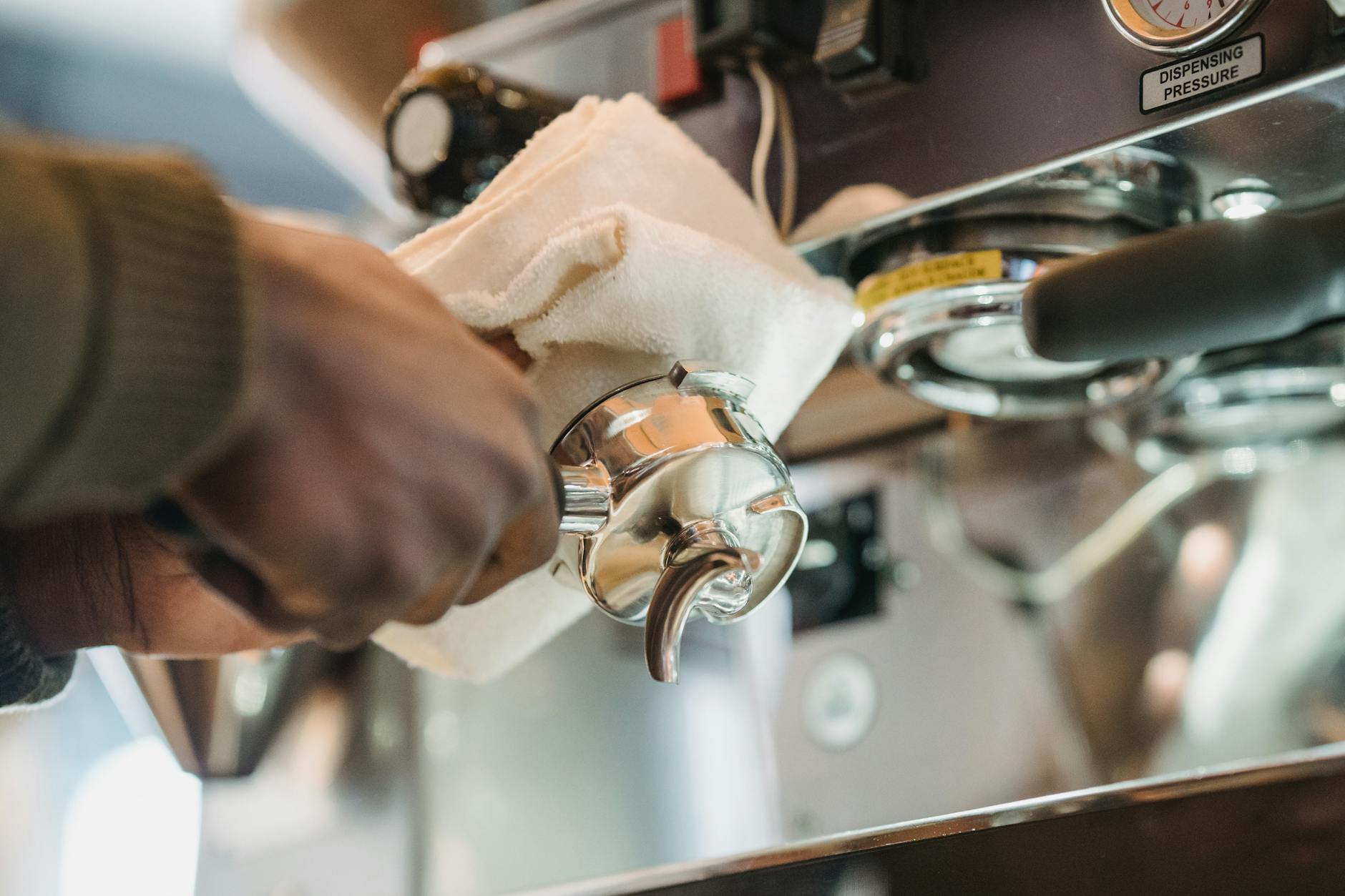
How often should you deep clean a non-removable brew group?
That beautiful, chrome-plated brew group is the heart of your espresso machine. It’s where hot, pressurized water meets finely ground coffee to create the magic in your cup. But for many owners of machines with non-removable brew groups, like the iconic E61, a cloud of uncertainty hangs over maintenance: how often do I really need to deep clean this thing? While daily rinses are common knowledge, the schedule for a more intensive clean can be confusing. Neglecting this crucial task leads to bitter-tasting espresso and can even harm your machine’s longevity. This guide will demystify the process, providing a clear, usage-based schedule for deep cleaning your non-removable brew group to ensure every shot you pull is as delicious as the first.
Why a clean brew group is non-negotiable
Before we discuss the when, it’s essential to understand the why. A non-removable brew group is a complex assembly of metal parts, valves, and channels. Every time you pull a shot, a small amount of coffee oil and microscopic grounds are left behind. At first, this is harmless. Over days and weeks, however, these residues accumulate and turn rancid. This buildup has three major negative effects:
- Taste and aroma: The most immediate impact is on your coffee’s flavor. Rancid oils impart a bitter, metallic, or generally “off” taste that can ruin even the highest quality beans. The crema may be darker and less stable, and the beautiful aroma you expect is replaced by something unpleasant.
- Machine performance: The buildup can clog the tiny holes in your shower screen, leading to uneven water distribution over the coffee puck. This causes channeling, where water finds a path of least resistance, resulting in a shot that is simultaneously under-extracted and over-extracted—sour and bitter at the same time. In machines with a three-way solenoid valve, this gunk can eventually clog the valve, leading to a messy, wet puck and costly repairs.
- Longevity: Coffee residue is acidic and abrasive. Over time, it can cause premature wear on the rubber group gasket, leading to leaks around the portafilter. More seriously, it can contribute to scale buildup and corrosion of internal metal components, shortening the lifespan of your prized machine.
In short, cleaning isn’t just about hygiene; it’s a fundamental part of maintaining the quality of your coffee and protecting your investment.
Daily habits vs. periodic deep cleaning
Effective maintenance isn’t a single action but a routine built from different tasks. It’s crucial to distinguish between the quick, everyday rituals and the less frequent but more thorough deep clean. Think of it like brushing your teeth versus visiting the dentist for a professional cleaning—both are necessary, but they serve different purposes.
Your daily and weekly rituals should include:
- Flushing: Briefly run the pump for 2-3 seconds before locking in your portafilter and immediately after you remove it. This purges old grounds and oils from the shower screen.
- Brushing: After your last shot of the day, use a group head brush to scrub the shower screen and the inside of the group to dislodge stubborn grounds.
- Water backflush (weekly): If your machine has a three-way solenoid valve, performing a backflush with a blind basket and plain water once a week helps keep the internal pathways clear of loose debris.
A deep clean, on the other hand, is a chemical intervention. This process involves using a specialized espresso machine detergent (like Cafiza or Puly Caff) to dissolve the hardened, rancid coffee oils that water alone cannot remove. This is the “reset button” for your brew group, and its frequency is what we need to establish.
Finding your deep cleaning rhythm
There is no single correct answer for how often to perform a detergent backflush. The ideal frequency depends entirely on one factor: how much coffee you make. The more shots you pull, the faster those oils and grounds build up. Using very oily, dark-roasted beans can also accelerate this process. Instead of following a generic “once a month” rule, you should tailor your schedule to your specific usage.
Here’s a simple, usage-based guide to help you find your rhythm. A “deep clean” here refers to backflushing with a chemical detergent.
| Usage level | Typical shots per day | Recommended deep clean frequency |
|---|---|---|
| Light home use | 1-2 | Every 3-4 weeks |
| Moderate home use | 3-5 | Every 2 weeks |
| Heavy home use / Prosumer | 6+ | Every week |
| Small office / Light commercial | 15+ | Every 2-3 days |
Note: If you notice your espresso starting to taste off or see excessive grime when you wipe the shower screen, don’t wait for your scheduled day. A dirty machine is telling you it needs attention. Cleaning a little too often is always better than not cleaning enough.
The step-by-step deep cleaning process
Ready to give your brew group the deep clean it deserves? The process is straightforward and typically takes less than 15 minutes. You’ll need an espresso machine cleaner, a blind basket (a portafilter basket with no holes), and your group head brush.
Here is the procedure for a machine with a three-way solenoid valve:
- Initial rinse: Lock the portafilter with the blind basket into the group head. Run the pump for 10 seconds, then stop. This will discharge water into the drip tray. Remove the portafilter and dump the water. This clears out any loose grounds.
- Add detergent: Place a small amount of espresso machine cleaning powder (usually 1/8 to 1/4 teaspoon) into the blind basket.
- The cleaning cycle: Lock the portafilter back into the group head. Run the pump for about 10 seconds, then stop it. Wait 10-15 seconds. You’ll hear a “whoosh” as the machine discharges the foamy, dirty water into the drip tray. Repeat this cycle 4-5 times. The detergent is being forced up into the group head, dissolving stubborn oils.
- The rinse cycle: Remove the portafilter and rinse it and the blind basket thoroughly. Lock it back into the group head. Now, repeat the 10-second-on, 10-second-off cycle with only clean water. Do this at least 5-10 times, or until the discharged water is completely clear and free of foam. This step is critical to remove all traces of the cleaner.
- Final scrub and shot: Remove the portafilter and use your group brush to scrub the shower screen and gasket one last time. Run the water for a few seconds to flush any remaining particles. To finish, pull a shot of espresso and discard it. This “seasons” the group head and ensures any residual cleaning taste is eliminated.
Your machine is now ready to produce clean, flavorful espresso once again.
Conclusion
Maintaining a non-removable brew group isn’t a chore to be feared but a simple routine that pays huge dividends in flavor and machine health. The key is to move beyond a one-size-fits-all approach and adopt a schedule that reflects your personal use. By integrating daily flushes and weekly water backflushes with a periodic detergent-based deep clean, you take full control of your espresso quality. Remember, the rancid oils and leftover grounds are the biggest enemies of a great-tasting shot. A clean brew group is the foundation of delicious espresso, and by following this guide, you ensure that your machine can consistently perform at its best. This small investment of time is the most important thing you can do to protect your machine and your daily coffee ritual.

 No products in the cart.