

How to achieve better temperature stability during Gaggia extractions
The Gaggia Classic is a legendary entry-level espresso machine, celebrated for its robust build and potential to produce café-quality shots. However, its greatest weakness lies in its temperature instability. The small boiler and simple thermostat create wide temperature swings, making shot-to-shot consistency a significant challenge. If you’ve ever pulled a perfect shot followed by a bitter or sour one, inconsistent brew temperature is likely the culprit. This article will guide you through the essential techniques and modifications, from free “hacks” to transformative upgrades, to help you tame the Gaggia’s thermal fluctuations. By understanding and controlling this critical variable, you can unlock your machine’s true potential and achieve consistently delicious espresso extractions every single time.
Understanding the Gaggia’s heating system
To solve a problem, you first need to understand its cause. The Gaggia Classic’s temperature issues stem directly from its design, specifically its single boiler and bimetallic thermostat. The machine uses a small, aluminum boiler that heats up quickly but also loses heat rapidly. This boiler is controlled by a simple on/off thermostat that works like the one in a basic home oven. It has a wide temperature range, often called a “deadband.”
Here’s how it works: When the water temperature drops below a certain point, the thermostat clicks on, and the heating element engages at full power. The element heats the water and the aluminum boiler, but due to thermal momentum, it overshoots the target temperature before the thermostat clicks off. Now, with the heater off, the boiler begins to cool, dropping well below the ideal range before the thermostat clicks back on to repeat the cycle. This creates a constant temperature roller coaster, with the water in the boiler swinging by as much as 10-15°C (20-30°F). Pulling a shot at the wrong point in this cycle is the primary source of inconsistent extractions.
Mastering the art of temperature surfing
Before you spend any money on upgrades, the most impactful skill you can learn is temperature surfing. This technique is a manual method of timing your shot to coincide with a more consistent and predictable point in the machine’s heating cycle. It costs nothing but a little bit of practice and attention. The goal is to “catch the wave” at the same temperature for every shot, giving you a repeatable baseline.
Follow these steps to temperature surf effectively:
- Warm up properly: Turn your machine on and let it heat up for a minimum of 20 minutes. Keep the portafilter locked into the group head so it heats up along with the machine. A cold portafilter will instantly sap heat from your brew water.
- Initiate the heating cycle: After the machine is warm, purge a few ounces of water through the group head. This will introduce cooler water into the boiler, causing the brew thermostat to kick the heating element on. You’ll know it’s on when the brew-ready light on the front of the machine turns on.
- Wait for the peak: Now, wait. When the ready light turns off, the thermostat has just detected that the boiler has reached the top of its heating cycle. This is your starting signal.
- Time your shot: Immediately after the light turns off, start a timer. The temperature will now begin to fall in a predictable curve. By starting your extraction a set number of seconds after the light goes out, you can hit a consistent temperature every time. A common starting point is to begin pulling your shot 10-15 seconds after the light goes out. For darker roasts that favor cooler temperatures, you might wait 20-25 seconds. For lighter roasts, you might start sooner, around 5-10 seconds.
Experimentation is key. This manual process gives you a surprising amount of control and is the single best way to improve your Gaggia’s consistency without any modifications.
Simple modifications for improved stability
Once you’ve mastered temperature surfing, a few relatively inexpensive hardware modifications can further tighten your temperature stability and improve overall performance. These mods work by increasing the thermal mass of the group head and reducing heat loss from the boiler, creating a more stable environment for your brew water.
A great first upgrade is replacing the stock aluminum shower plate holder with a brass shower plate holder. Brass is much denser than aluminum and has a higher thermal capacity. This means it holds onto heat much better, acting as a heat sink that stabilizes the temperature of the water right as it hits the coffee puck. This simple swap reduces temperature fluctuations at the group head, providing a more stable environment for extraction.
Another effective and easy modification is to insulate the boiler. The Gaggia’s boiler is exposed to the air inside the machine’s casing, causing it to lose heat quickly. You can wrap the boiler in a heat-resistant material like Armaflex or a custom Aerogel insulator. This reduces the rate of heat loss, which in turn causes the heating element to cycle less frequently and makes the temperature swings less dramatic. It’s a simple, low-cost mod that makes the machine more energy-efficient and thermally stable.
The ultimate upgrade: Installing a PID controller
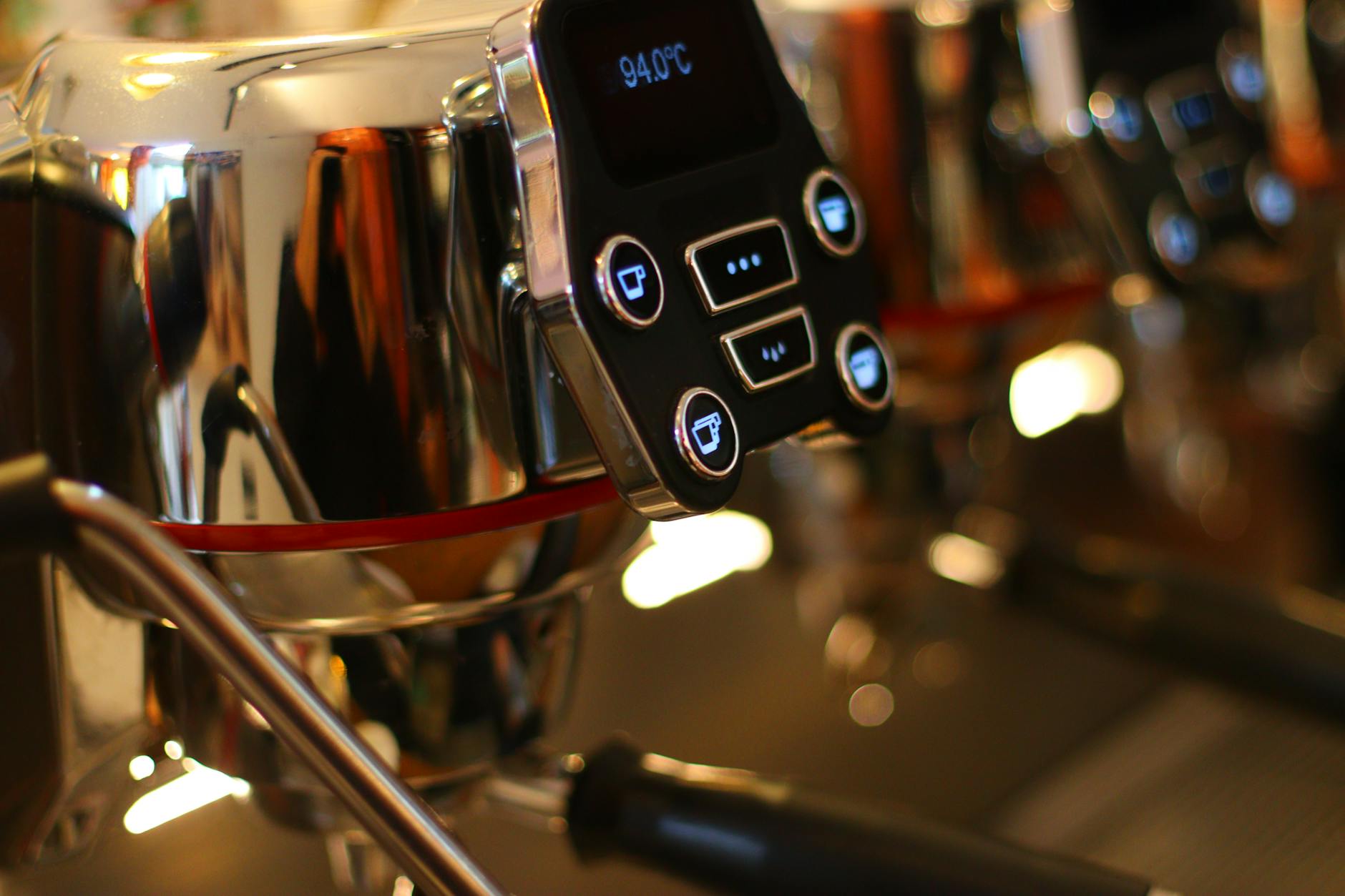
While the previous methods offer significant improvements, the definitive solution to the Gaggia’s temperature instability is installing a PID (Proportional-Integral-Derivative) controller. A PID replaces the machine’s crude on/off thermostat with a sophisticated microprocessor and a more accurate temperature sensor. Instead of letting the temperature swing wildly, the PID intelligently pulses the heating element to hold the boiler temperature with incredible precision, often within a single degree of your set target.
Installing a PID controller completely eliminates the need for temperature surfing. You simply set your desired brew temperature (e.g., 93°C for a medium roast) and the machine holds it there. This unlocks a new level of control and repeatability that is impossible to achieve otherwise. It allows you to precisely dial in your coffee by changing the temperature by a single degree to see how it affects the taste, giving you the kind of control typically reserved for much more expensive machines. While it requires a bit of an investment and some DIY confidence to install, a PID kit transforms the Gaggia Classic from a capable entry-level machine into a true espresso powerhouse.
| Method | Cost | Effort Level | Stability Improvement |
|---|---|---|---|
| Temperature Surfing | Free | Medium (Requires practice) | Moderate |
| Brass Shower Holder | Low | Low (Easy installation) | Minor |
| Boiler Insulation | Low | Low (Easy installation) | Minor |
| PID Controller | Medium-High | High (DIY installation) | Excellent |
In conclusion, taming the Gaggia Classic’s temperature is a journey, but one that is well worth the effort for any serious home barista. We began by understanding that the machine’s simple thermostat and small boiler are the root cause of its thermal instability. From there, we explored the essential, no-cost technique of temperature surfing, which allows for a dramatic increase in consistency through careful timing. We then moved to simple, effective modifications like a brass shower holder and boiler insulation to further stabilize the system. Finally, we covered the ultimate upgrade: a PID controller, which offers absolute control and repeatability by holding a precise temperature. By following these steps, you can methodically eliminate temperature as an unwanted variable, transforming your reliable Gaggia into a truly exceptional espresso machine.
 No products in the cart.