

Why your Gaggia espresso tastes sour and how to fix it
There’s nothing quite like the ritual of preparing a morning espresso with your Gaggia machine. You’ve invested in a quality piece of equipment, known for its ability to produce authentic, cafe-quality coffee. So, it’s incredibly frustrating when you pull a shot, take that first hopeful sip, and are met with a sharp, puckering sourness. It’s a common problem for home baristas, but the good news is that it’s almost always fixable. This unpleasant taste isn’t a flaw in your machine; it’s a sign that your coffee is underextracted. In this guide, we will break down the science behind sour espresso and walk you through the key variables you need to adjust to transform your sour shots into rich, balanced, and delicious ones.
Understanding the enemy: sourness vs. acidity
Before we can fix the problem, it’s crucial to understand what’s happening in your portafilter. When hot, pressurized water hits your coffee grounds, it starts a process called extraction. This is where the water dissolves the various flavor compounds from the coffee. The key thing to know is that these compounds extract at different rates.
Initially, the first compounds to dissolve are the acids. These are responsible for the bright, fruity, and vibrant notes in coffee. If you stop the extraction process too early, you’re left with a cup dominated by these acids, which manifests as an aggressive, unpleasant sourness—think of biting into an unripe lemon. As extraction continues, the sugars are extracted, which balance the acidity and add sweetness. Finally, the bitter compounds come out. A well-balanced shot has a harmonious mix of all three. A sour shot is simply one that hasn’t extracted far enough into the sweet spot.
Don’t confuse this undesirable sourness with desirable acidity. Acidity is a celebrated quality in specialty coffee, often described as brightness or fruitiness. Sourness is what happens when that acidity is unbalanced and overwhelming.
Dialing in your grind and dose
The single most influential factor in controlling extraction is the resistance the coffee grounds provide to the water. Your goal is to slow the water down just enough to allow it to spend the right amount of time in contact with the coffee. The two primary ways to control this resistance are with your grind size and your dose.
- Grind size: This is the number one culprit behind sour espresso. If your coffee grounds are too coarse, water will rush through them too quickly. This fast flow means the water doesn’t have enough time to dissolve the sugars needed to balance the initial acids. The fix is simple: make your grind finer. A finer grind creates more surface area and packs more tightly, increasing resistance and slowing down the shot. Adjust your grinder one small step at a time until you see an improvement.
- Dose: The dose is the amount of dry coffee grounds you put in your portafilter basket. If you under-dose the basket, there won’t be enough coffee to provide adequate resistance, even if the grind is correct. This also leads to a fast, sour shot. For most standard double-shot baskets on a Gaggia, a dose between 14 and 18 grams is a good starting point. Using a coffee scale to weigh your dose is non-negotiable for consistency.
These two variables work together. Start with a consistent dose (e.g., 16 grams) and then adjust only the grind size until you eliminate the sourness and achieve a balanced taste.
Mastering brew temperature and time
Once your grind and dose are in the right ballpark, the next layer of control comes from your Gaggia machine itself, specifically its temperature and the resulting shot time.
Brew temperature is critical. Water that is too cool lacks the thermal energy to properly extract all the flavor compounds, leading directly to—you guessed it—underextraction and sourness. Gaggia machines like the popular Classic Pro have a single boiler and require a little technique to ensure the water is hot enough. It’s not enough to just turn it on and wait for the light. For a hotter shot, you can try a technique called temperature surfing. Let the machine heat up for at least 15 minutes. Then, flick the steam switch on for about 5-10 seconds to trick the boiler into heating up more, then flick it off and immediately start pulling your shot. This “boost” can help you reach the ideal brewing range of 90-96°C (195-205°F).
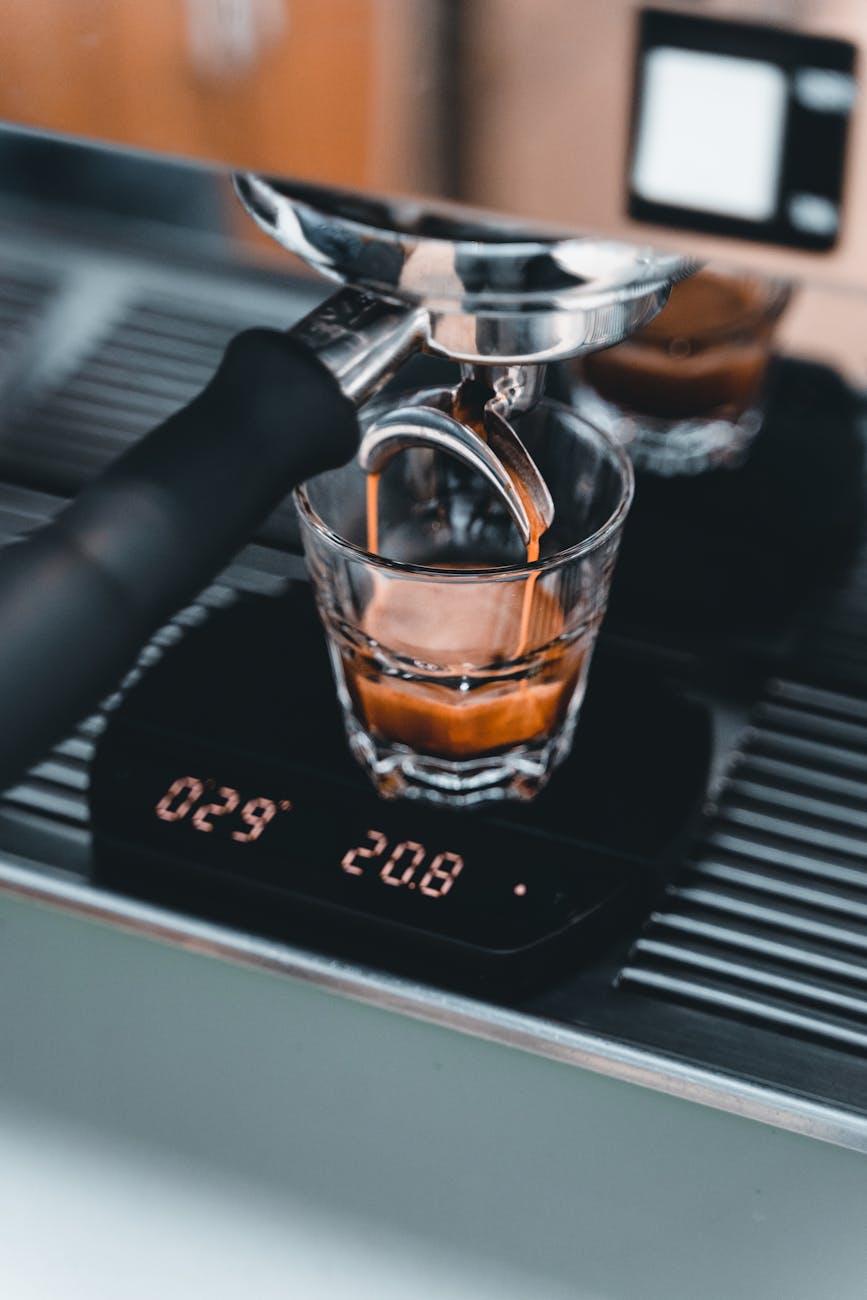
Brew time is your ultimate report card. It tells you if your other adjustments are working. For a traditional double espresso, you should be aiming for a total shot time of about 25-35 seconds from the moment you press the brew button. This is the time it takes to produce a target yield, typically a 1:2 ratio (e.g., 16g of dry coffee producing 32g of liquid espresso). If your shot is gushing out in 15 seconds, it’s a clear sign of underextraction and will taste sour. Your goal is to use your grind and dose adjustments to slow the shot down into that 25-35 second window.
Troubleshooting sour shots: a quick reference
| Symptom | Likely Cause | Primary Solution |
|---|---|---|
| Shot runs very fast (<20 sec) | Grind is too coarse | Grind finer |
| Espresso looks pale and thin | Underextraction | Grind finer or increase dose |
| Tastes aggressively sharp and sour | Underextraction | Grind finer, increase brew temp |
| Shot time is good, but still slightly sour | Brew temp is too low | Warm up machine longer, try temperature surfing |
Beyond the basics: beans and machine care
If you’ve meticulously dialed in your grind, dose, and temperature but still find a hint of sourness, there are a couple of other factors to consider. First is your coffee beans. Extremely light roasts are naturally higher in acidity and are much harder to extract properly. They can easily taste sour if your technique isn’t perfect. If you’re struggling, try a medium roast, which is generally more forgiving. Also, ensure your beans are fresh. Coffee that was roasted more than a month ago can lose its character and become difficult to work with.
Finally, don’t overlook machine maintenance. Over time, mineral deposits (scale) can build up on your Gaggia’s boiler and heating element. This scale acts as an insulator, preventing the machine from reaching its target temperature. No matter how long you warm it up, a scaled-up machine will struggle to get the water hot enough, leading to chronically underextracted and sour shots. Following Gaggia’s recommendations for regular descaling and backflushing is essential for both the longevity of your machine and the quality of your espresso.
Conclusion
Pulling a sour shot of espresso from your Gaggia can be disheartening, but it’s a solvable problem that every home barista faces. Remember that sourness is almost always a symptom of underextraction. By taking a methodical approach, you can diagnose and fix the issue. Start by focusing on the fundamentals: use a scale to ensure a proper dose and make your grind finer to slow down the flow of water. Pay attention to your brew time as a key indicator of success. Then, master your machine’s temperature to ensure you have enough heat for a full extraction. Finally, using fresh, appropriate beans and keeping your Gaggia clean will set you up for success. With a little patience and practice, you’ll be pulling balanced, sweet, and delicious espresso shots every time.
 No products in the cart.