

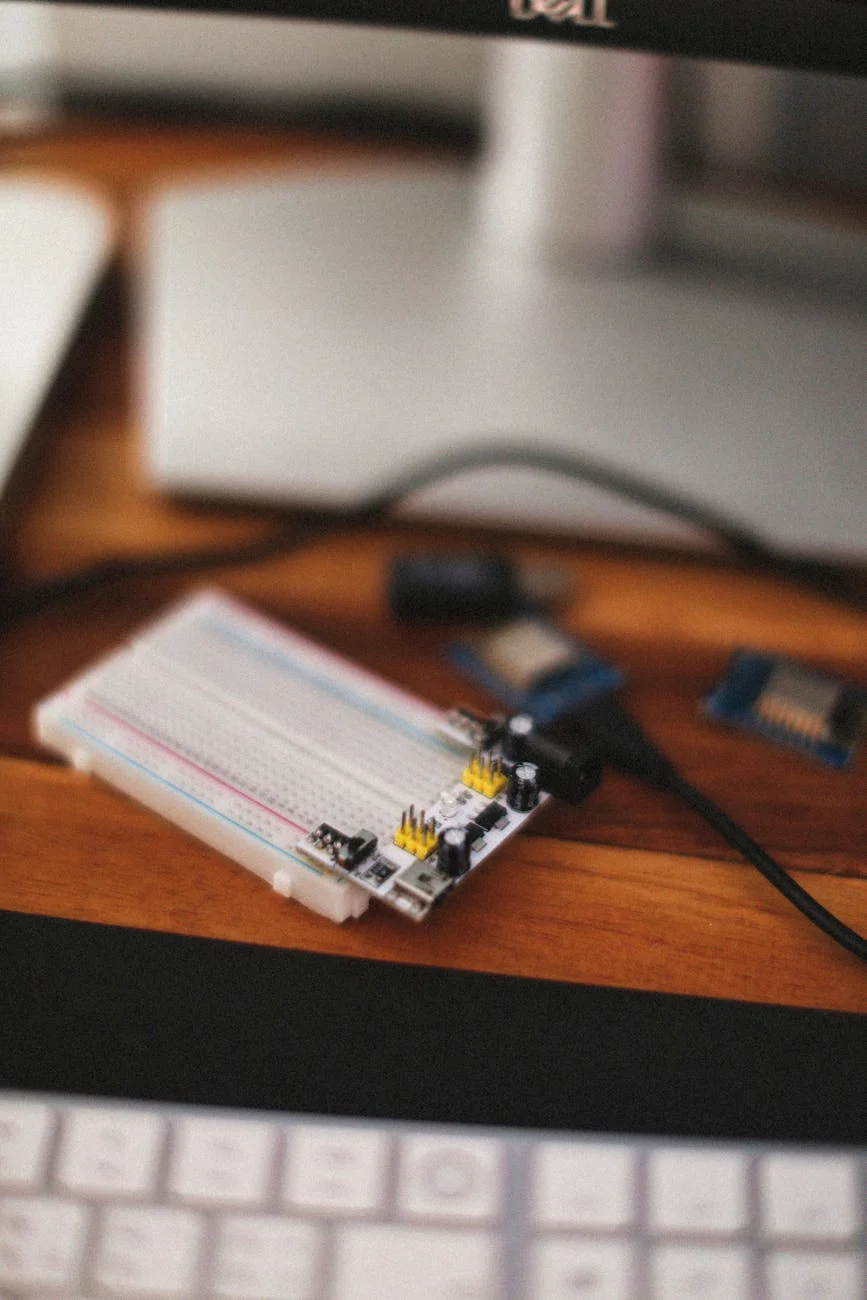
The Gaggiuino project represents a fascinating intersection of coffee passion and DIY electronics. It allows enthusiasts to transform the capable Gaggia Classic espresso machine into a powerhouse that rivals equipment costing thousands of dollars. At the heart of this transformation lies a tiny computer: the microcontroller. This component acts as the brain of the entire operation, controlling everything from temperature to pressure. However, for newcomers to the project, the choice of which microcontroller to use can be a significant hurdle. This guide is designed to demystify the process, breaking down the most popular options, their pros and cons, and helping you choose the right microcontroller for your specific Gaggiuino build and aspirations.
Understanding the brain of the operation
Before diving into specific models, it’s crucial to understand what the microcontroller actually does in your Gaggiuino-modded machine. Think of it as the central nervous system. It continuously reads data from various sensors you install, such as the temperature sensor (thermocouple) in the boiler and the pressure sensor (transducer) in the brew circuit. Based on this incoming information and the code it’s running, it makes real time decisions.
These decisions involve sending signals to control other components:
- The heater: It uses a sophisticated PID (Proportional-Integral-Derivative) algorithm to pulse the boiler’s heating element, maintaining rock-solid temperature stability far beyond what the stock thermostat can achieve.
- The pump: It controls the pump via a dimmer circuit, allowing for advanced features like pre-infusion and pressure profiling during the shot.
- The solenoid valve: It manages the three-way solenoid to start and stop the flow of water to the group head.
- The user interface: It drives the display screen, showing you vital information, and reads inputs from buttons or rotary encoders.
Because it juggles all these critical tasks simultaneously, the microcontroller’s processing power, memory, and speed directly impact the machine’s performance and the features you can enable.
The primary contenders: Arduino Nano vs STM32
The Gaggiuino community has largely centered on two main families of microcontrollers. While the project started with one, it has evolved to favor the other for very specific reasons. Understanding the difference between them is the key to your decision.
First is the Arduino Nano. Based on the 8-bit ATmega328P processor, the Nano was the original brain of the Gaggiuino project. Its primary advantage is its simplicity and the vast amount of documentation available for the Arduino platform in general, making it very approachable for absolute beginners. For a basic build focused solely on PID temperature control, a Nano is technically sufficient. However, its limited processing power and memory (only 2KB of SRAM) mean it quickly runs out of steam when you try to implement more advanced features. Running pressure profiling, scale integration, and a graphical display all at once can overwhelm the Nano, leading to sluggish performance or forcing you to disable certain features.
The modern and now highly recommended alternative is the STM32 “Black Pill”. Typically using an STM32F401 or STM32F411 chip, this is a much more powerful 32-bit ARM-based microcontroller. It boasts a significantly faster clock speed, vastly more flash storage for the program, and crucially, much more SRAM (up to 64KB or 128KB). This extra horsepower means the STM32 can handle every feature the Gaggiuino project offers, now and in the future, without breaking a sweat. It manages complex pressure profiles and rich graphical displays simultaneously and smoothly. While it might seem more intimidating than an Arduino, the Gaggiuino project’s excellent documentation makes the setup process very manageable.
Factors that should guide your choice
With the two main options laid out, your choice comes down to balancing your goals, budget, and technical comfort. The transition from the Nano to the STM32 within the community reflects the project’s growing ambition, and your choice should reflect your own.
Your primary consideration should be your project goals. Are you content with just stable brew temperatures, or do you want the full Gaggiuino experience with pressure profiling and scales? If you desire the latter, the decision is already made for you: you need the STM32. The Arduino Nano simply lacks the resources to run the full feature set effectively. Trying to save a few dollars on the microcontroller will only lead to frustration and a compromised build down the line.
Next, consider the concept of future-proofing. The Gaggiuino project is actively developed by a vibrant community. New features and refinements are always in the works, and they are being developed with the STM32’s capabilities in mind. Choosing the STM32 today ensures that your build will be compatible with exciting future updates. Opting for the Nano essentially locks you into an older, less capable version of the software, making it a legacy choice rather than a forward-looking one.
A comparison at a glance
To make the decision even clearer, here is a direct comparison of the typical specifications for each microcontroller. This table highlights the significant performance gap and reinforces why one has become the standard for new builds.
| Feature | Arduino Nano (ATmega328P) | STM32 Black Pill (STM32F411) |
|---|---|---|
| Architecture | 8-bit | 32-bit ARM Cortex-M4 |
| Clock Speed | 16 MHz | 100 MHz |
| Flash Memory (Storage) | 32 KB | 512 KB |
| SRAM (Working Memory) | 2 KB | 128 KB |
| Performance | Basic. Struggles with multiple features. | Excellent. Handles all features smoothly. |
| Future-Proofing | Poor. Not supported for new features. | Excellent. The standard for all new development. |
| Recommended For | Legacy builds or experimental use only. | All new Gaggiuino builds. |
Choosing the right microcontroller is one of the most critical decisions you’ll make at the start of your Gaggiuino journey. While the Arduino Nano served as the project’s foundation, its limitations have become clear as the software has grown in sophistication. It struggles to keep up with the demands of modern features like pressure profiling and advanced user interfaces. For this reason, the STM32 “Black Pill” has emerged as the undisputed champion and the only logical choice for anyone starting a new build today. Its superior processing power, abundant memory, and status as the target platform for all future development make it the definitive brain for your ultimate espresso machine modification. By investing in an STM32, you aren’t just building for today; you are future-proofing your machine for years of caffeinated innovation.


 No products in the cart.