

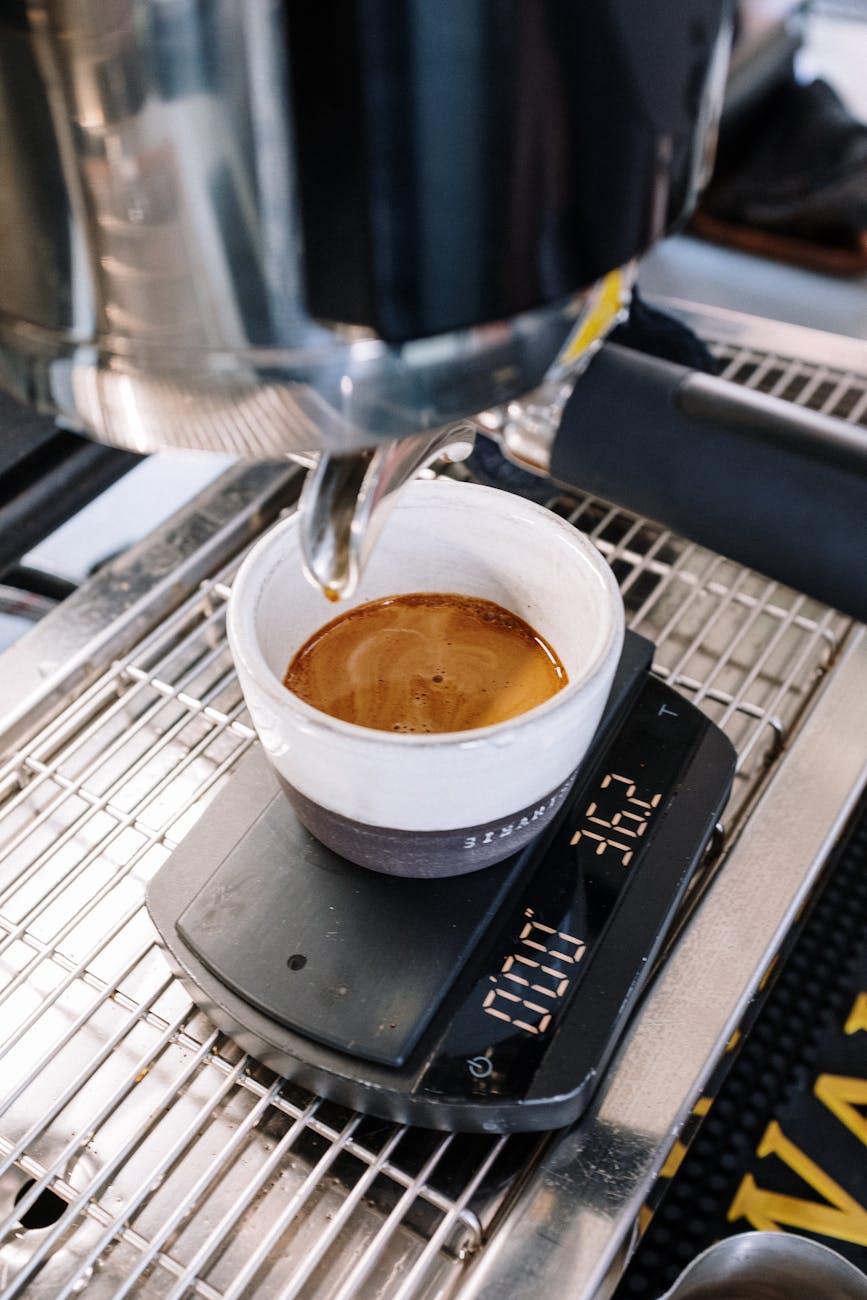
The quest for the perfect shot of espresso is a journey of precision. For the modern home barista, this journey is guided by data, and the most crucial piece of equipment for gathering that data is the digital scale. However, a common and often frustrating hurdle appears when theory meets reality: fitting your favorite cup and a precise scale under your espresso machine’s group head. This seemingly simple physical limitation can disrupt your entire workflow, compromise your shot’s quality, and turn a delightful ritual into a daily puzzle. This article explores the delicate balance between the cup you drink from and the scale you brew on, delving into why this relationship is so critical and offering practical solutions for a seamless, consistent espresso routine.
The non-negotiable role of precision in espresso
Before we tackle the physical constraints, it’s essential to understand why a scale is indispensable. In the world of espresso, we don’t rely on volume; we rely on mass. The relationship between the dry coffee grounds (the dose) and the liquid espresso in the cup (the yield) is known as the brew ratio. This ratio is the single most important variable you can control to determine the taste and strength of your shot.
A classic espresso might use a 1:2 ratio, meaning 18 grams of ground coffee produce a 36-gram shot. Want something more concentrated and intense, like a ristretto? You might aim for a 1:1.5 ratio (18g in, 27g out). Prefer a longer, more diluted shot? A lungo could be 1:3 (18g in, 54g out). Without a scale accurate to at least 0.1 grams, you are essentially flying blind. A difference of just two or three grams in yield can drastically alter the taste, turning a balanced, sweet shot into one that’s sour (under-extracted) or bitter (over-extracted). The scale, often with a built-in timer, provides the real-time feedback needed to stop your shot at the perfect moment, ensuring repeatability day after day.
The vertical challenge: When gear doesn’t fit
Herein lies the central problem. You have your portafilter locked in, your meticulously prepared puck of coffee ready to go, and your favorite ceramic cappuccino cup. You place it on your scale, slide it onto the drip tray, and… clank. The cup is too tall. It either won’t fit under the portafilter spouts at all, or it presses against them, rendering the scale’s reading completely useless. This spatial conflict is a function of two main constraints:
- Vertical clearance: The distance between your machine’s drip tray and the bottom of the portafilter spouts. Many popular and otherwise excellent home espresso machines have limited clearance.
- Component stack: The total height of your drip tray grate, your scale, and your cup. Each millimeter counts.
The immediate consequence is a broken workflow. Baristas are forced into compromises, such as brewing into a small, awkward shot glass that fits, only to transfer the espresso into their desired cup. This extra step is not only inconvenient but also detrimental to the coffee, causing significant heat loss and disturbing the delicate crema. The daily frustration of this puzzle can take the joy out of the process, making consistency feel like a chore rather than a craft.
Finding harmony with smart gear and workflow adaptations
Fortunately, this common problem has several elegant solutions that involve both smart equipment choices and slight adjustments to your technique. Harmony is achievable without buying a new espresso machine. The most impactful solution is to switch to a bottomless portafilter. By removing the spouts, you can gain an extra inch or more of precious vertical clearance, instantly solving the height issue for most cup and scale combinations. This also provides the added benefit of giving you direct visual feedback on the quality of your extraction.
Your choice of equipment is equally critical. Investing in a low-profile espresso scale is a game-changer. These scales are specifically designed for this problem, with slim designs that minimize their impact on the total stack height. Similarly, consider your cups. While that oversized mug is comfortable to hold, a set of dedicated espresso or cappuccino cups with a narrower base and appropriate volume is often shorter and fits more easily. For many popular machines, you can even purchase a custom-made, low-profile drip tray that shaves off even more height from the equation.
A comparative look at your options
Making an informed decision requires knowing the landscape of available gear. Different scales and cups are designed with different priorities in mind, from ultra-portability to all-in-one smart features. Below is a comparison to help guide your choices.
Choosing your scale
| Scale Type | Approx. Dimensions (W x D x H) | Key Feature | Best For |
|---|---|---|---|
| Ultra-Slim Scale (e.g., Timemore Black Mirror Nano) | 100mm x 115mm x 20mm | Extremely low profile and small footprint. | Baristas with very limited vertical clearance. |
| Standard Smart Scale (e.g., Acaia Lunar) | 105mm x 105mm x 15mm | Water resistance, speed, and app connectivity. | The enthusiast who wants top-tier performance and durability. |
| Budget-Friendly Scale (e.g., generic coffee scale) | 127mm x 106mm x 19mm | Basic weighing and timing at a low cost. | Beginners or those who don’t need advanced features. |
Choosing your cup
| Cup Type | Typical Volume | Fit Consideration |
|---|---|---|
| Espresso Shot Glass | 60-90 ml | Fits under any machine but requires transferring the shot. |
| Classic Cappuccino Cup | 150-180 ml | Often has a wide, stable base. Check total height. |
| NotNeutral LINO/VERO | Varies (74ml – 355ml) | Designed with baristas in mind; generally good clearance. |
| Standard Coffee Mug | 300+ ml | Almost always too tall for direct brewing. |
Mastering your espresso workflow is about removing variables and eliminating friction. The conflict between your cup and scale is a significant point of friction, but one that is entirely solvable. By understanding the importance of measuring your yield, you can appreciate why this battle for millimeters is so important. The solution lies not in compromise, but in optimization. A bottomless portafilter offers the single biggest improvement, while a carefully selected low-profile scale and appropriately sized cups complete the setup. Ultimately, achieving this physical balance transforms the brewing process from a clunky, frustrating task into an elegant, repeatable ritual. This harmony in your setup is the foundation upon which you can build true consistency, unlocking the full potential of your coffee, one perfect shot at a time.


 No products in the cart.