

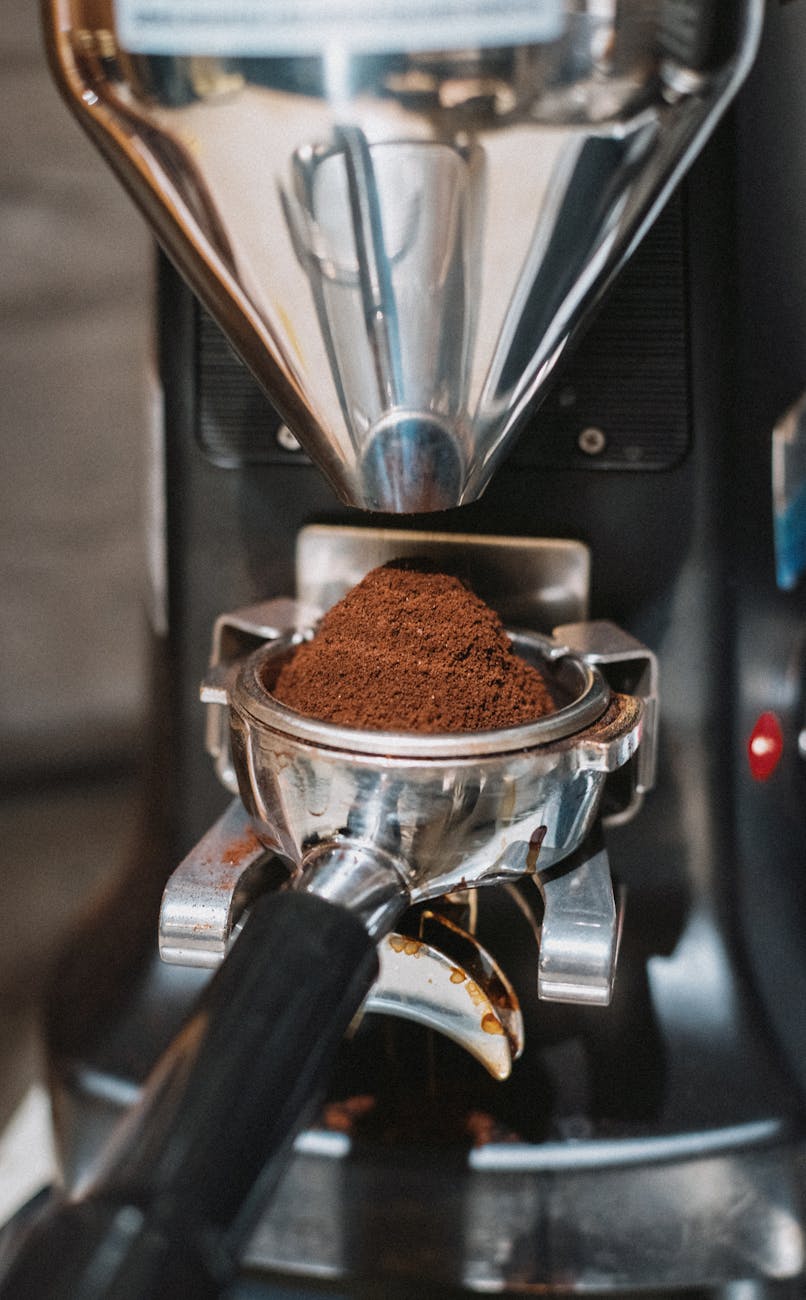
The impact of bean feed rate on espresso channeling and distribution
The quest for the perfect espresso shot is a journey filled with variables. Baristas and home enthusiasts alike obsess over grind size, dose weight, water temperature, and pressure, meticulously tweaking each one to achieve a balanced and delicious extraction. However, there is a more subtle, often overlooked factor that can have a profound impact on the final result: the bean feed rate. This refers to the speed at which coffee beans are fed into the grinder’s burrs. It might seem like a minor detail, but this rate directly influences the quality and uniformity of your coffee grounds. This article will delve into how the simple act of controlling how beans enter your grinder can be the key to reducing channeling and achieving a more even, consistent extraction.
What is grind distribution and why does it matter?
Before we can understand the role of feed rate, we must first grasp the concept of grind particle distribution. When a grinder crushes or cuts coffee beans, it doesn’t produce grounds of a single, perfect size. Instead, it creates a range of particle sizes, from very fine dust (known as fines) to much larger chunks (often called boulders). An ideal espresso grind has what’s called a tight, unimodal distribution, meaning the vast majority of particles are very close to the target size, with very few fines or boulders.
Why is this so crucial for espresso? Extraction is a surface area game.
- Fines: These tiny particles have immense surface area and extract very quickly. Too many fines can lead to over-extraction, introducing bitter and astringent flavors. They can also migrate with water during the brewing process, clogging the pores of the coffee puck and forcing water to find an easier path, which is the primary cause of channeling.
- Boulders: These large particles have less surface area and extract slowly. An excess of boulders results in under-extraction, contributing sour, acidic, and weak flavors to the shot.
When you have a wide distribution with both fines and boulders, you’re trying to extract two different coffees at once. The result is an unbalanced, muddled cup that is simultaneously bitter and sour. Achieving a uniform grind distribution is the foundation of a clean, sweet, and well-balanced espresso shot.
How bean feed rate influences the grinding process
The bean feed rate is the gatekeeper to your grinder’s burrs, and it dictates the conditions under which grinding occurs. A fast, aggressive feed rate creates a chaotic environment inside the grinding chamber. When a large volume of beans is dumped into a running grinder, the burrs are instantly placed under a heavy, inconsistent load. Beans collide not only with the burrs but also with each other, shattering and fragmenting rather than being cleanly cut. This process of violent fragmentation is a major contributor to the production of excess fines. Furthermore, beans can bounce off the rapidly spinning burrs, a phenomenon known as “popcorning,” leading to inconsistent contact time and a wider particle size distribution.
Conversely, a slow and controlled feed rate allows the grinder to operate under a stable, manageable load. By introducing beans gently, each one can be properly engaged and pulled into the burrs. This allows the burrs to do their job as intended: slicing and cutting the beans into uniform particles. This controlled process minimizes shattering, drastically reduces the creation of fines, and results in a much more consistent and uniform grind. For single-dose grinders, this is achieved by slowly pouring the beans in. For grinders with hoppers, the weight of the beans in the hopper provides pressure, meaning a full hopper creates a faster feed rate than a nearly empty one.
From grinder to puck: the link between feed rate and channeling
Now we can connect the dots from the grinder to the final shot. Channeling occurs when water under pressure finds a path of least resistance through the coffee puck, leading to severe localized over-extraction while the rest of the puck remains under-extracted. The primary culprit behind this is an uneven puck density, which is directly exacerbated by a poor grind distribution.
Here’s the chain of events:
- A fast bean feed rate produces a grind with a high percentage of fines.
- These fines, combined with the static electricity generated during grinding, often lead to clumping.
- Even with meticulous puck preparation (WDT, distribution tools), these micro-clumps and loose fines can create hidden pockets of varying density within the puck.
- When the shot begins, water will naturally bypass the denser, fine-clogged areas and rush through the weaker, less dense spots, carving a channel. You can see this as spritzers or “blond” spots forming early on a bottomless portafilter.
–
By implementing a slow bean feed rate, you create a more uniform grind with fewer fines. This fluffy, homogenous grind is far easier to prepare into a puck of even density. With no significant weak points for water to exploit, the water is forced to percolate evenly through the entire bed of coffee. This results in a beautiful, syrupy, and centered extraction, minimizing channeling and ensuring that the entire dose contributes equally to the final flavor of the shot.
How to control and test bean feed rate in your setup
Experimenting with bean feed rate is a practical step you can take to improve your espresso. The method will vary slightly depending on your grinder type.
For single-dosing users: This is where the technique of “slow feeding” shines. Instead of dumping your entire dose into the grinder at once, turn the grinder on and pour the beans in slowly and steadily over 5-10 seconds. Try a back-to-back comparison: pull one shot by dumping the beans and another by slow feeding, keeping every other variable identical. Observe the difference in how the shot pulls and, most importantly, how it tastes. You will likely find the slow-fed shot to be sweeter and more balanced.
For hopper-fed grinder users: You can observe the effect by noting the difference between grinding with a full hopper versus a nearly empty one. The weight from a full hopper forces beans into the burrs faster. Try pulling shots at both extremes. This is why many professional cafes strive to keep their hoppers filled to a consistent level—to maintain a consistent feed rate and, therefore, more consistent shots throughout the day.
The following table summarizes the expected outcomes of experimenting with feed rate:
| Variable | Fast feed rate (dumping beans / full hopper) | Slow feed rate (gentle pour / low hopper) |
|---|---|---|
| Grind quality | Less uniform, more fines and boulders | More uniform, fewer fines |
| Puck integrity | Higher risk of density variations and clumps | More homogenous and structurally stable |
| Channeling risk | High | Low |
| Taste profile | Potentially muddled, with bitter and sour notes | Cleaner, more balanced, and complex |
| Shot behavior | Prone to spritzers; less predictable shot times | Even, centered flow; more consistent shot times |
In conclusion, while variables like grind size and temperature are rightly at the forefront of any espresso discussion, the bean feed rate is a powerful, secondary tool for dialing in your coffee. As we’ve explored, a fast, uncontrolled feed can sabotage your efforts by producing an inconsistent grind that is predisposed to channeling. This leads to an unbalanced extraction, masking the true potential of your coffee beans. By simply slowing down and controlling how beans enter the grinder, you promote a more uniform particle distribution. This, in turn, allows for the creation of a stable, homogenous puck that resists channeling and promotes an even extraction. It’s a small adjustment in your workflow that can yield a significant improvement in shot consistency and taste, elevating your espresso from good to truly exceptional.

 No products in the cart.