

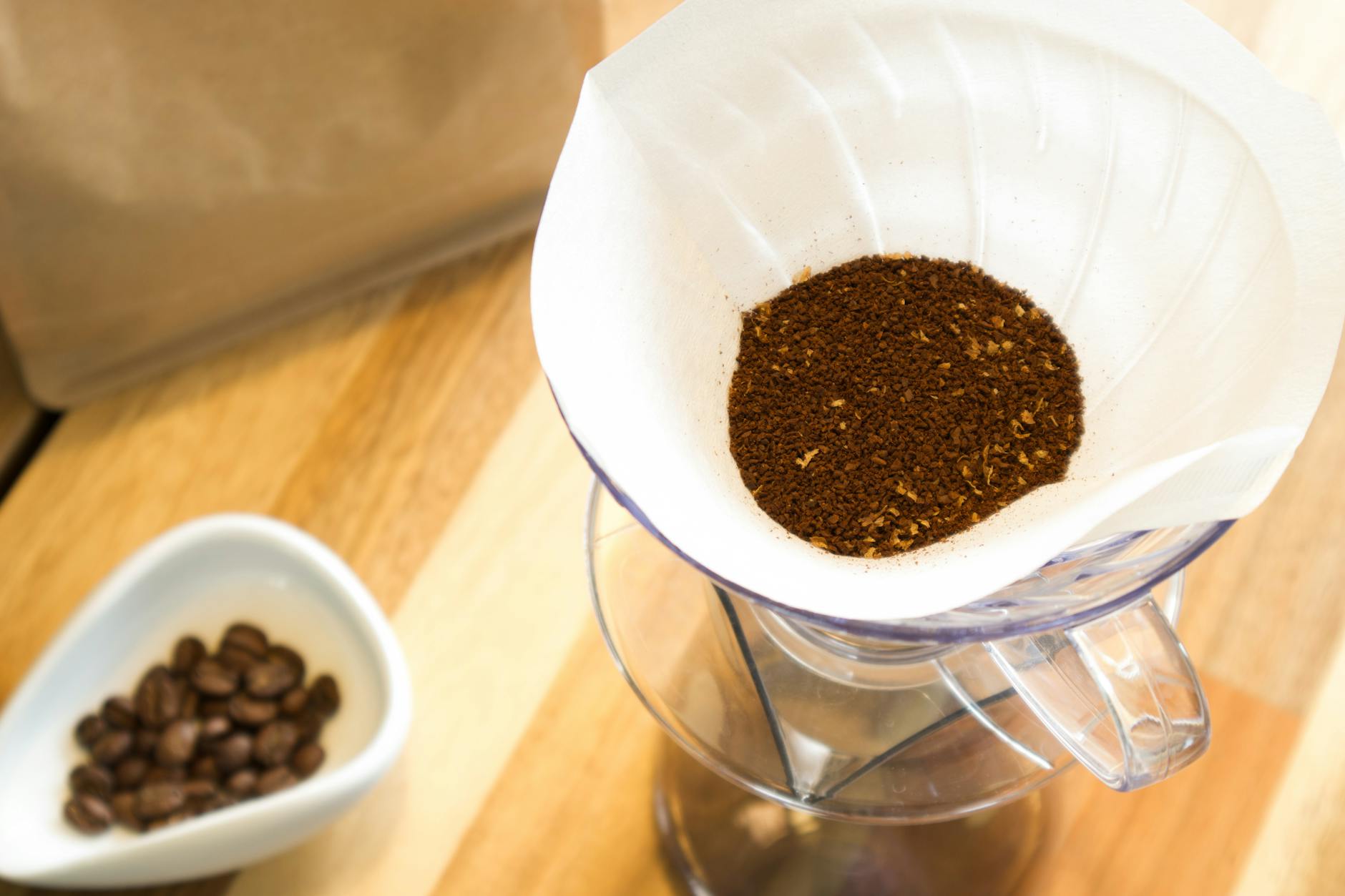
Moccamaster vs. pour-over: Can automation match the artisan’s craft?
The quest for the perfect cup of coffee at home has led many down the rabbit hole of manual brewing, with the pour-over method often hailed as the pinnacle of precision and flavor clarity. This hands-on approach offers complete control over every variable. In the other corner stands the Technivorm Moccamaster, a legendary automatic drip machine celebrated for its engineering and ability to brew to Specialty Coffee Association (SCA) standards. This raises a compelling question for coffee lovers: Can the automated precision of the Moccamaster truly replicate the nuanced, high-quality results of a professionally executed manual pour-over? This article will delve into the core principles of coffee extraction to evaluate just how close this iconic machine comes to mimicking the artisan’s touch.
The science of a perfect cup: Key brewing variables
Before we can assess the Moccamaster, we must first understand what makes a manual pour-over so special. It isn’t just about pouring water over coffee; it’s a controlled process designed to achieve an even and optimal extraction. Three pillars support this process:
- Water temperature: This is arguably the most critical factor. The ideal temperature range for coffee extraction is between 195°F and 205°F (90°C to 96°C). Water that is too cool will result in a sour, underdeveloped cup, a phenomenon known as under-extraction. Conversely, water that is too hot will scald the grounds, leading to a bitter and astringent taste from over-extraction. A barista uses a gooseneck kettle with a thermometer to maintain this precise temperature throughout the entire pour.
- Even saturation: Achieving uniform saturation of the coffee grounds is the goal of the pour-over technique. A skilled barista pours in a slow, circular motion to ensure all grounds are wet simultaneously. This prevents “channeling,” where water finds a path of least resistance and bypasses parts of the coffee bed, leading to an inconsistent brew that is both sour and bitter. The initial “bloom” phase, where a small amount of water is added to release trapped CO2, is a key step in promoting even extraction from the start.
- Brew time: The total contact time between water and coffee grounds directly impacts the flavor. Generally, a pour-over brew time falls between 2.5 to 4 minutes. This duration needs to be managed in tandem with the grind size to extract the desirable flavor compounds without pulling out the undesirable ones.
These three variables work together, and mastery of them is what separates a mediocre cup from a truly exceptional one. It is against this benchmark of manual control that the Moccamaster must be judged.
How the Moccamaster automates precision
The Moccamaster’s legendary status is built on its ability to address the core brewing variables with engineering rather than manual skill. It deconstructs the pour-over process and automates the most crucial elements with remarkable consistency.
At its heart is a unique copper heating element. Unlike many consumer-grade machines that struggle to reach and maintain proper temperature, the Moccamaster rapidly heats water to the optimal 195°F to 205°F range and keeps it there. This single feature immediately elevates it above most automatic brewers, as it guarantees the foundational requirement for proper extraction is met every single time.
Next, it tackles water distribution. Instead of a single spigot that dumps water in the center of the brew basket, the Moccamaster employs a 9-hole outlet arm. This showerhead is designed to disperse water over a wider surface area of the coffee grounds. While it’s not the same as a barista’s targeted spiral pour, it’s a significant improvement that promotes a much more even saturation than typical drip machines. The machine’s brewing cycle is also timed to manage the contact time, ensuring it aligns with SCA Golden Cup standards for a balanced brew.
The result is a machine that automates the science of good brewing. It removes human error, delivering a consistently bright, clean, and well-extracted cup that far surpasses what most automatic machines can produce.
The irreplaceable human touch: Where pour-over retains its edge
For all its technical prowess, the Moccamaster is a system built for consistency, not adaptability. This is where the dedicated pour-over enthusiast finds an advantage. The manual method allows for a level of micro-management and technique that a machine simply cannot replicate.
The most obvious difference is the bloom. A manual pour-over allows the barista to precisely control this initial wetting phase, gently saturating the grounds and allowing them to de-gas for 30-45 seconds before beginning the main pour. This critical step ensures a more even subsequent extraction. The Moccamaster begins its full shower almost immediately, bypassing this nuanced technique.
Furthermore, manual pouring allows for dynamic control over agitation. Depending on the coffee bean, its age, and roast level, a barista might use different pouring techniques—a gentle, continuous pour or several “pulse” pours—to control how much the coffee bed is disturbed. This fine-tuning can bring out different nuances in the coffee. The Moccamaster’s showerhead has one setting: on. It provides a consistent shower, but not a tailored one.
Finally, a human can react in real-time. If the coffee is draining too quickly, the barista can slow their pour. If it’s draining too slowly, they can adjust their technique. This ability to adapt to the specific characteristics of each coffee is the hallmark of the artisan’s craft.
Feature comparison: Automation vs. manual control
So, where does that leave us? The Moccamaster excels at flawlessly executing the fundamentals, while the pour-over offers a higher ceiling for customization and perfection. The choice between them often comes down to prioritizing consistency and convenience versus ultimate control and ritual.
The following table breaks down how each method handles the key aspects of brewing:
| Brewing aspect | Moccamaster | Manual pour-over |
|---|---|---|
| Temperature control | Excellent. Automatically heats and holds water in the 195-205°F range. | Excellent, but requires user diligence with a quality kettle and thermometer. |
| Water distribution | Very good. 9-hole showerhead ensures wide, even coverage. | Potentially perfect. Allows for precise spiral pours to saturate all grounds. |
| Consistency | Exceptional. Removes human error for the same result every time. | Variable. Depends entirely on the skill and focus of the user each morning. |
| Control over bloom | None. The brew cycle starts immediately. | Full control over timing and water volume for optimal de-gassing. |
| Adaptability | Low. The process is fixed and cannot be adjusted on the fly. | High. The user can adjust pour rate, agitation, and technique for each coffee. |
| Convenience | High. Add water and coffee, then press a button. | Low. A hands-on, multi-step process requiring full attention. |
Conclusion: An automated artist that nearly perfects the craft
The Technivorm Moccamaster comes remarkably close to mimicking professional pour-over quality. By mastering the non-negotiable elements of brewing—water temperature and a well-managed brew cycle—it produces a cup that is clean, balanced, and complex, easily rivaling a well-made pour-over. Its greatest strength is its unwavering consistency, delivering this high-quality result day in and day out without the potential for human error. For over 90% of coffee drinkers, the difference in cup quality will be negligible, while the convenience is a game-changer.
However, it cannot fully replicate the artisan. The ability to control the bloom, to adapt pouring techniques to specific beans, and to make micro-adjustments during the brew remains the exclusive domain of the manual pour-over. This is the final frontier where craft and intuition give pour-over a slight edge for the dedicated hobbyist. Ultimately, the Moccamaster isn’t a replacement for the craft, but rather its most faithful and convenient automated interpreter.

 No products in the cart.