

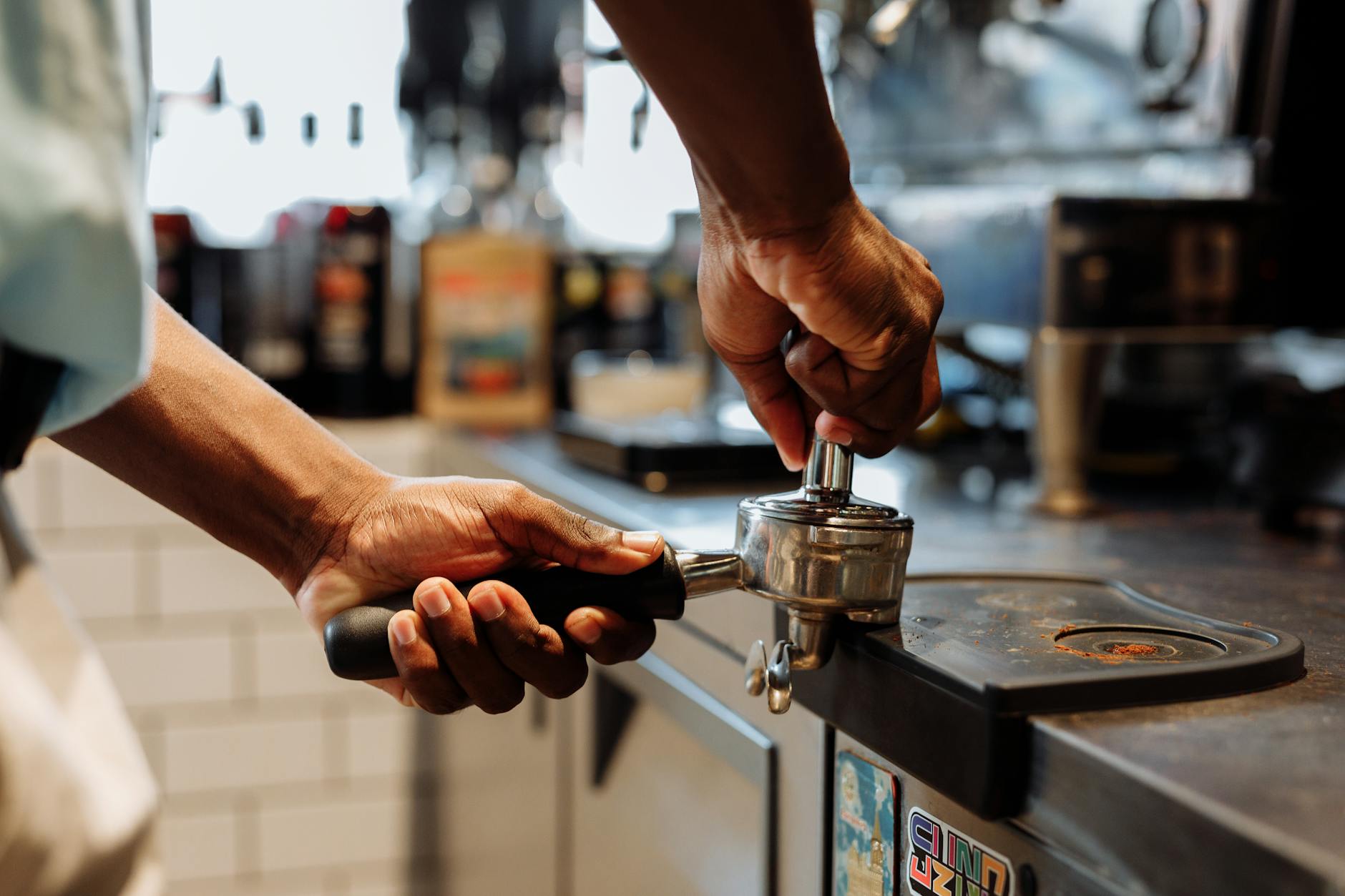
The key to perfect espresso: Why consistent tamping pressure matters for even extraction
Every coffee enthusiast dreams of pulling that perfect shot of espresso—rich, syrupy, and bursting with complex flavors. We obsess over grinders, beans, and machines, but often overlook a small yet critical step: tamping. The act of compressing coffee grounds in the portafilter is more than just a routine; it’s a foundational element that dictates the quality of your extraction. While many debate the ideal amount of pressure, the real secret lies not in a specific number, but in consistency. This article will delve into why maintaining a repeatable tamping pressure is essential for achieving a balanced, even extraction, and how this simple act of precision can transform your espresso from good to truly exceptional, shot after shot.
What is tamping and why do we do it?
At its core, tamping is the process of compressing loose coffee grounds into a dense, level puck within the portafilter basket. This simple action serves a crucial purpose: to create uniform resistance against the high-pressure water from the espresso machine. When you start an extraction, your machine forces hot water (typically at 9 bars of pressure) through the coffee grounds. Without a properly compacted puck, this water would gush through the grounds uncontrollably, finding the easiest path and failing to extract the desirable flavors.
The primary goals of tamping are:
- To remove air pockets: Compressing the grounds eliminates empty spaces, ensuring the coffee bed has a uniform density.
- To create a level surface: A flat, even surface is critical for water to flow through the entire coffee bed equally.
- To build resistance: The compacted puck slows the water down, giving it the necessary contact time to dissolve the coffee solids and oils that create the rich taste and body of espresso.
Think of the coffee puck as a gatekeeper. A well-tamped puck forces water to saturate the grounds evenly, leading to a balanced extraction. A poorly tamped one, however, leaves channels and cracks, setting the stage for a flawed and disappointing shot.
The impact of pressure on water flow and extraction
Once you understand that tamping creates resistance, it becomes clear why the consistency of that resistance is paramount. The biggest enemy of a good espresso shot is channeling. This occurs when water exploits weaknesses in the coffee puck—cracks, fissures, or less dense areas—and rushes through them, bypassing other parts of the coffee. This leads to a disastrously uneven extraction where some grounds are over-extracted (imparting bitter, harsh flavors) while others are under-extracted (contributing sour, acidic notes).
Inconsistent tamping pressure is a primary cause of channeling:
- Tamping too lightly: If you press too softly one time, the puck will be too loose. Water will flow through too quickly, resulting in a weak, sour, and under-extracted shot.
- Tamping with inconsistent force: If you press with 20 pounds of pressure on one shot and 40 on the next, your extraction times will vary wildly. You’ll never be able to dial in your grind size properly because you’ve introduced another unpredictable variable. The result is a frustrating lack of control over your final cup.
- Tamping unevenly: Applying more pressure to one side of the puck than the other creates a tilted coffee bed. Water will naturally flow toward the less dense side, leading to severe channeling and a shot that is both bitter and sour.
The long-debated “30 pounds of pressure” rule is less a strict command and more a guideline. What truly matters is choosing a pressure that is firm enough to fully compact the grounds and then repeating that exact same pressure for every single shot. Consistency is king.
Techniques and tools for consistent tamping
Achieving a repeatable tamp is a skill that combines proper technique with the right tools. Focusing on both will dramatically improve your espresso-making process and eliminate a major source of inconsistency.
First, perfect your technique. Start with a proper stance: stand square to the counter, keep your wrist straight, and your elbow bent at a 90-degree angle. Use your body weight to apply pressure, not just your arm strength, as this is much more repeatable. Before tamping, ensure your coffee grounds are evenly distributed in the portafilter. A Weiss Distribution Technique (WDT) tool or a simple leveling tool can break up clumps and create a flat bed, which is the necessary starting point for a level tamp.
Beyond technique, specialized tools can remove the guesswork entirely:
Calibrated Tampers: These tools are designed to “click” or give way when a pre-set amount of pressure (e.g., 30 lbs) has been applied. This provides tactile feedback, ensuring you hit the same force every time.
Palm or Distributor Tampers: These tools combine distribution and tamping. They rest on the rim of the portafilter, which guarantees a perfectly level tamp to a consistent depth, making it almost impossible to tamp unevenly.
| Tool Type | Pros | Cons | Best for |
|---|---|---|---|
| Standard Tamper | Inexpensive, widely available | Requires practice and muscle memory, can be inconsistent | Experienced baristas with a well-developed, repeatable technique |
| Calibrated Tamper | Ensures consistent pressure, great for training, excellent for repeatability | More expensive than standard models | Baristas and home users seeking to eliminate pressure as a variable |
| Palm/Distributor Tamper | Guarantees a perfectly level tamp, highly consistent results | Highest cost, sets tamp by depth rather than pressure | Anyone prioritizing a perfectly level puck and ultimate ease of use |
Tasting the difference: From channeling to a balanced cup
The results of consistent tamping are not just theoretical; they are immediately apparent in the look, smell, and taste of your espresso. When you eliminate channeling, you unlock the true flavor potential of your coffee beans. A shot plagued by inconsistent tamping will often taste muddled and unpleasant—a confusing mix of sourness from the under-extracted parts and bitterness from the over-extracted channels.
A well-extracted shot, built on the foundation of a perfectly and consistently tamped puck, will exhibit:
- Balanced flavors: You will be able to taste the distinct notes of your coffee, whether they are chocolatey, fruity, or nutty. Sweetness will be present to balance the acidity and bitterness.
- A rich mouthfeel: The body will be viscous and syrupy, not thin and watery.
- A beautiful crema: The crema will be thick, uniform in its reddish-brown color, and persistent.
You can also diagnose your tamp by watching the extraction, especially with a bottomless portafilter. A good extraction will begin with a few drips that coalesce into a single, steady, centered stream. You might see “tiger striping” as darker and lighter parts of the extract mix together. In contrast, channeling will be obvious: jets of watery coffee will squirt out, and the flow will be uneven and messy. After the shot, inspect the spent puck. A solid, dry, and firm puck that knocks out in one piece is a sign of a good extraction. If it’s soupy or has visible cracks, you know that water broke through prematurely.
Conclusion
In the complex world of espresso, tamping may seem like a minor detail, but its impact is profound. It’s the critical step that prepares the coffee bed for the intense pressure of extraction. While the force you apply is important, the true goal is unwavering consistency. An inconsistent tamp invites channeling, which leads directly to an uneven extraction and a cup filled with unbalanced, disappointing flavors. By focusing on a repeatable technique, using tools like calibrated or palm tampers to remove human error, and learning to read the signs of a good extraction, you take control of a crucial variable. Mastering consistent tamping pressure is not just about perfecting a single step; it’s about building the foundation upon which every great shot of espresso is made.


 No products in the cart.