

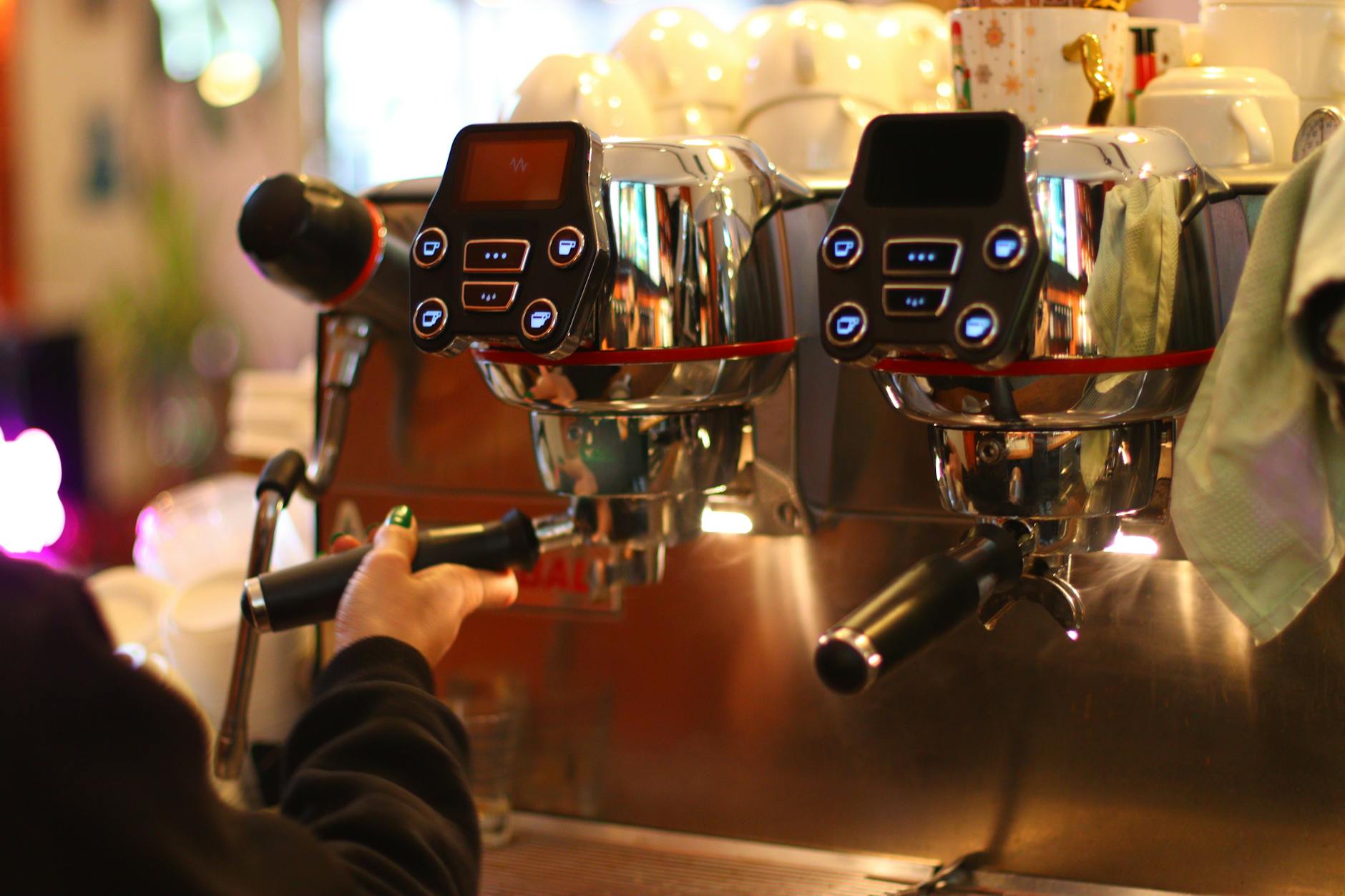
The Gaggia Classic is a legendary machine in the world of home espresso, celebrated for its robust build and potential to produce truly exceptional coffee. However, many new owners find themselves struggling to get that perfect, syrupy shot. The secret often lies not just in the beans or the tamp, but in understanding and taming the machine’s powerful, high-pressure pump. Out of the box, the Gaggia is often set to a pressure far exceeding the industry-standard 9 bars. This aggressive water delivery makes your choice of grind size more critical than ever. This article will guide you through the specifics of the Gaggia’s pump profile and teach you how to adjust your grind size to work with it, transforming frustrating shots into consistently delicious espresso.
Understanding the Gaggia Classic’s pump pressure
Before you can effectively adjust your grind, you need to understand what you’re working against. Most stock Gaggia Classic and Gaggia Classic Pro models leave the factory with their Over-Pressure Valve (OPV) set to 12, or even 15, bars of pressure. For comparison, the commercial standard for ideal espresso extraction is around 9 bars. So, what does this extra pressure do?
This high pressure forces water through your coffee puck with immense force and speed. If the coffee grounds don’t provide enough resistance, the water will blast through them, creating channels and leading to a fast, under-extracted, and sour shot. This is why a Gaggia Classic can be so unforgiving. It magnifies any small imperfections in your puck preparation, from an uneven distribution of grounds to a slightly inconsistent grind.
To counteract this, you must use your grind size to create the necessary resistance. A finer grind increases the surface area of the coffee and compacts the particles more tightly, forcing the water to work harder and flow more slowly. This slower, more controlled flow is essential for achieving a balanced extraction and unlocking the sweet, complex flavors in your coffee beans.
The relationship between grind, dose, and yield
Dialing in espresso is a balancing act between three key variables: the dose (the weight of dry coffee grounds), the yield (the weight of the liquid espresso in your cup), and the grind size. While all three are connected, the most powerful tool you have for controlling the speed of your extraction is the grind.
- Dose: This is the foundation of your recipe. For a standard double basket on a Gaggia Classic, a dose between 16-18 grams is a great starting point. The key is to keep it consistent while you are dialing in. Changing your dose will change the amount of space in the basket, which in turn affects how the water flows. Pick a dose and stick with it.
- Yield: This is your target output. A common and excellent starting point is a 1:2 brew ratio. This simply means for every gram of coffee you put in, you want two grams of espresso out. For an 18-gram dose, your target yield would be 36 grams of liquid espresso. Using a scale to measure your yield is non-negotiable for consistency.
- Grind: This is the variable you will adjust to hit your target yield in the desired time. The ideal extraction time is typically between 25 and 30 seconds. If your 36-gram shot pulls in 15 seconds, your grind is too coarse. If it takes 45 seconds, it’s too fine.
By keeping your dose and yield constant, you isolate the grind size as the one factor you are changing, making the process methodical and easy to understand.
Dialing in your grind: a step-by-step guide
Now let’s get practical. You have your beans, your scale, and your Gaggia is warmed up. It’s time to dial in. This process requires patience, but the results are worth it.
1. Establish a starting point: Set your grinder to a setting that feels like fine table salt or sand. If you’re unsure, you can find the “zero point” where the burrs touch (you’ll hear a chirp) and then back it off a few notches. It’s better to start slightly too coarse and have a fast shot than to start too fine and choke the machine.
2. Prepare your shot: Weigh out your chosen dose (e.g., 17 grams). Grind the beans, distribute them evenly in your portafilter—using a Weiss Distribution Technique (WDT) tool is highly recommended—and tamp level and firm. Lock the portafilter into the Gaggia.
3. Pull and time the shot: Place your cup on a scale under the portafilter and tare it to zero. Start a timer the moment you flip the brew switch. Watch the scale and stop the shot just before you reach your target yield (e.g., 34 grams for a 17-gram dose), as a few extra drops will fall. Note the final time and weight.
4. Analyze and adjust: Did you hit 34 grams in 18 seconds? Your grind is too coarse. Did it take 40 seconds? Your grind is too fine. Make one small adjustment to your grinder in the appropriate direction (finer for a faster shot, coarser for a slower one). Don’t change your dose or your tamping pressure.
5. Repeat the process: Dump the old puck, wipe the basket dry, and go back to step 2. Repeat this cycle of preparing, pulling, and adjusting until you consistently hit your target yield in that 25-30 second window. Only then should you taste it and make final, small adjustments based on flavor.
Troubleshooting common issues with grind and pressure
Even with a methodical approach, the Gaggia’s high pressure can cause some common problems. Here’s how to identify and solve them by adjusting your grind.
A shot that is sour, acidic, or thin is under-extracted. This is the most common issue for new Gaggia owners. It means the water flowed through the puck too quickly, not allowing enough time to dissolve the sugars and richer compounds. The solution is straightforward: grind finer. This will increase the resistance, slow the shot down, and lead to a more balanced extraction.
Conversely, a shot that is bitter, harsh, and astringent is over-extracted. This happens when the shot runs too long because the grind is too fine, choking the machine. The prolonged contact time extracts unpleasant, bitter compounds from the coffee. The solution is to grind coarser to allow the water to flow through more easily and shorten the extraction time.
The dreaded channeling—where the high-pressure water finds a weak spot and drills a hole through the puck—results in a shot that is both sour and bitter. You might see spurts or a watery-looking stream from your portafilter. While puck prep is key to preventing this, your grind plays a role. A grind that is too fine can create too much resistance, causing pressure to build until it violently breaks through a weak point. If you are grinding finer and finer but still getting fast shots with channeling, try a slightly coarser grind combined with meticulous puck prep (WDT, level tamping) to create a more uniform and stable coffee bed.
| Problem | Observation | Probable Cause (Grind-Related) | Solution |
|---|---|---|---|
| Sour / Weak Taste | Shot runs very fast (< 20 seconds for a 1:2 ratio) | Grind is too coarse | Adjust grinder to a finer setting |
| Bitter / Harsh Taste | Shot runs very slow (> 35 seconds) | Grind is too fine | Adjust grinder to a coarser setting |
| Uneven Flow / Squirting | Blonding happens early, weak spots in puck | Channeling; grind may be too fine or uneven | Improve puck prep (WDT) and try a slightly coarser grind to reduce resistance |
| No Flow at All | Machine chokes, only drips come out | Grind is excessively fine | Adjust grinder significantly coarser and start the process again |
Mastering your Gaggia Classic is a journey of understanding how to balance its raw power with precision and technique. The stock high-pressure pump profile presents a unique challenge, but it’s one that can be overcome by focusing on your grind. By creating enough resistance with a fine, consistent grind, you can slow the flow of water and take control of the extraction process. Remember to be methodical: keep your dose and yield targets consistent, make only one adjustment at a time, and use time as your guide. While puck preparation techniques are vital, your grinder is your primary dial for taste. Embrace the process, don’t be afraid to waste a few shots, and you will soon be taming the Gaggia Classic’s pressure to produce consistently rich and delicious espresso.

 No products in the cart.