

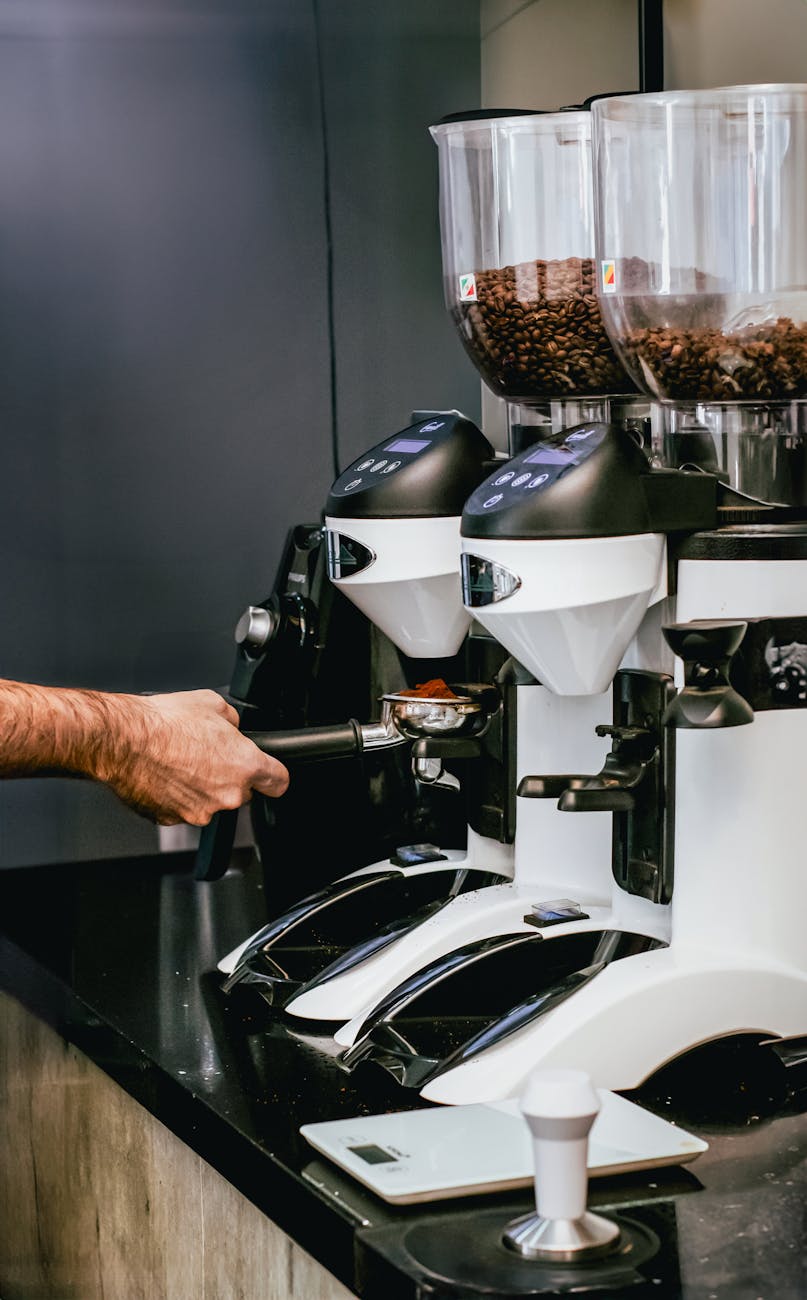
For many aspiring home baristas, the journey into great espresso begins with a shiny, new espresso machine. It’s the centerpiece of the coffee bar, the engine of the operation. The grinder, however, is often an afterthought, a secondary purchase made with whatever budget is left. Yet, this is where the most significant potential for improvement lies. An entry-level grinder can be a source of daily frustration, turning the art of espresso into a game of chance. This article will explore why investing in a premium espresso grinder is not just an upgrade for your coffee’s taste, but a fundamental transformation of your entire coffee-making workflow. We will delve into how it moves you from inconsistency and guesswork to precision, speed, and enjoyable ritual.
From frustration to flow: The consistency factor
The single most important variable in a delicious espresso is a consistent grind. When coffee beans are ground into particles of varying sizes—a mix of boulders and dust—water cannot flow through them evenly. This is the primary culprit behind the dreaded phenomenon of channeling, where water finds the path of least resistance and over-extracts some grounds while under-extracting others. The result is an unpredictable shot that can be both sour and bitter simultaneously.
An entry-level grinder often produces this inconsistent particle distribution. This means your workflow starts with a gamble. Every morning, you “dial in” your shot, but the target is constantly moving. One shot might run too fast; the next, with the same setting, might choke the machine. This transforms your coffee routine into a frustrating chore of trial and error.
A premium grinder, with its high-quality burrs and powerful motor, changes this entirely. It produces a uniform, consistent grind particle size. Suddenly, the main variable is stabilized. “Dialing in” is no longer a daily battle but a simple process you perform once for a new bag of beans. Your workflow shifts from being reactive and unpredictable to proactive and repeatable. You can pull a great shot, make a small adjustment, and know exactly how the next one will behave. This consistency is the foundation upon which a smooth and rewarding workflow is built.
Taming the variables: Precision and micro-adjustments
Once you have a consistent grind, the next step is controlling it with precision. Espresso is incredibly sensitive to grind size; a minuscule change can dramatically alter the extraction time and flavor profile. Budget grinders typically use a “stepped” adjustment system, where you are limited to a set number of clicks between settings. Often, the perfect grind size lies somewhere between two of these clicks, leaving you permanently compromised.
Premium grinders often feature “stepless” or “micro-stepped” adjustment mechanisms. This gives you virtually infinite control over the grind size. This level of precision fundamentally alters your workflow. Instead of making large, clumsy adjustments and hoping for the best, you can make tiny, incremental changes. Is your shot running a second too fast because the beans are a day older? A tiny nudge on the adjustment collar is all it takes. This empowers you to adapt to variables like bean age, humidity, and roast level with surgical accuracy.
Your workflow evolves from one of broad strokes to fine-tuning. You are no longer just aiming for an “acceptable” shot; you are chasing the perfect extraction, confident that your equipment can deliver the control you need.
More than just grinding: The impact of retention and static
What happens to the coffee grounds after they are ground is just as important as the grind itself. Two major issues plague lesser grinders: retention and static. Retention refers to the amount of old, stale grounds left inside the grinder’s chute and burr chamber from previous uses. In a high-retention grinder, a significant portion of these old grounds gets mixed in with your fresh coffee, tainting the flavor and compromising consistency.
This forces an extra, wasteful step into your workflow: purging. Before grinding your actual dose, you have to grind and discard several grams of coffee just to clear out the old stuff. Premium grinders, especially those designed for single dosing, are engineered for low or zero retention. This means the coffee you put in is the coffee you get out. The “purging” step is eliminated, saving you time and expensive coffee beans. Your workflow becomes leaner and more efficient.
Static is another workflow killer, causing coffee grounds to cling to every surface and create a mess around your station. Premium grinders combat this with better materials, coatings, and design, resulting in a fluffier, clump-free grind and a much cleaner workspace.
| Workflow Aspect | Budget Grinder | Premium Grinder |
|---|---|---|
| Dialing In | A daily, often frustrating, process of trial and error. | A simple, one-time setup for a new bag of beans. |
| Adjustments | Large, stepped adjustments; often compromises are necessary. | Precise, stepless micro-adjustments for fine-tuning. |
| Waste (Retention) | Requires purging several grams of coffee before each use. | Minimal to zero purging required due to low retention design. |
| Speed & Noise | Slow grinding process and often very loud. | Fast, efficient grinding with a much lower noise level. |
| Overall Feel | A chore that adds friction and unpredictability to the morning. | A smooth, repeatable, and enjoyable part of a coffee ritual. |
Streamlining your routine: Speed and user experience
Beyond the technical aspects of grind quality, premium grinders are simply more pleasant to use. The workflow improvements are not just about the coffee in the cup; they are about the entire experience. Motors in high-end grinders are more powerful, meaning they grind an 18-gram dose in a matter of seconds, not half a minute. This small time-saving adds up, especially on a busy morning.
They are also significantly quieter. The high-pitched whine of a budget grinder is replaced by the low, satisfying hum of well-engineered machinery. This small change can make the morning coffee ritual a more peaceful and meditative experience. Furthermore, features that were once exclusive to commercial environments are now common in premium home grinders. These include things like:
- Digital timers: For dosing by time with tenth-of-a-second accuracy.
- Grind-by-weight technology: The ultimate in consistency, where the grinder doses the exact weight you program.
- Ergonomic features: Such as magnetic portafilter forks, easy-to-clean burrs, and intuitive controls.
These features remove minor points of friction, turning a multi-step, messy process into a seamless, clean, and efficient workflow.
Ultimately, investing in a premium espresso grinder is about more than just chasing the “god shot.” It is about transforming your relationship with making coffee. It’s an investment in consistency, which removes daily frustration and guesswork. It provides precision, giving you the control to refine and perfect your technique. It reduces waste and mess through smart design features like low retention and static control. The cumulative effect of these improvements is a fundamental change in your workflow. The process shifts from being a source of stress and unpredictability to a smooth, efficient, and deeply satisfying daily ritual. A great grinder doesn’t just make better coffee; it makes a better coffee-making experience.
 No products in the cart.