

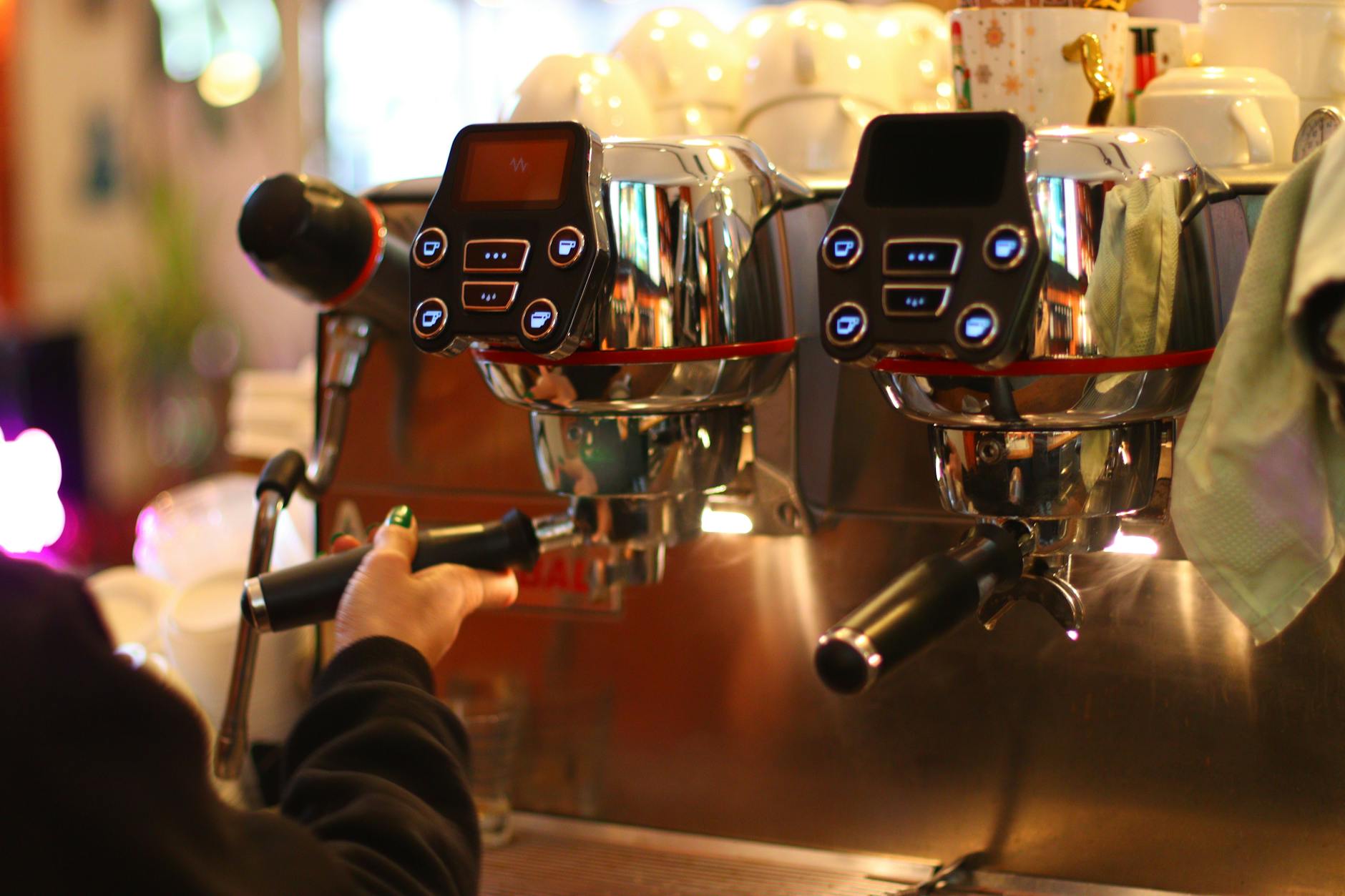
Unlocking perfection: Why the PID is the most significant upgrade for your Gaggia Classic
The Gaggia Classic has earned its legendary status among home espresso enthusiasts for good reason. It’s a robust, capable machine that offers a genuine entry point into the world of craft coffee. For decades, it has been the go-to recommendation for aspiring baristas. However, like any entry-level machine, it has its limitations. While owners often rush to buy new portafilters or shower screens, one modification stands head and shoulders above the rest in terms of its transformative impact: installing a PID controller. This single upgrade addresses the machine’s most significant weakness—temperature instability. In this article, we will explore why adding a PID is not just another tweak, but the most crucial step you can take to elevate your Gaggia Classic from a good machine to a great one.
The Gaggia’s Achilles’ heel: Temperature instability
To understand why the PID is so impactful, we first need to look under the hood of a stock Gaggia Classic. Its brewing temperature is regulated by a simple bimetallic thermostat. Think of it as a basic on/off switch for the boiler’s heating element. When the water temperature drops below a certain point (around 95°C), the thermostat clicks on, heating the boiler. When it reaches a high point (around 105°C), it clicks off. This creates a massive temperature range, often called a “deadband,” that can be as wide as 10-15°C.
Why is this a problem? Espresso extraction is incredibly sensitive to temperature. A variance of just two or three degrees can be the difference between a sweet, balanced shot and one that is sour (too cold) or bitter (too hot). With the stock thermostat, the temperature of the water hitting your coffee puck is a lottery. Baristas often try to mitigate this with a technique called “temperature surfing,” where they time their shot relative to the heating light’s cycle. While this can help, it’s an imprecise and frustrating workaround that rarely delivers true consistency.
Enter the PID: The brain your machine is missing
A PID (Proportional-Integral-Derivative) controller is, in essence, a small computer that replaces the Gaggia’s rudimentary thermostat. Instead of a simple on/off mechanism, a PID uses a sophisticated algorithm to intelligently manage the boiler’s heating element. It constantly monitors the temperature via a precise sensor and learns the thermal behavior of your machine.
Here’s how it works in practice:
- Proportional: It applies power proportional to the difference between the current temperature and your target temperature.
- Integral: It corrects for small, long-term errors, ensuring the system doesn’t settle below your target.
- Derivative: It anticipates future temperature changes, preventing the boiler from overshooting the target.
The result is that the PID can hold the brew temperature with incredible stability, often within one degree of your set point. It achieves this by pulsing power to the heating element in tiny, rapid increments, making micro-adjustments to keep the temperature locked in. It completely eliminates the wild temperature swings of the stock thermostat, giving you a level of control previously reserved for machines costing thousands of dollars.
The tangible benefits of ultimate temperature control
Installing a PID isn’t just about seeing a stable number on a digital display; it translates into immediate and noticeable improvements in your coffee. The primary benefit is shot-to-shot consistency. Once you dial in your grinder for a specific coffee bean, you can pull shot after shot with the confidence that temperature is no longer a random variable. This consistency dramatically shortens the learning curve and reduces wasted coffee.
Secondly, a PID unlocks the ability to explore the full flavor potential of your coffee. Different beans and roast levels have different optimal extraction temperatures. A light-roasted single-origin might express its delicate floral notes best at 94°C, while a classic dark roast blend may be less bitter and more chocolatey at 90°C. With a PID, you can set the exact temperature required to get the best out of every bean. Finally, many PID kits also offer enhanced steam control, allowing you to set a higher and more stable steam temperature. This provides more powerful and continuous steam, making it far easier to achieve silky, glossy microfoam for lattes and cappuccinos.
| Feature | Stock Gaggia Classic | Gaggia Classic with PID |
|---|---|---|
| Temperature Control | Bimetallic Thermostat | Digital PID Controller |
| Temperature Swing | 10-15°C (20-30°F) | +/- 1°C (+/- 2°F) |
| Shot Consistency | Low; requires “temperature surfing” | Extremely high |
| Flavor Profiling | Not possible | Precise control for different beans |
| Steam Power | Inconsistent; cycles on and off | Stable and powerful |
Why the PID is the foundational upgrade
Gaggia Classic owners have several popular upgrades to choose from, including a 9-bar OPV spring, bottomless portafilters, and precision baskets. While these are all valuable, the PID is the foundational mod upon which all others are built. A bottomless portafilter is a great diagnostic tool, but it will only show you channeling caused by temperature swings; it won’t fix it. A precision basket from IMS or VST can improve water flow, but its benefits are masked if the water temperature is wrong.
Even the essential 9-bar pressure mod, which corrects the machine’s overly high stock pressure, is less impactful on a day-to-day basis than taming temperature. Pressure is a relatively stable variable once set, whereas temperature is constantly in flux without a PID. By stabilizing the temperature, the PID provides the consistent foundation needed to see the true benefit of every other modification. It turns your Gaggia Classic into a precise instrument, allowing you to focus on the other variables like grind size and puck prep.
In conclusion, while the Gaggia Classic is a fantastic machine out of the box, its greatest potential is locked behind an outdated thermostat. Installing a PID controller is the key to unlocking that potential. It directly remedies the machine’s primary weakness—erratic temperature—and replaces it with digital precision and unwavering stability. This single upgrade delivers unprecedented shot-to-shot consistency, opens the door to flavor profiling by brew temperature, and improves steam performance. While other accessories are nice additions, the PID fundamentally transforms the Gaggia Classic’s core functionality. It elevates the machine from a capable hobbyist tool into a semi-professional powerhouse that can produce espresso to rival equipment many times its price, making it unequivocally the most significant upgrade an owner can make.
 No products in the cart.