

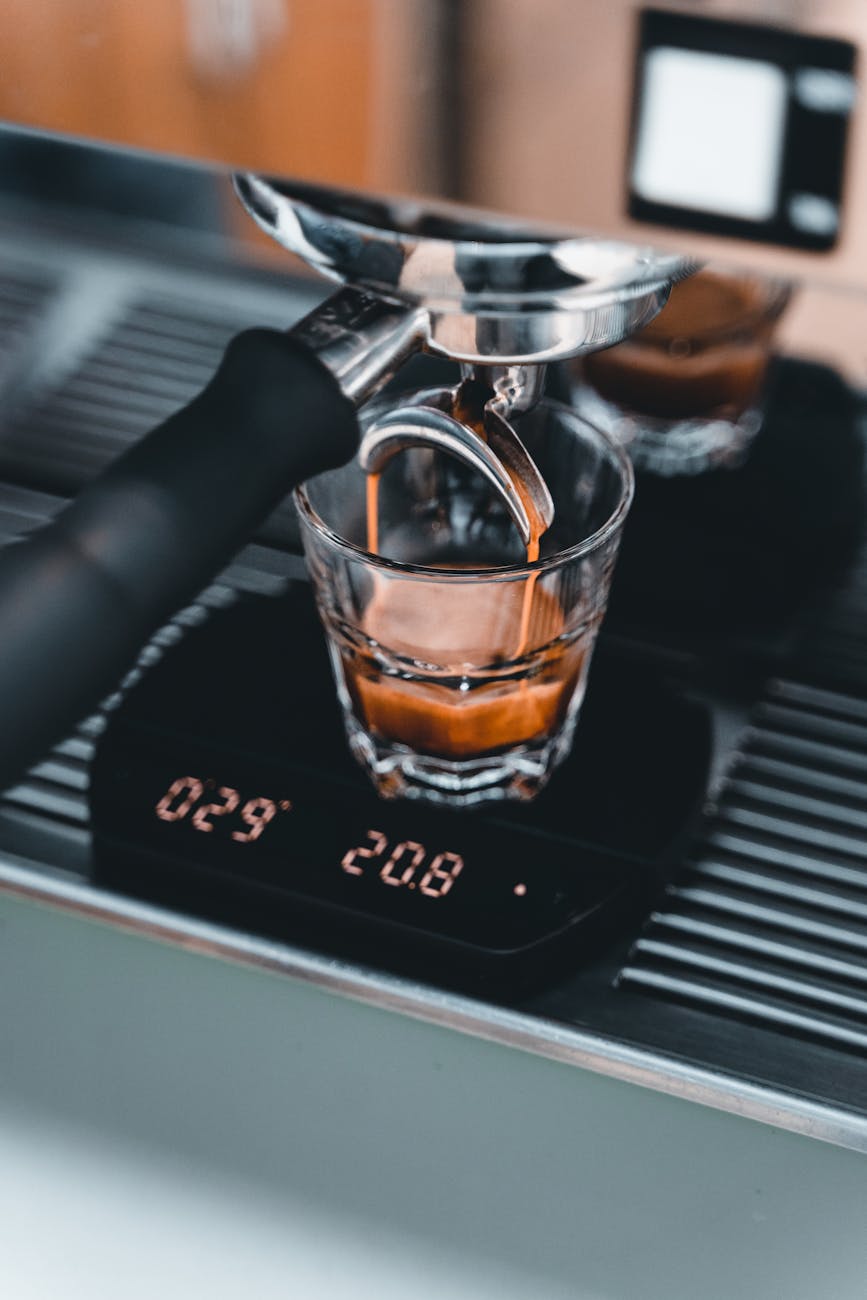
The quest for the perfect shot of espresso is a journey of precision, one where science and art collide within the small confines of a portafilter. While we often focus on bean origin, roast level, or the machine’s brand, the true magic happens in a few crucial seconds as hot, pressurized water meets a compressed bed of coffee grounds. This interaction is the heart of extraction. This article delves into the fascinating science of water distribution through an espresso puck, exploring how every step, from grinding to tamping, dictates the path water takes. Understanding this process is the key to unlocking consistent, delicious espresso and troubleshooting the dreaded uneven extraction that leads to a disappointing cup.
The foundation: Puck preparation and its influence on flow
Before water even touches the coffee, the stage is set for success or failure. The “puck”—the tightly compressed disc of ground coffee in the portafilter basket—is the medium through which extraction occurs. Its structure must be as uniform as possible, because water, under intense pressure, is inherently lazy. It will exploit any weakness and follow the path of least resistance. This is where meticulous puck preparation becomes non-negotiable.
It starts with the grind. A consistent grind size is crucial. If your grinder produces a wide range of particle sizes, from fine “dust” to coarse “boulders,” it’s impossible to create a puck with even density. The finer particles can clog certain areas, while larger gaps between coarse particles create superhighways for water.
This is why techniques like the Weiss Distribution Technique (WDT) have become standard. Using a tool with fine needles to stir the grounds in the portafilter breaks up clumps and evenly distributes particles, eliminating dense spots and voids. Following distribution, tamping is the final step in creating the puck. The goal isn’t maximum force, but even pressure to create a level and uniformly compacted bed of coffee. An uneven tamp leaves one side less dense than the other, effectively creating a pre-made channel for water to exploit.
The physics of pressure and saturation
Once you lock in the portafilter, the physics of extraction begins. Modern espresso machines typically apply around 9 bars of pressure, which is roughly nine times the atmospheric pressure at sea level. However, blasting a dry, fragile puck with this immense force instantly would be a recipe for disaster, as it would shatter the puck’s structure and create massive channels.
This is why pre-infusion is so critical. This initial phase uses very low pressure (typically 1-4 bars) to gently saturate the entire puck. During this time, several important things happen:
- Degassing: Freshly roasted coffee contains trapped carbon dioxide (CO2). Pre-infusion allows this gas to escape gently. If high pressure were applied immediately, these gas pockets would be violently displaced, creating fissures in the puck.
- Swelling: The coffee grounds absorb water and swell, effectively closing any small gaps or minor imperfections in the puck’s structure. This creates a more unified, stable mass that is better prepared to withstand the full pressure of extraction.
After a few seconds of pre-infusion, the machine ramps up to full pressure. The now-saturated and stable puck provides a much more uniform resistance, compelling the water to percolate evenly through the entire coffee bed. This even flow is essential for extracting the desirable soluble compounds—sugars, oils, and acids—at a balanced rate.
The enemy of extraction: Understanding channeling
Channeling is the single greatest adversary in the pursuit of a perfect espresso. It occurs when water finds a specific, low-resistance path and rushes through it, bypassing the rest of the coffee bed. Instead of a slow, even percolation, you get tiny, high-velocity jets of water drilling through one section of the puck. This phenomenon completely derails the extraction process, resulting in a cup that is both sour and bitter simultaneously.
How does this happen? The areas of the puck that the water bypasses are under-extracted, contributing weak, acidic, and sour flavors. Meanwhile, the coffee grounds directly in the path of the channel are blasted with an excessive amount of water, leading to over-extraction. This strips the grounds of all their soluble compounds, including the unpleasant, bitter, and astringent ones. The result is a chaotic, unbalanced flavor profile.
Visually, channeling can be identified by watching a bottomless portafilter. Instead of a single, syrupy cone forming in the center, you might see spurting jets, multiple streams that fail to coalesce, or a section of the basket that looks dry while another flows too quickly. The causes almost always trace back to failures in puck preparation: lingering clumps, an uneven tamp, or a poor grind distribution.
Tools and techniques for mastering water distribution
Fortunately, the coffee community has developed an arsenal of tools and refined techniques designed specifically to combat channeling and promote even water distribution. Beyond a quality grinder and proper WDT/tamping, several accessories can elevate your puck’s integrity and, consequently, your espresso’s quality.
Puck Screens: These are thin, metal mesh discs placed directly on top of the tamped coffee. When the machine’s water hits the screen, it is dispersed gently and evenly across the entire surface of the puck, rather than hitting one spot with intense force. This prevents the initial blast of water from digging into the coffee bed and helps ensure uniform saturation from the very start.
Paper Filters: Similar in function to puck screens, paper filters (either at the top or bottom of the puck) can also improve flow dynamics. A paper filter on top aids in water dispersion, while one at the bottom can prevent very fine coffee particles from clogging the basket’s holes, which can cause pressure to build and force a channel elsewhere.
Precision Baskets: The basket itself plays a role. Standard baskets that come with many machines can have inconsistently sized or shaped holes. Precision baskets are engineered with perfectly circular, uniformly spaced holes, providing a consistent foundation for the water to exit the puck. This removes a significant variable and encourages a more even flow pattern across the entire bed.
| Tool | Primary function | How it helps |
|---|---|---|
| WDT Tool | De-clumping and distribution | Creates a homogenous bed of coffee with no dense or empty pockets. |
| Puck Screen | Water dispersion | Softens the initial impact of water, preventing it from disturbing the puck’s surface. |
| Paper Filter | Dispersion and filtration | Aids in even saturation (top) and prevents fines from clogging holes (bottom). |
| Precision Basket | Uniform exit path | Ensures water has an even and consistent path to exit the puck. |
By understanding the science, we can approach espresso not with guesswork, but with intention. Each tool and technique is a method of controlling variables to create the ideal environment for a perfect extraction.
In conclusion, the journey of water through an espresso puck is a complex dance governed by physics and meticulous preparation. The ultimate goal is to create a puck so perfectly uniform that the water has no choice but to flow through it evenly, ensuring a balanced extraction. We’ve seen how every step—from an even grind and thorough distribution to a level tamp—builds the foundation for this process. The science of pre-infusion shows us the importance of gently preparing the coffee bed to withstand the immense force of full pressure. By understanding and identifying the causes of channeling, we can actively work to prevent it, using modern tools like puck screens and precision baskets to further refine our technique and gain control over the final outcome.


 No products in the cart.