

How to transition from semi-automatic to manual lever espresso brewing
Making the leap from a familiar semi-automatic espresso machine to the world of manual levers can feel like learning to drive a manual car after years of an automatic. Your semi-automatic offers comfort and consistency with its electric pump and straightforward operation. Yet, you’re drawn to the gleaming lever, the promise of unparalleled control, and the romantic, hands-on ritual of brewing. This transition is less about replacing technology and more about embracing an art form. This article will serve as your guide, demystifying the process and providing a clear path. We’ll explore the core differences between the machines, how to adapt your workflow and gear, and finally, how to master the variables to pull a truly exceptional shot of espresso by hand.
Understanding the fundamental differences
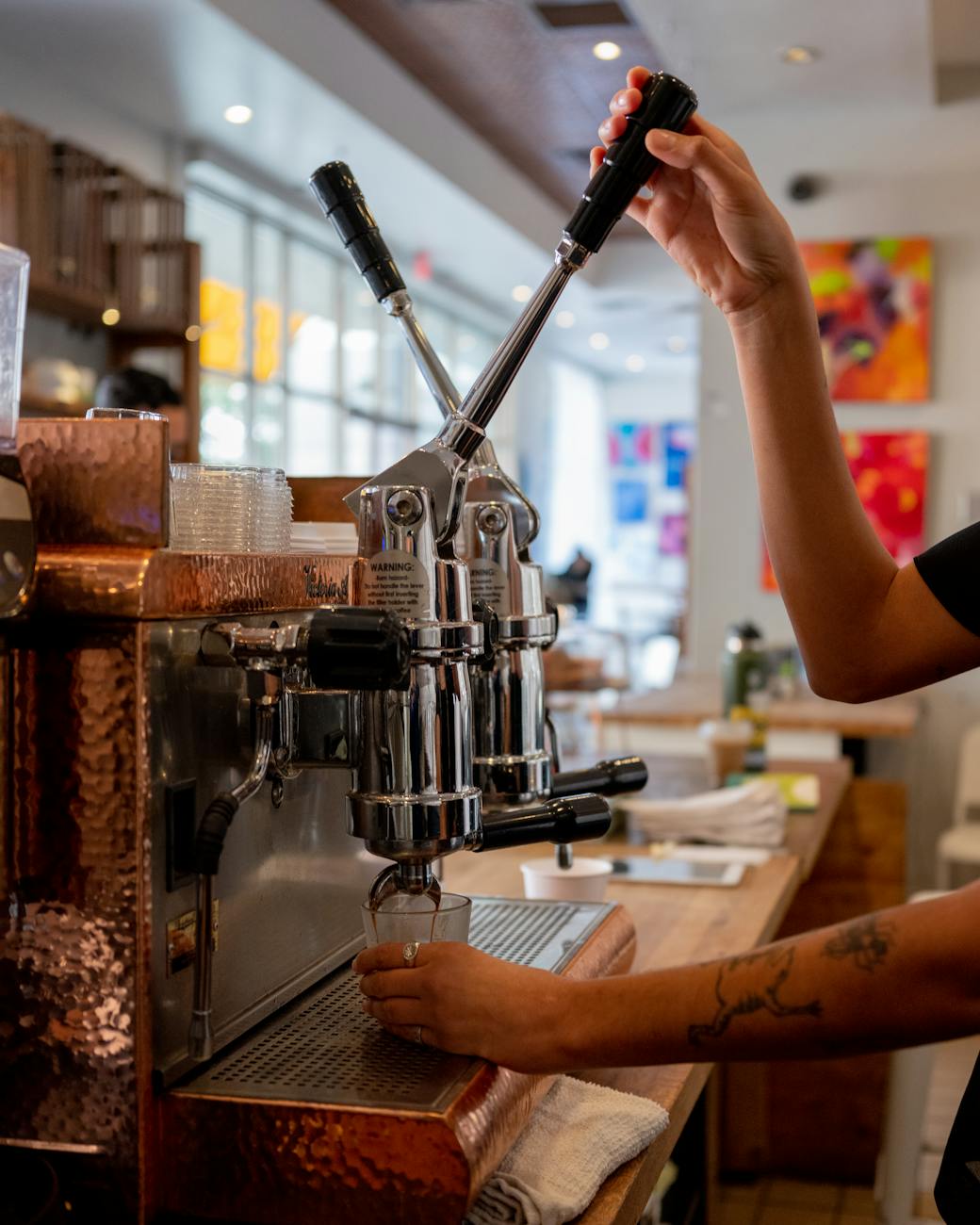
The primary distinction between a semi-automatic and a manual lever machine lies in how pressure is generated. Your semi-automatic uses an electric pump to force water through the coffee puck at a consistent, sustained pressure, typically around 9 bars. You control the start and stop of the extraction, but the machine handles the pressure. A manual lever machine puts that power entirely in your hands. Instead of a pump, it uses a piston that you control directly or indirectly via a lever.
This opens the door to pressure profiling, the ability to vary the pressure throughout the shot. This is the single biggest advantage and challenge of a lever machine. There are two main types to be aware of:
- Spring-piston levers: On these machines, you pull the lever down (or up) to compress a large spring. When you release it, the spring expands and pushes the piston, forcing water through the coffee. The pressure is determined by the spring’s strength, which naturally declines as it expands. This creates a gentle, tapering pressure profile that is often prized for its ability to produce sweet, less bitter shots. It offers more consistency than a direct lever but still provides tactile feedback.
- Direct levers: With a direct lever, your muscle provides 100% of the force throughout the entire extraction. There is no spring. The pressure you apply to the lever directly translates to the pressure on the coffee puck. This offers the ultimate control but also has the steepest learning curve, as maintaining steady and appropriate pressure requires practice and feel.
This shift from a machine-driven, static pressure to a human-driven, dynamic pressure is the reason your entire approach to making espresso will need to evolve.
Adapting your espresso workflow and gear
While the goal is the same, the journey to a great shot is different with a lever machine. This means re-evaluating some of the tools and techniques you’ve grown accustomed to. The forgiving nature of a 9-bar pump is gone; a lever machine will immediately expose any flaws in your preparation.
Your grinder, already important, now becomes the most critical piece of equipment you own. Because you are manually creating delicate pre-infusion pressure, any inconsistencies in grind size will create weak spots in the coffee puck, leading to channeling. A stepless grinder, which allows for micro-adjustments, is highly recommended to properly dial in your shots. Likewise, a high-quality scale is non-negotiable. You must weigh your dose of beans and the yield of espresso in the cup for every shot to build consistency and understand how your inputs affect the output.
Your puck preparation must become meticulous. Techniques like the Weiss Distribution Technique (WDT) to break up clumps, using a leveling tool to create a flat bed, and applying a consistent, level tamp are now essential. Any imperfection that a semi-automatic might power through will result in a gushing, uneven extraction on a lever. Finally, be prepared for more hands-on temperature management. Many popular lever machines have group heads attached directly to the boiler. This means you may need to learn routines, often called “temperature surfing,” like flushing water through the group to cool it down or pulling “half pumps” to heat it up before locking in your portafilter.
Mastering the variables: Grind, dose, and temperature
With the new machine comes the need to re-learn how to dial in your coffee. The starting points you used for your semi-automatic will likely not translate directly. Because lever machines typically pre-infuse at a very low pressure and then ramp up, they often perform better with a slightly finer grind than you might be used to. This finer grind provides the necessary resistance for the manual pressure you’ll be applying. Rushing this step will lead to fast, watery shots lacking in body and flavour.
Your dose is also more sensitive. You need to be mindful of the headspace—the gap between the top of the tamped coffee and the shower screen. Too much coffee can make it difficult to lock in the portafilter or even damage the screen. Start with the manufacturer’s recommended basket dose and adjust by small increments of 0.5 grams. The goal is to find a dose that allows for even water distribution without being overly restrictive. The table below offers a general comparison for starting points.
| Variable | Semi-Automatic starting point | Manual lever starting point |
|---|---|---|
| Grind size | Fine, dialed in for ~25-30 sec shot | Often slightly finer to provide resistance |
| Dose | Basket dependent (e.g., 18g in 18g basket) | More critical, start lower to ensure headspace |
| Ratio | 1:2 (e.g., 18g in, 36g out) | 1:2 is a great start, but levers excel at longer ratios |
| Pressure | Constant 9 bars | Variable (e.g., 2 bar pre-infusion, 8 bar peak) |
The art of pulling the shot: Pre-infusion and pressure
This is where the magic happens. The single most important technique to master is pre-infusion. This is the act of gently saturating the coffee puck with low-pressure water before applying full extraction pressure. On a direct lever, you achieve this by lifting the lever just enough to allow water to enter the chamber and then holding it there for several seconds until the first drops of espresso appear on the bottom of the basket. This slow saturation settles the coffee bed, minimizes channeling, and leads to a more even and flavourful extraction.
Once the puck is saturated, you begin the main pull. Unlike the flat 9-bar profile of a semi-automatic, a classic lever shot has a dynamic profile. You’ll ramp up the pressure to a peak of around 6 to 9 bars and then naturally, or intentionally, let the pressure decline as the shot finishes. This declining profile is key; it prevents over-extraction of bitter compounds toward the end of the shot, resulting in a cup that is often perceived as sweeter and having more clarity. Don’t obsess over hitting a specific number at first. Instead, focus on a smooth, steady pull. Watch the stream from a bottomless portafilter—it should come together into a single, steady cone. Feel the resistance from the lever. This tactile feedback is your guide, telling you if your grind is too coarse (too little resistance) or too fine (choking the machine).
Conclusion: Your journey into tactile brewing
Transitioning from a semi-automatic to a manual lever espresso machine is a rewarding journey from automation to artistry. It forces a deeper connection with the brewing process, demanding a greater focus on the fundamentals of puck preparation, grind consistency, and temperature management. While the learning curve is undeniable, the skills you develop are universal to making great coffee. The initial frustration of a few challenging shots quickly gives way to the immense satisfaction of mastering pre-infusion and feeling the perfect resistance through the lever. The reward for your patience is not just better espresso, but espresso that is truly a product of your own hands, with a taste profile you crafted from start to finish. Embrace the ritual, enjoy the process, and welcome to a more tactile and engaging world of coffee.

 No products in the cart.