

How flow profiling changes the mouthfeel of espresso
For home baristas seeking to master the craft of espresso, moving beyond basic recipes is a significant step. While pressure profiling has received considerable attention, flow profiling offers a more direct and intuitive method for manipulating the final cup. Understanding how to control the flow rate of water through the coffee puck is not just about taste; it is a powerful tool for fundamentally changing the mouthfeel and texture of your espresso. This article explores the mechanics of flow profiling and its direct impact on the tactile sensations that define a truly exceptional shot, providing experienced users with the knowledge to control body and texture with precision.
What creates mouthfeel in espresso
Before manipulating mouthfeel, it is essential to understand its components. The texture of espresso is not a single attribute but a complex sensation created by several elements suspended or dissolved in the water. The primary components include:
- Oils: Coffee beans contain lipids, which are extracted during brewing. These oils are emulsified into the shot, contributing to a viscous, rich texture and stabilizing the crema.
- Dissolved solids: These are the soluble flavor compounds from the coffee grounds. A higher total dissolved solids (TDS) measurement often correlates with a heavier body, though the specific compounds matter as much as the quantity.
- Undissolved solids: These are microscopic coffee fragments, or fines, that pass through the basket filters. While excessive fines can create grittiness, a controlled amount contributes to a syrupy, dense mouthfeel.
The final mouthfeel is a result of the concentration and balance of these elements. Flow profiling gives the barista direct influence over how efficiently and in what order these components are extracted from the coffee puck.
The relationship between flow rate and extraction
The speed at which water moves through the coffee bed directly influences which compounds are extracted and carried into the cup. A slower flow rate increases the contact time between the water and the coffee particles. This prolonged contact is particularly effective at dissolving the desirable organic acids and oils that build flavor and a viscous texture. A gentle, slow-moving stream of water coaxes out these elements without causing significant physical disruption to the puck.
Conversely, a high flow rate creates more agitation and physical force within the coffee bed. This can increase the migration of undissolved solids (fines) into the final shot, which can rapidly build a thick, sometimes gritty, texture. The key is that flow rate is not just a single variable; its manipulation throughout the shot—from pre-infusion to final extraction—is what allows for targeted textural outcomes.
Practical flow profiles for textural control
By adjusting the flow rate at different stages of the extraction, a barista can emphasize specific textural characteristics. While countless profiles exist, two fundamental approaches demonstrate how flow impacts mouthfeel.
| Profile goal | Flow strategy | Resulting mouthfeel |
|---|---|---|
| Heavy, syrupy body | A long, low-flow pre-infusion (e.g., 2-3 ml/s) to fully saturate the puck, followed by a gradual increase to a peak flow that then tapers off toward the end of the shot. | This method gently extracts oils and soluble compounds early on, building a viscous foundation. The declining flow at the end prevents channeling and reduces the extraction of astringent compounds, preserving a smooth, rich texture. |
| Juicy, clean body | A quicker, higher-flow pre-infusion to saturate the puck, followed by a steady, moderate flow rate (e.g., 4-5 ml/s) held constant for the duration of the shot. | This approach limits the migration of fines and avoids over-extracting the heavy-bodied oils. The result is an espresso with greater clarity and a lighter, more tea-like or juicy mouthfeel, which can highlight the delicate flavors of certain beans. |
The importance of puck preparation
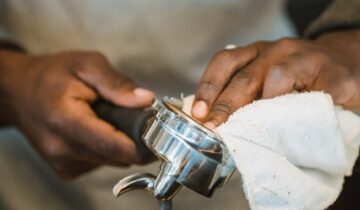
It is critical to recognize that flow profiling cannot compensate for a poorly prepared puck. In fact, its effectiveness is entirely dependent on a uniform and consistent coffee bed. An uneven grind, poor distribution, or an inconsistent tamp will create channels—paths of least resistance where water can flow through too quickly. When channeling occurs, the intended flow profile is irrelevant, as the water is no longer passing through the entire puck evenly. This leads to a shot that is simultaneously under-extracted in some areas and over-extracted in others, destroying any potential for a balanced taste or desirable mouthfeel. Excellent puck preparation is the foundation upon which successful flow profiling is built.
Conclusion
Flow profiling provides the advanced home barista with a direct lever to influence espresso mouthfeel. By moving beyond a fixed pressure approach and instead controlling the rate of water, you can target the extraction of the specific components—oils, solubles, and non-solubles—that build texture. A slow, gentle flow tends to produce a heavier, more viscous shot, while a faster, steadier flow can yield a cleaner, juicier cup. Ultimately, this method allows for a more nuanced and repeatable way to craft espresso that is tailored not only to a specific taste profile but to a desired textural experience. Achieving this level of precision is made possible with specialized tools, and a range of relevant equipment can be found at papelespresso.com.

 No products in the cart.