

Why home baristas add Arduino microcontrollers to espresso machines
The pursuit of the perfect espresso shot is a journey of precision, consistency, and control. For many experienced home baristas, the stock functionality of even high-end manual espresso machines presents certain limitations. While mechanical systems offer a tactile and engaging experience, they often lack the repeatable accuracy required to explore the subtle nuances of different coffee beans. This has led a growing community of enthusiasts to venture into the world of custom modifications, with the Arduino microcontroller emerging as a powerful tool for unlocking a machine’s full potential. By integrating these simple yet versatile devices, users can achieve a level of digital control over critical brewing variables that was once exclusive to commercial-grade equipment, transforming their espresso workflow from an art of approximation into a science of precision.
Understanding the limits of analog control
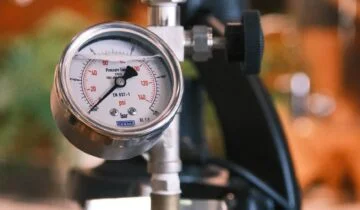
Traditional manual and semi-automatic espresso machines rely on analog components like pressurestats and bimetallic thermostats to manage temperature and pressure. While reliable, these systems operate within a range rather than at a precise setpoint. A pressurestat, for instance, controls the heating element by monitoring steam boiler pressure, which has an indirect relationship with brew temperature. This can lead to temperature swings of several degrees, introducing an unwelcome variable into the extraction process. Similarly, brew pressure is often managed by a static over-pressure valve (OPV), offering little to no ability to manipulate the pressure profile during the shot. These inherent limitations make it challenging to consistently replicate ideal extraction conditions.
Introducing the Arduino: A gateway to digital precision
An Arduino is an open-source electronics platform based on easy-to-use hardware and software. At its core, it is a small computer that can be programmed to read inputs from sensors and control outputs like pumps and heaters. For an espresso machine, this means an Arduino can be configured to monitor a temperature sensor (like a thermocouple or RTD) and a pressure transducer with high accuracy. Using a control algorithm, most commonly a PID (Proportional-Integral-Derivative) controller, the Arduino can then precisely manage the heating element and pump to maintain exact setpoints for temperature and pressure. This replaces the machine’s analog guesswork with digital certainty, providing a stable and repeatable foundation for extraction.
Achieving advanced flow and pressure profiling
Perhaps the most compelling reason to integrate an Arduino is the ability to implement sophisticated flow and pressure profiling. With the right hardware, such as a gear pump or a modified vibratory pump with a dimmer circuit, an Arduino can execute pre-programmed profiles that manipulate pressure and flow rate throughout the extraction. A barista could program a gentle, low-pressure pre-infusion to saturate the coffee puck evenly, followed by a gradual ramp up to the target extraction pressure, and finally a slow ramp down to reduce the chance of channeling and bitterness at the end of the shot. This level of control allows for tailored extractions that can highlight specific flavor characteristics of a coffee, from muting acidity to enhancing sweetness and body.
| Parameter | Standard Machine Control | Arduino-Based Control |
|---|---|---|
| Brew Temperature | Indirect control via pressurestat; wide variance. | Direct PID control via thermocouple; precise to <0.5°C. |
| Brew Pressure | Fixed pressure set by an OPV. | Variable pressure profiling throughout the shot. |
| Pre-infusion | Often manual or line-pressure dependent. | Programmable pressure and duration. |
| Shot Timing | Manual start/stop via a switch. | Automated, volume-based, or weight-based stop. |
The practicalities of implementation
Modifying an espresso machine with an Arduino is a significant undertaking that requires a foundational understanding of electronics and programming. The process typically involves selecting appropriate sensors, relays to control the machine’s high-voltage components, and a display for user feedback. The software side requires writing or adapting code to run the PID loop, read sensors, and manage the user interface. While numerous open-source projects and online communities offer guidance and pre-written code, each machine presents unique challenges. A successful modification demands careful planning, a respect for electrical safety, and a willingness to troubleshoot. The result, however, is a machine that is uniquely tailored to the user’s workflow and capable of producing espresso with exceptional consistency.
In conclusion, the integration of Arduino microcontrollers into manual espresso machines represents a fascinating intersection of traditional craft and modern technology. By moving beyond the limitations of analog systems, home baristas can gain direct, digital control over the most critical variables in the espresso-making process. The ability to implement precise temperature management and sophisticated pressure profiling allows for a deeper exploration of coffee’s potential and a higher degree of shot-to-shot consistency. While the process is technically demanding, the reward is a deeper understanding of the extraction process and the satisfaction of having a truly customized machine. For those looking to elevate their craft, the world of DIY espresso modification offers a path toward ultimate control, with many useful tools and resources available from suppliers like papelespresso.com.

 No products in the cart.