

Troubleshooting inconsistent drink volumes on the Gaggia Anima
For the experienced home barista, consistency is the foundation of quality. When a machine like the Gaggia Anima, known for its automated convenience, begins producing variable drink volumes, it presents a unique challenge. This issue goes beyond simple inconvenience; it directly impacts espresso extraction, altering flavor, body, and aroma with each unpredictable shot. An inconsistent yield suggests an underlying problem in the complex relationship between the machine’s mechanics and the user’s technique. Understanding the cause is the first step toward reclaiming control over your espresso. This article provides a systematic guide to diagnosing and resolving volume inconsistencies, focusing on the technical factors that manual espresso users will appreciate and understand.
Understanding the volumetric system
The Gaggia Anima uses a flow meter to achieve its programmed drink volumes. This small, turbine-like component is situated in the water line before the brew group. As water flows through it, the turbine spins, and a sensor counts each rotation. These rotations are converted into electronic pulses sent to the machine’s mainboard, which equates a specific number of pulses to a target volume (e.g., 30 ml for an espresso). When the target pulse count is reached, the mainboard signals the pump to stop.
While effective, this system is not infallible. Its accuracy depends on a steady, uninterrupted flow of water. Any factor that disrupts this flow, from internal scale buildup to external puck resistance, can cause the flow meter to register an incorrect volume, leading to frustratingly inconsistent shots.
The critical role of grind and dose
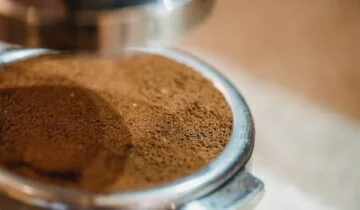
Before assuming a machine fault, the first variables to examine are grind size and dose weight. The coffee puck itself is the primary source of resistance that governs the flow rate of water through the group head. An inconsistent grind or dose will create inconsistent resistance, which directly misleads the volumetric system.
- Grind size: If the grind is too fine, it can create excessive resistance, sometimes choking the machine entirely. This results in a very slow, dripping flow. The flow meter may struggle to accurately measure this low-velocity trickle, potentially cutting the shot short or letting it run long. Conversely, a grind that is too coarse allows water to pass through with little resistance, causing the flow meter to register the target volume too quickly, resulting in an under-extracted and low-volume shot.
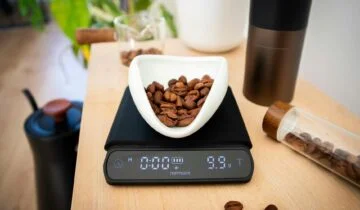
- Dose weight: Varying the amount of coffee grounds from shot to shot changes the density and headspace within the brew chamber. Even a small deviation of a gram can significantly alter the puck’s hydraulic resistance, leading to different shot times and, consequently, different final volumes. Using a scale to ensure a consistent dose is fundamental to troubleshooting.
Distribution, tamping, and water flow
Proper puck preparation is essential for ensuring that water flows evenly through the coffee. Any imperfections in the puck’s density can lead to channeling, a primary culprit behind inconsistent volumes. Channeling occurs when water finds a path of least resistance and creates a small, eroded pathway through the puck.
When channeling happens, water rushes through that pathway at high speed. This concentrated, high-velocity flow causes the flow meter’s turbine to spin much faster than it would during a normal extraction. As a result, the machine’s mainboard reaches its pre-programmed pulse count prematurely and shuts off the pump. The outcome in the cup is a small, under-extracted shot that tastes thin and sour. The machine thinks it delivered the correct volume because the flow meter spun the correct number of times, but it did so in less time with less water. Achieving a level and evenly compressed bed of coffee is key to preventing this.
Machine maintenance and water quality
If you have standardized your coffee preparation and still face issues, the focus should shift to machine health. The water path must be clean and free of obstructions for the flow meter to function correctly.
The most common issue is mineral scale buildup from hard water. Scale can accumulate on the delicate fins of the flow meter’s turbine, causing it to stick, drag, or spin erratically. This will send noisy and unreliable data to the mainboard, making consistent volumes impossible. A regular descaling routine, guided by your machine’s manual and your local water hardness, is the most effective preventative measure.
Additionally, a dirty group head or a clogged shower screen can cause uneven water distribution onto the coffee puck. This poor distribution can itself induce channeling, even if your tamping and distribution techniques are perfect. Regular cleaning of the brew group ensures that water delivery is not the source of the problem.
Conclusion
Resolving inconsistent shot volumes on the Gaggia Anima requires a methodical approach that respects the interplay between user technique and machine function. The issue rarely stems from a single, dramatic failure. Instead, it is often a result of accumulated variables: an inconsistent dose, a slightly uneven tamp, or the slow buildup of scale within the machine’s hydraulic system. By first mastering the variables of coffee preparation—weighing your dose, ensuring an even grind, and preparing a level puck—you can isolate and address the true root cause.
A clean, well-maintained machine is the other half of the equation. Regular descaling and cleaning are not merely suggestions; they are fundamental practices for ensuring the long-term accuracy and reliability of the volumetric system. For baristas seeking precision, a consistent machine is a prerequisite, and the necessary tools and cleaning supplies to maintain it can be found at retailers like papelespresso.com.

 No products in the cart.