

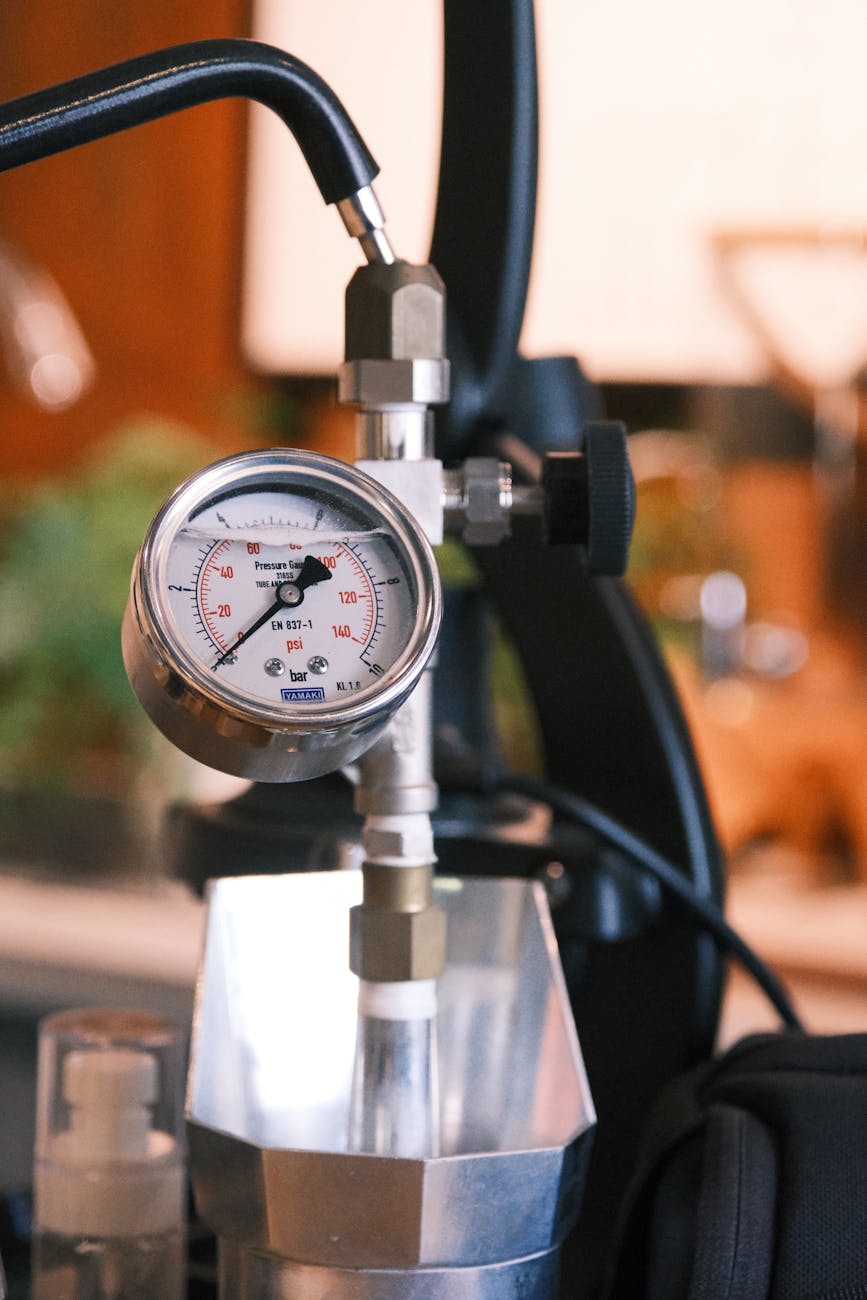
The Gaggia Classic is a legend in the world of home espresso. For decades, it has served as the gateway for countless enthusiasts, offering a robust platform for learning the art of the perfect shot. However, this beloved machine has a significant Achilles’ heel: temperature instability. While capable of producing excellent espresso, achieving consistency shot after shot is a challenge due to its rudimentary temperature control system. This article will delve into why a Proportional-Integral-Derivative, or PID, controller is not just a fancy add-on, but an essential upgrade for any Gaggia Classic owner serious about coffee. We will explore the machine’s inherent temperature problem, explain how a PID solves it, and outline the transformative benefits for your daily espresso routine.
The Gaggia Classic’s temperature problem
To understand why a PID is so transformative, we first need to look under the hood of a stock Gaggia Classic. Its brewing temperature is managed by a simple bimetallic thermostat. Think of it like the thermostat in an old-fashioned home heating system. It works on a basic on/off principle. When the boiler temperature drops below a certain point, the thermostat clicks on, sending full power to the heating element. Once it reaches an upper threshold, it clicks off entirely. This creates a crude and highly inefficient cycle.
The result is a massive temperature swing within the boiler, often as wide as 15-20°C (around 30-40°F). One moment the water might be 95°C, and a few minutes later it could be as high as 115°C. This volatility is the enemy of good espresso. Coffee extraction is a delicate chemical process that is extremely sensitive to temperature.
- Too hot: Water that’s too hot will over-extract the coffee grounds, resulting in a bitter, ashy, and burnt-tasting shot.
- Too cold: Water that’s not hot enough will under-extract the grounds, leading to a sour, weak, and lifeless shot.
This forces the user to perform a ritual known as “temperature surfing”—a frustrating guessing game of timing your shot in relation to the heating light cycles to try and catch the temperature at an optimal point. This is inconsistent, difficult to master, and a major barrier to repeatable results.
What is a PID and how does it fix this?
Unlike the Gaggia’s simple on/off switch, a PID controller is a smart device. It uses a sophisticated algorithm and a feedback loop to maintain a precise temperature with incredible stability. It constantly measures the boiler temperature via a thermocouple and makes tiny, intelligent adjustments to the power sent to the heating element. It doesn’t just switch on and off; it pulses the power as needed to hold the temperature steady, often to within a fraction of a degree of your set target.
The name PID comes from its three control components:
- Proportional (P): This is the primary control. The further the current temperature is from your target, the more power it applies. As it gets closer, it backs off the power to avoid overshooting.
- Integral (I): This component looks at the past. It calculates the accumulated error over time and adjusts the power to eliminate any “droop” or steady-state error, ensuring the temperature settles exactly on your target.
- Derivative (D): This component looks to the future. It analyzes the rate of temperature change. If it sees the temperature rising too quickly, it will reduce power to prevent it from overshooting the target, effectively damping the system.
By combining these three actions, a PID can anticipate and react to temperature changes proactively, holding the brew water at the exact temperature you desire for perfect extraction every single time.
The tangible benefits for your espresso
Installing a PID on your Gaggia Classic isn’t just a technical exercise; it delivers immediate and noticeable improvements to your coffee. The single biggest benefit is shot-to-shot consistency. The guesswork of temperature surfing is completely eliminated. You can pull a shot, prepare your next one, and be confident that the water temperature will be identical, allowing you to focus on other variables like grind size and tamping.
Furthermore, a PID unlocks a new level of control over extraction. Different coffees shine at different temperatures. A light-roasted single-origin from Ethiopia might require a higher temperature (e.g., 94°C) to properly extract its delicate floral notes, while a dark-roasted Italian blend might taste best at a lower temperature (e.g., 90°C) to avoid bitterness. With a PID, you can dial in the perfect temperature for any bean, effectively tailoring the machine to the coffee, not the other way around.
Many PID kits also offer control over steam temperature. This results in more powerful, drier, and more consistent steam pressure, making it significantly easier to create silky microfoam for lattes and cappuccinos.
Is a PID worth the investment?
A PID kit is a significant investment, often costing a third or even half the price of the Gaggia Classic itself. The installation is also a DIY project that requires some comfort with basic wiring. So, is it right for you? If you are a casual coffee drinker who is happy with “good enough” espresso, perhaps not. But if you are an enthusiast who craves consistency and wants to explore the full flavor potential of your coffee beans, the answer is a resounding yes.
A PID is arguably the single most impactful upgrade you can make to a Gaggia Classic. It elevates the machine from a capable entry-level device into a semi-professional powerhouse that can produce results rivaling machines costing three or four times as much. It fundamentally changes the user experience from one of frustration and guesswork to one of precision, control, and repeatability.
| Feature | Standard Gaggia Classic | Gaggia Classic with PID |
|---|---|---|
| Temperature Control | Bimetallic Thermostat (On/Off) | PID Controller (Proactive Algorithm) |
| Temperature Stability | Large swing (+/- 10°C) | Highly stable (+/- 0.5°C) |
| Shot Consistency | Low; requires “temp surfing” | High; extremely repeatable |
| Extraction Control | Very limited and unreliable | Precise and user-adjustable |
| User Focus | Managing the machine’s flaws | Managing coffee variables (grind, dose) |
In conclusion, the Gaggia Classic is a fantastic machine with a single, glaring flaw: its inability to maintain a stable brew temperature. This limitation introduces inconsistency and makes it difficult to get the best out of your coffee. A PID controller directly and effectively solves this problem by replacing the crude stock thermostat with an intelligent, proactive system. The result is unparalleled temperature stability, which translates into shot-to-shot consistency, granular control over extraction, and ultimately, a far superior cup of espresso. For any Gaggia Classic owner looking to move beyond the basics and unlock their machine’s true potential, installing a PID is not just an upgrade; it is a necessary evolution.
 No products in the cart.