

That perfect espresso shot—rich, syrupy, with a beautiful crema and a complex, sweet flavor—is the goal of every home barista. So, when you pull a shot that tastes overwhelmingly bitter, sharp, and unpleasant, it can be incredibly frustrating. While many guides point to issues like grind size, water temperature, or over-extraction, there’s a far more common and often-overlooked culprit lurking in your setup: your equipment. A dirty espresso machine doesn’t just look bad; it actively poisons every shot you pull. This article will delve into how built-up residue and neglected components are the secret source of that dreaded bitterness and, more importantly, what you can do to finally achieve a consistently sweet and delicious espresso every single time.
The hidden enemy: Rancid coffee oils
To understand why a dirty machine creates bitterness, we first need to talk about coffee oils. These oils are essential components of roasted coffee beans. During extraction, hot, pressurized water emulsifies these oils, creating the signature velvety body and stable crema of a great espresso. They carry many of the delicate and desirable flavor compounds that we seek. However, these oils have a dark side. When left exposed to air and heat, they begin to oxidize and turn rancid, much like cooking oil left in a pan for too long. This process transforms them from flavor carriers into flavor destroyers.
Every time you pull a shot, a microscopic layer of these oils is left behind on every surface it touches. This includes the shower screen, the group head gasket, the portafilter, and the basket. Over time, these layers build up, creating a sticky, dark, and incredibly bitter residue. Fresh, hot water passing over this old, rancid gunk picks up its acrid flavors and injects them directly into your new shot. No matter how perfect your beans are or how dialed-in your grind is, you are starting with tainted water. This is why you can have a “perfect” looking extraction that still tastes punishingly bitter—you’re tasting the ghosts of coffees past.
The group head and portafilter: Ground zero for bitterness
The journey to a bitter shot begins at the very first point of contact between water and coffee. The group head and portafilter are the workhorses of your machine, and they are also the areas most susceptible to the rapid buildup of rancid oils. Think of the group head as the “ground zero” for flavor contamination. The shower screen, which distributes water evenly over the coffee puck, gets caked with old coffee grounds and oils. These get baked on by the constant heat, creating a hard, bitter crust. When you start your extraction, the clean water from your boiler is forced through this dirty screen, becoming contaminated before it even reaches your fresh coffee.
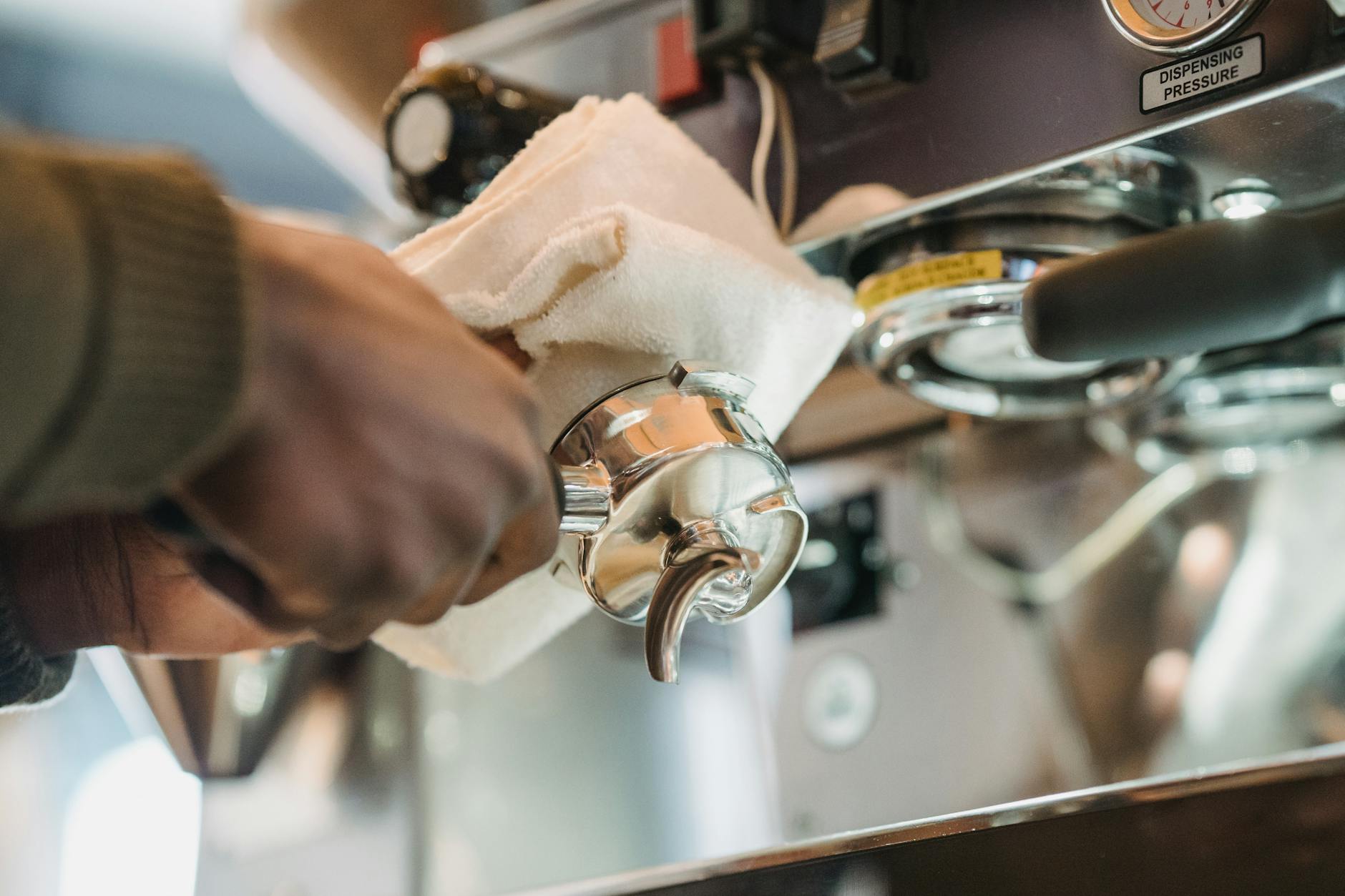
The portafilter and its basket are equally guilty. After knocking out a puck, a quick rinse under the tap simply isn’t enough. Oils and microscopic coffee fines cling to the metal surfaces and lodge themselves in the tiny holes of the basket. With each shot, the portafilter heats up, effectively baking these old oils and creating a foul-smelling, bitter seasoning that taints every subsequent espresso. If you’ve ever noticed a dark, tar-like substance on your “clean” portafilter, that is the source of the bitterness you’re tasting.
Beyond the surface: The internal culprits
While the visible parts of your machine are major offenders, the bitterness can also originate from unseen internal pathways. This is where the practice of backflushing becomes crucial for machines equipped with a three-way solenoid valve (a common feature on semi-automatic machines that releases pressure after a shot). This valve vents excess pressure and water into the drip tray, but in doing so, it can suck coffee grounds and oils back up into the group head’s inner workings.
Without regular backflushing, this internal pathway becomes clogged with old, rancid coffee residue. Each time you brew, the fresh water must travel through this contaminated channel, picking up off-flavors along the way. Even if your portafilter is spotless, a dirty solenoid valve and water path will guarantee a bitter edge to your shot. Similarly, while the steam wand doesn’t directly affect the espresso’s flavor, a neglected wand caked with old, sour milk can ruin a milk-based drink, contributing to an overall negative and “off” taste experience.
Your cleaning schedule for a sweeter shot
The good news is that preventing bitterness from dirty equipment is entirely within your control. It simply requires establishing a consistent cleaning routine. Integrating these tasks into your coffee-making workflow will transform the quality of your espresso from a game of chance into a reliable and delicious daily ritual. A clean machine not only produces better-tasting coffee but also extends the life of its components.
Here is a simple, actionable schedule you can follow:
| Frequency | Task | Why it’s important |
| After every shot | Wipe the shower screen with a brush or cloth. Purge the group head for a few seconds. | Removes fresh coffee grounds and oils before they have a chance to bake on. |
| Daily | Backflush with water (using a blind basket). Thoroughly wash the portafilter and basket with hot water. | Flushes out loose grounds from the solenoid valve and removes the day’s oil buildup from contact surfaces. |
| Weekly | Backflush with a dedicated espresso machine cleaner (like Cafiza). Soak the portafilter and metal baskets in a hot water and cleaner solution for 30 minutes. | The chemical cleaner breaks down and removes stubborn, baked-on rancid oils that water alone cannot. |
| Monthly / As Needed | Descale the machine according to manufacturer instructions. | Removes mineral buildup (limescale) from the boiler and water paths, ensuring stable temperature and pressure, which are also key to avoiding bitterness. |
You have invested in a quality espresso machine and premium coffee beans, so don’t let a simple lack of hygiene stand between you and a delicious cup. The frustration of a bitter espresso is often not a reflection of your brewing skills but rather a cry for help from your equipment. As we’ve seen, the culprit is almost always the buildup of old, rancid coffee oils that accumulate on every surface, from the visible shower screen and portafilter to the hidden internal pathways of the group head. By understanding how these residues contaminate each shot, you can take targeted action. Adopting a simple and consistent cleaning schedule is the single most effective step you can take to eliminate this source of bitterness, ensuring your machine is a clean canvas for every brew. This small investment of time will pay massive dividends in flavor, allowing you to finally taste the coffee as the roaster intended: sweet, balanced, and complex.

 No products in the cart.