

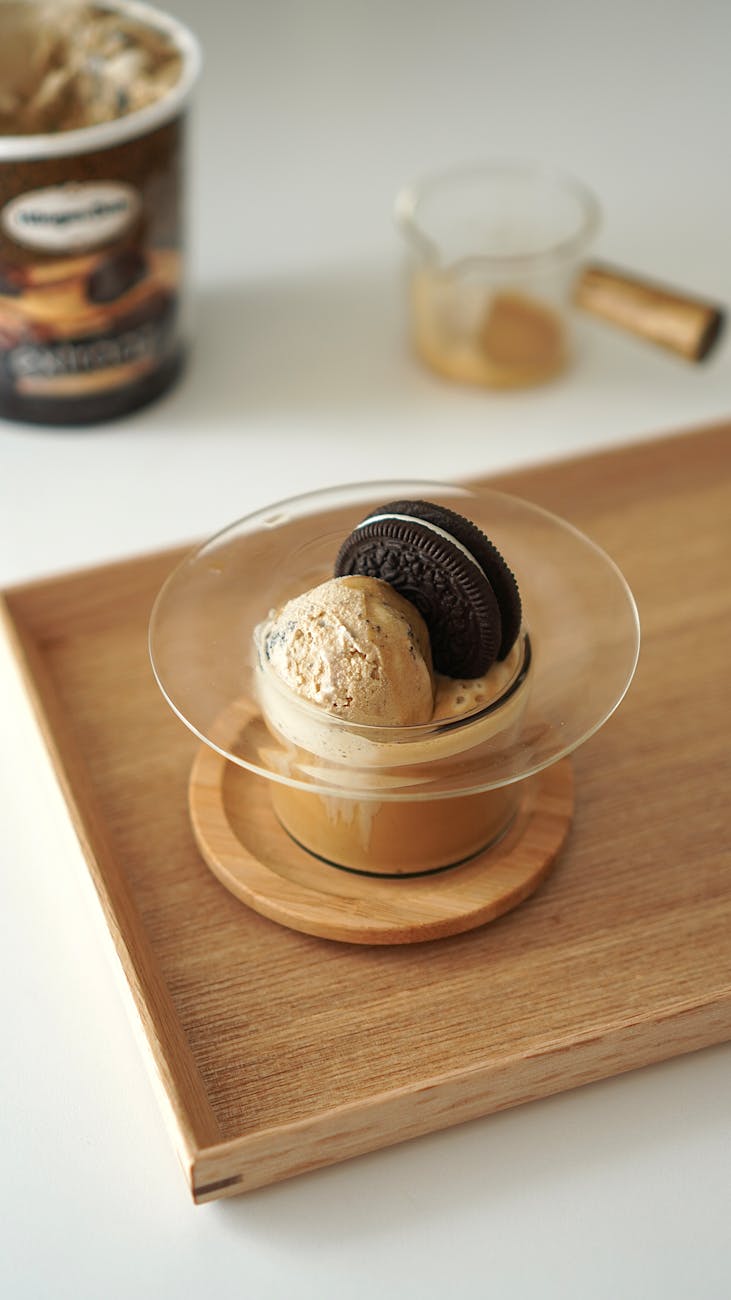
The affogato is a masterclass in simplicity. This classic Italian dessert, translating to “drowned,” features a scoop of vanilla gelato or ice cream gloriously submerged in a shot of hot, fresh espresso. It’s a study in contrasts: hot and cold, bitter and sweet, liquid and solid. However, its simplicity is deceptive. Many home baristas make the mistake of pouring their standard, everyday espresso shot over the ice cream, only to be met with a soupy, diluted, and underwhelming result. This article will dive into why your go-to espresso recipe just won’t cut it for a perfect affogato and how a few simple adjustments can elevate this humble dessert from good to truly sublime.
The clash of temperature and dilution
The core challenge of an affogato lies in the dramatic interaction between its two ingredients. You are pouring a liquid brewed around 93°C (200°F) over a product that is frozen solid. This immediate and extreme temperature difference is the primary reason your standard espresso shot fails. A typical espresso is brewed to a ratio between 1:2 and 1:2.5, meaning for every 18 grams of coffee grounds, you get between 36 and 45 grams of liquid espresso. While perfect for a latte or to be enjoyed on its own, this volume of hot liquid is catastrophic for ice cream.
This larger volume causes instant, aggressive melting, turning your perfectly formed scoop of ice cream into a sweet, milky puddle in seconds. This process does two things, both detrimental to the final taste. First, it destroys the dessert’s intended texture. Second, the melted ice cream—which is largely water, sugar, and fat—massively dilutes the espresso, washing out its complex flavors, body, and aroma. What should be a powerful coffee punch cutting through the creamy sweetness becomes a weak, watery coffee-flavored milk. The art is in minimizing this thermal shock while maximizing flavor.
Brewing for intensity: The ristretto solution
If a standard espresso shot is too watery, the logical solution is to brew a shorter, more concentrated shot. Enter the ristretto. A ristretto, meaning “restricted” in Italian, is an espresso shot pulled with the same amount of coffee grounds but about half the amount of water. Instead of a 1:2 ratio, you aim for a ratio closer to 1:1 or 1:1.5. For an 18-gram dose of coffee, you would be aiming for an 18 to 27-gram yield of liquid espresso.
This shorter, syrupy shot is the secret to a world-class affogato. Because there is significantly less hot water, it melts the ice cream much more slowly, preserving its texture. More importantly, this concentrated shot has an intense, powerful flavor that isn’t just maintained but actually shines against the sweetness and fat of the ice cream. A ristretto naturally emphasizes the rich, sweet, and chocolatey notes of the coffee while minimizing some of the bitterness that comes later in a longer extraction. This creates a balanced, harmonious flavor profile where the coffee and ice cream complement each other instead of competing.
Choosing your beans and dialing in your grind
Crafting the perfect ristretto for your affogato starts with your choice of coffee beans. While you can experiment, a classic affogato pairs best with beans that have classic flavor profiles. Look for medium to dark roasts with tasting notes of chocolate, caramel, nuts, and brown sugar. These robust flavors are a natural match for vanilla ice cream. Highly acidic, light-roasted coffees with delicate floral or citrus notes can often taste sour or clash unpleasantly with the dairy.
Once you’ve chosen your beans, you must adjust your grinder. You cannot simply stop a normal espresso shot early to make a ristretto; this will result in a sour, under-extracted mess. To properly extract flavor in such a small volume of water, you need to grind your coffee finer than you would for a standard shot. This finer grind creates more resistance, slowing down the flow of water through the coffee puck. This allows you to achieve that short 1:1 or 1:1.5 yield in a proper extraction time (typically 15-25 seconds), ensuring the shot is balanced, sweet, and viscous, not weak and sour.
Your recipe for the perfect affogato
Bringing it all together, the perfect affogato is a deliberate process. It requires preparing the espresso specifically for the dessert, not treating it as an afterthought. Chilling your serving glass beforehand will also help preserve the ice cream’s integrity for a few precious extra moments. Remember to pour the espresso slowly over the scoop to create a beautiful marbling effect and, most importantly, serve it immediately. An affogato waits for no one.
Here is a comparison of a standard espresso recipe versus one tailored for an affogato:
| Parameter | Standard Espresso | Affogato Espresso (Ristretto) |
|---|---|---|
| Dose (Dry Coffee) | 18 grams | 18 grams |
| Yield (Liquid Espresso) | 36 – 40 grams | 20 – 27 grams |
| Brew Ratio | ~1:2 to 1:2.2 | ~1:1.1 to 1:1.5 |
| Grind Size | Standard Espresso Setting | Finer than standard |
| Shot Time | 25 – 32 seconds | 15 – 25 seconds |
| Result | Balanced for drinking, but too watery and weak for an affogato. | Concentrated, syrupy, and intense. Cuts through sweetness without creating a soupy mess. |
In conclusion, the affogato is a dessert that demands respect for its coffee component. By abandoning your standard espresso recipe, you can unlock its true potential. The key is to shift your mindset from brewing a beverage to brewing a concentrated, flavorful sauce. By pulling a shorter, ristretto-style shot using a finer grind, you create an espresso that is intense enough to stand up to the cold, sweet ice cream. This simple adjustment minimizes dilution, preserves texture, and creates a harmonious balance of flavors. The next time you crave this Italian classic, take a few extra minutes to dial in a dedicated affogato recipe. Your taste buds will thank you for transforming a simple dessert into a truly memorable experience.



 No products in the cart.