

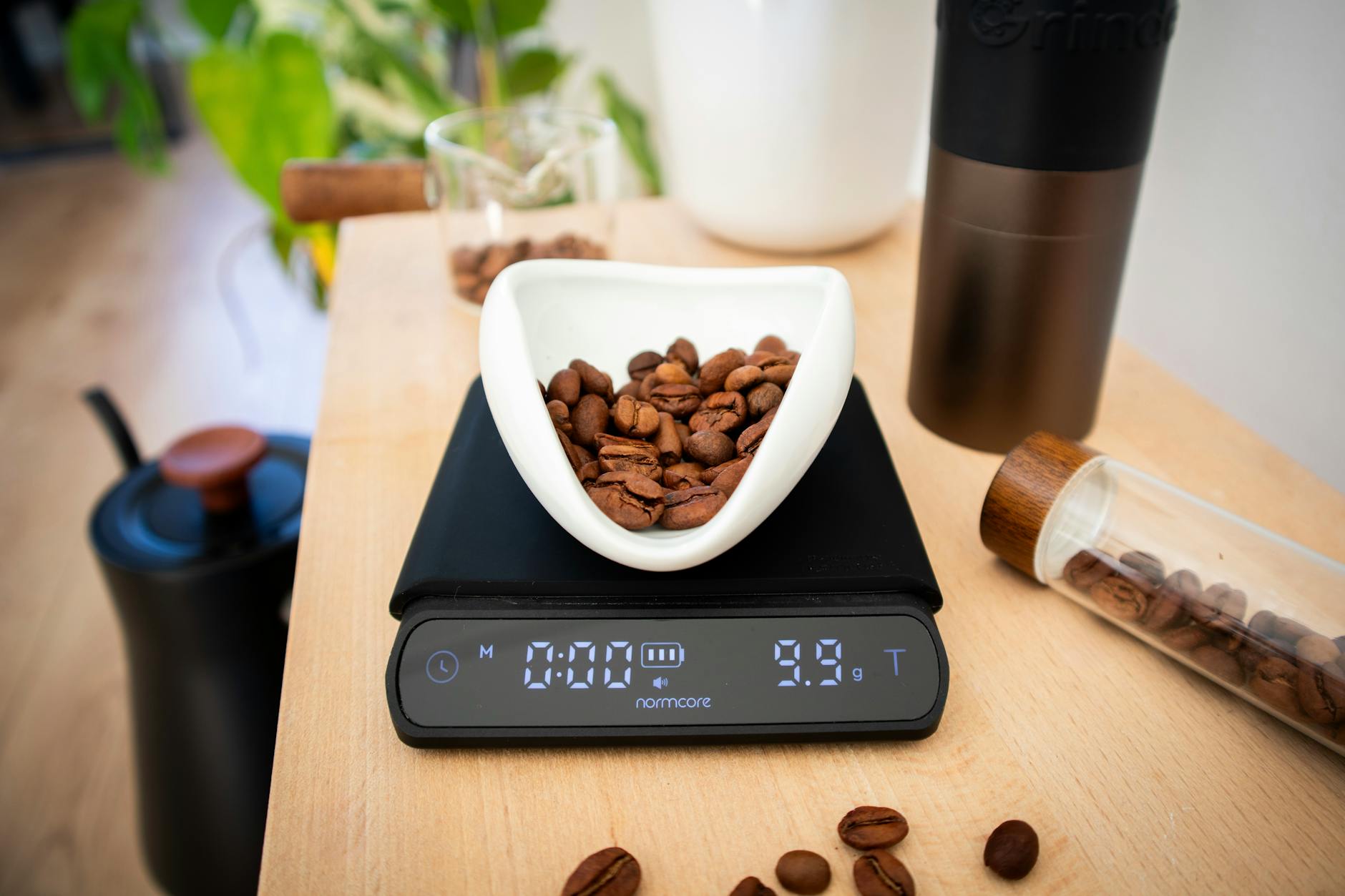
The journey to brewing the perfect espresso at home is a rewarding one, filled with nuanced variables and a-ha moments. Many aspiring baristas start by focusing on the obvious: the beans, the grind, and the tamping. They often measure their shot’s success using the lines on a shot glass, aiming for that classic “double shot” volume. However, this common practice is one of the biggest roadblocks to consistency. Relying on volume is a game of guesswork. The real secret to unlocking repeatable, café-quality espresso lies not in how much space the liquid takes up, but in how much it weighs. This article will explore why trading your shot glass for a digital scale is the single most important step you can take to elevate your coffee game.
The problem with volume and the illusion of crema
When you pull an espresso shot, you aren’t just getting liquid coffee; you’re also getting crema. Crema is the beautiful, reddish-brown foam that sits on top of the shot. While it looks fantastic and contributes to the aroma and texture, it’s mostly carbon dioxide gas that was trapped in the beans during roasting. This is where the problem with volume begins.
The amount of crema can change dramatically from one day to the next, or even from bean to bean. Here’s why:
- Bean freshness: Freshly roasted coffee has a lot more trapped CO2. This means fresh beans will produce a thick, voluminous layer of crema, making a 2-ounce shot appear full while containing less actual coffee liquid. As beans age and degas, they produce far less crema.
- Roast level: Different roast profiles can affect the bean’s structure and gas content, influencing crema production.
- Bean origin: Some coffee varietals are simply known to produce more crema than others.
Because of this, two shots that both fill a glass to the 2-ounce line can have wildly different amounts of actual brewed coffee. One might be 50% crema and 50% liquid, while the other is 10% crema and 90% liquid. This makes it impossible to brew consistently. You are essentially tasting a different recipe every single time, wondering why your coffee is sour one day and bitter the next.
Why weight is the gold standard for consistency
Unlike volume, which is easily distorted by crema, mass is a constant. Thirty-six grams of liquid is always thirty-six grams of liquid, regardless of how much air is mixed into it. This simple fact is the foundation of modern espresso theory. By weighing your output, you remove the variable of crema and focus on the actual amount of coffee you have extracted from your grounds.
This introduces the most critical concept for dialing in espresso: the brew ratio. A brew ratio is simply the relationship between the weight of your dry coffee grounds (your dose) and the weight of the final liquid espresso (your yield). For example, a common starting point is a 1:2 ratio. This means for every 1 gram of dry coffee, you want 2 grams of liquid espresso. So, if you start with an 18-gram dose in your portafilter, you would aim for a 36-gram yield in your cup.
Using a scale is the only way to accurately control and repeat this ratio. It transforms brewing from a guessing game into a precise science, allowing you to make tiny adjustments and truly understand how they affect the taste in your cup.
Getting started with weighing your shots
Making the switch from volume to weight is simple and requires only one piece of equipment: a digital coffee scale. Look for one that measures in 0.1-gram increments, has a built-in timer, and is small enough to fit on your espresso machine’s drip tray. Once you have your scale, the process is straightforward.
- Weigh your dose: Place your empty portafilter on the scale and press the “tare” button to zero it out. Grind your coffee directly into the portafilter until you reach your desired dose, for example, 18 grams.
- Prepare your cup: Place your empty cup on the scale that is now on the drip tray. Tare the scale again so it reads 0.0 grams.
- Pull your shot: Start your espresso machine’s pump and the timer on your scale simultaneously.
- Stop at your target weight: Watch the weight on the scale climb. Stop the shot a gram or two before your target yield. For a 36-gram target, you might stop the machine at 34 grams, as a few extra drips will inevitably fall into the cup.
By controlling your dose, yield, and time, you now have a repeatable recipe you can rely on every single day.
Using brew ratios to control flavor
Once you’ve mastered the technique, you can start experimenting with different brew ratios to intentionally change your espresso’s flavor profile. The ratio has a direct impact on the extraction and, therefore, the taste. A shorter ratio (less water) will be more concentrated and intense, while a longer ratio (more water) will be more diluted and can highlight different flavors.
Here’s a simple guide to common espresso brew ratios and their general effect on taste, assuming an 18-gram dose.
| Ratio name | Input : Output | Typical yield (from 18g dose) | General flavor profile |
|---|---|---|---|
| Ristretto | 1:1 – 1:1.5 | 18g – 27g | Syrupy, concentrated, and intense. Highlights sweetness and body but can taste sour if under-extracted. |
| Normale (Standard) | 1:2 – 1:2.5 | 36g – 45g | A balanced shot. The ideal starting point that aims for a pleasant mix of sweetness, acidity, and body. |
| Lungo | 1:3+ | 54g+ | Thinner body and less intense. Can highlight more delicate, tea-like notes but risks tasting bitter and over-extracted. |
This level of control is simply impossible with volumetric measurements. Weighing your shots empowers you to decide whether you want a rich, syrupy ristretto or a more delicate lungo, and then to repeat that result perfectly every time.
In conclusion, while the lines on a shot glass may seem like a helpful guide, they are fundamentally unreliable for brewing quality espresso. The variable nature of crema makes volume a deceptive and inconsistent metric. By switching to a digital scale, you embrace weight, a constant and precise unit of measurement. This simple change unlocks the powerful concept of brew ratios, giving you complete control over your espresso’s strength and flavor profile. It allows you to create a specific recipe for each coffee bean and repeat it flawlessly. Investing in a coffee scale isn’t just another gadget; it’s the single most impactful upgrade you can make to move from inconsistent coffee to consistently delicious espresso, every single time.



 No products in the cart.