

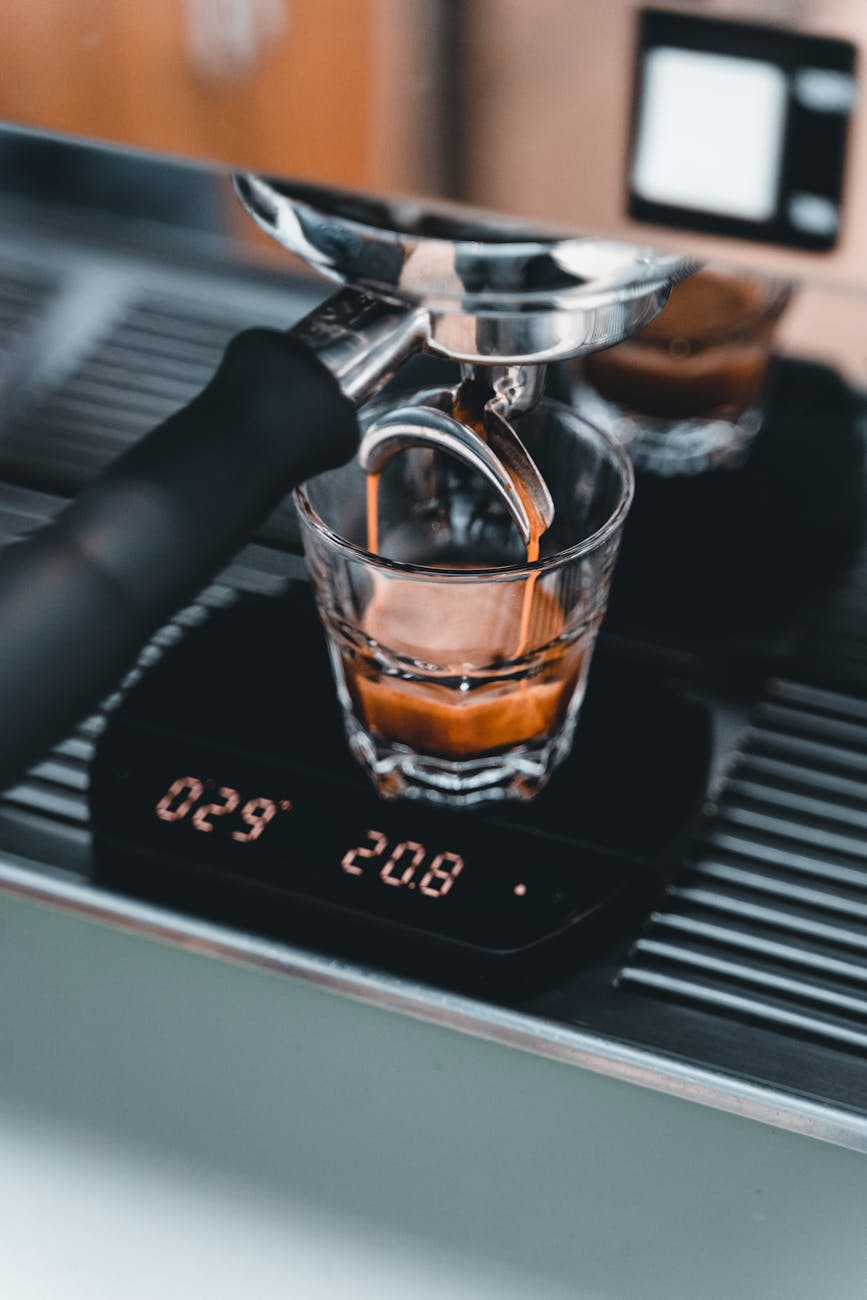
Why you need a WDT tool for more consistent espresso extraction
For any home barista, the quest for the perfect espresso shot is a journey filled with variables. You can have the best beans, a high-end grinder, and a state-of-the-art espresso machine, yet still pull shots that are disappointingly sour, bitter, or inconsistent. Often, the culprit is hiding in plain sight: an uneven distribution of coffee grounds in your portafilter. This leads to a problem known as channeling, which ruins extraction. Fortunately, there is a simple, inexpensive, yet incredibly effective solution that has become a staple in the specialty coffee community. This article will explore the Weiss Distribution Technique (WDT) and explain why a WDT tool is no longer a niche accessory but an essential part of your espresso-making workflow.
The hidden enemy of good espresso: clumps and channeling
Before we can appreciate the solution, we must first understand the problem. When you grind coffee beans for espresso, the process generates static and friction, causing the fine particles to clump together. No matter how expensive or well-designed your grinder is, some level of clumping is almost inevitable. When these clumps are transferred to your portafilter basket, they create an uneven coffee bed with varying densities. Some areas will be tightly packed with grounds, while others will be much looser.
When you lock in your portafilter and start the extraction, water under high pressure behaves like any liquid: it follows the path of least resistance. Instead of flowing evenly through the entire coffee puck, it will rush through the less dense areas, creating small rivers or “channels.” This is channeling. The result is a disastrously uneven extraction. The grounds in the channel’s path are over-extracted, releasing bitter compounds, while the denser, untouched areas are under-extracted, contributing sour, underdeveloped flavors. You’ll often see this visually as blond, watery streams spurting from a bottomless portafilter, and the final taste in the cup is always compromised.
What is the Weiss Distribution Technique (WDT)?
Faced with the persistent issue of channeling, coffee enthusiast John Weiss developed a simple yet brilliant solution in 2005, which came to be known as the Weiss Distribution Technique, or WDT. The technique involves using a fine, needle-like object to stir the coffee grounds in the portafilter basket before tamping. The goal is twofold: to break up any existing clumps and to evenly distribute the grounds, creating a homogenous, fluffy bed of coffee with consistent density throughout.
The tool itself has evolved from a simple DIY contraption (like a cork with needles stuck in it) to sophisticated, professionally manufactured devices. A modern WDT tool typically consists of a handle holding several very thin needles, usually 0.4mm or less in diameter. The thinness is crucial; thicker needles can actually create new channels instead of breaking up clumps. By gently raking the tool through the grounds in circular and crisscross patterns, you systematically de-clump and redistribute the coffee, setting the stage for a perfect, even extraction.
How a WDT tool directly improves your espresso
Incorporating the WDT into your routine directly addresses the root causes of poor extraction, leading to a significant and immediate improvement in the quality and consistency of your espresso shots. The connection is simple: by perfecting the coffee bed, you control the flow of water. This leads to several key benefits:
- Elimination of channeling: This is the primary benefit. A homogenous puck with no density variations forces the water to saturate and pass through the entire bed of coffee evenly. This prevents the under and over-extraction that ruins flavor.
- Increased shot consistency: With channeling removed from the equation, your shots become far more repeatable. You’ll find that your extraction times are more consistent, and the taste from one shot to the next is remarkably similar, allowing you to fine-tune other variables like grind size with greater confidence.
- Higher extraction yield: Because water makes contact with all the coffee grounds uniformly, you achieve a more efficient and balanced extraction. This often leads to a higher extraction yield, meaning you are getting more of the desirable flavor compounds from your beans, resulting in a sweeter, more complex, and fuller-bodied espresso.
Choosing and using your WDT tool effectively
While the concept is simple, the tool and technique matter. When selecting a WDT tool, you need to consider a few key factors to ensure it’s effective. A poor tool can be as bad as no tool at all.
First, focus on the needles. They should be extremely thin, ideally between 0.25mm and 0.4mm. Needles used for acupuncture or 3D printer nozzle cleaning are common for this reason. The number of needles and their arrangement also play a role; a tool with 8-10 well-spaced needles is generally very effective. Here is a quick guide to what to look for:
| Feature | Ideal Specification | Why it matters |
|---|---|---|
| Needle Diameter | 0.25mm – 0.4mm | Thicker needles can create new channels instead of de-clumping. Finer is better. |
| Needle Material | Stainless Steel | Durable, food-safe, and resistant to bending. |
| Number of Needles | 8 – 10 needles | Provides good coverage for efficient and even distribution. |
| Handle & Stand | Ergonomic with a stand | A comfortable handle improves usability, and a stand keeps needles clean and safe. |
To use the tool correctly, follow these steps for a flawless puck preparation:
- Grind your coffee directly into the portafilter basket, preferably using a dosing funnel to prevent mess and contain the grounds.
- Insert the WDT tool, ensuring the needles reach the bottom of the basket.
- Gently stir the grounds, starting with deep circular motions and moving to shallower crisscross or raking patterns across the surface to level the bed. The goal is to create a light, fluffy, and even surface.
- Gently tap the portafilter once or twice on the counter to settle the grounds.
- Tamp the coffee bed firmly and levelly.
By following this process, you create the ideal conditions for a beautiful and delicious extraction.
Conclusion
In the world of espresso, precision and consistency are everything. While it’s easy to get lost in the pursuit of expensive equipment, sometimes the most significant improvements come from refining our technique and using simple, effective tools. The Weiss Distribution Technique is a prime example. By addressing the fundamental problem of clumping and uneven density in the coffee puck, the WDT tool systematically eliminates channeling, the number one enemy of a great espresso shot. The result is not just better-tasting coffee, but a level of consistency that empowers the home barista to truly master their craft. For a minimal investment, the WDT tool offers a massive return, transforming your espresso from a game of chance into a predictable and rewarding daily ritual.

 No products in the cart.