

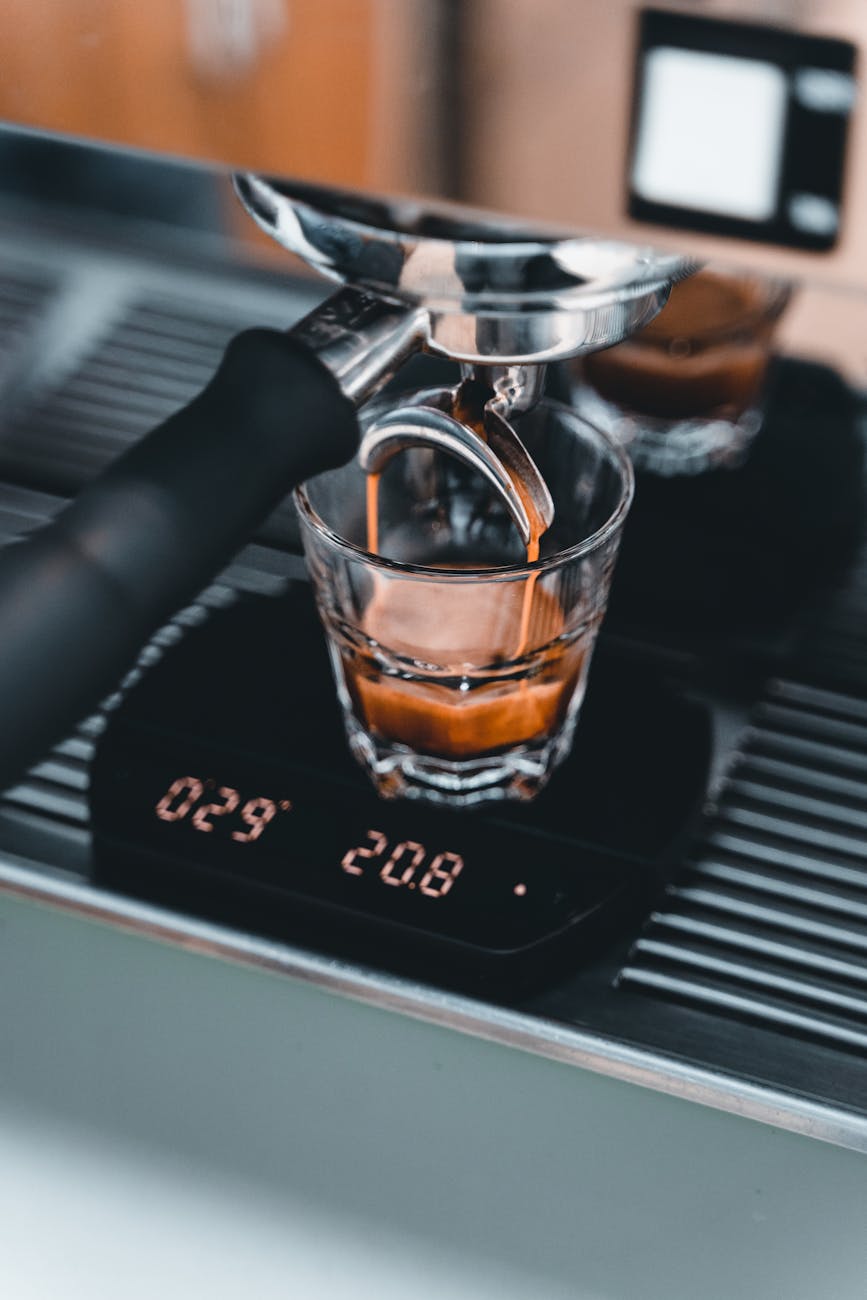
The allure of a fully automatic espresso machine lies in its promise: cafe-quality coffee at the touch of a button. We invest in these sophisticated devices for convenience and consistency, dreaming of the perfect latte or a rich, potent espresso to start our day. But behind the sleek interface and the whir of the grinder, a complex series of events must unfold perfectly. While we focus on the beans or the grind size, one of the most critical and often underestimated variables is water temperature. In the delicate dance of espresso extraction, even a minor temperature fluctuation can be the difference between a sublime coffee experience and a disappointing, lackluster cup. This article delves into why temperature stability is not just a technical feature, but the very heart of great automatic espresso brewing.
The science of coffee extraction
To understand why temperature is so vital, we first need to look at what happens when hot water is forced through finely ground coffee. This process, called extraction, is a chemical reaction where water acts as a solvent, dissolving hundreds of different compounds from the coffee grounds. These compounds are responsible for everything we taste and smell in the final cup.
Crucially, these compounds don’t all extract at the same time or at the same rate. The process generally follows a pattern:
- Acids and Fats: The first compounds to dissolve are the bright, fruity acids and oils. These are responsible for the coffee’s aroma and initial acidic “zing.”
- Sugars: Next, the sugars are extracted. These are what give a well-pulled shot its sweetness, balance, and body, counteracting the initial acidity.
- Plant Fibers (Bitter Compounds): Finally, the deeper, more bitter compounds from the coffee bean’s plant fibers begin to dissolve.
The goal of a perfect extraction is to achieve a balance: dissolving enough of the acids and a majority of the sugars, while stopping just before an excess of the bitter compounds are pulled into the cup. Temperature is the master conductor of this entire orchestra. It dictates the speed and efficiency at which these compounds are dissolved, making precision absolutely paramount.
The temperature sweet spot and its impact on taste
For espresso, the ideal brewing temperature is a surprisingly narrow window, generally accepted to be between 90°C and 96°C (195°F and 205°F). A machine that can consistently maintain its water temperature within this range is capable of producing a balanced shot. A machine that cannot, and allows the temperature to swing, will produce wildly different results, often with unpleasant flavors.
What happens when the temperature is too low? If the water is not hot enough (under 90°C), it lacks the energy to effectively dissolve the desirable sugars and oils. This leads to under-extraction. An under-extracted shot will taste noticeably sour, acidic, and sometimes even salty. It will feel thin and weak in the mouth, lacking the rich body and sweetness you expect from espresso.
What happens when the temperature is too high? Conversely, if the water is too hot (over 96°C), it will aggressively strip compounds from the coffee grounds. This results in over-extraction. The water dissolves all the acids and sugars very quickly and then starts pulling out an excessive amount of the bitter, astringent compounds. An over-extracted shot will taste harsh, bitter, and burnt, leaving a dry, unpleasant aftertaste.
Heating systems and the quest for stability
Fully automatic espresso machines employ different technologies to heat water, and their ability to maintain a stable temperature varies significantly. The two most common systems are thermoblocks and boilers.
A thermoblock or thermocoil works like an on-demand water heater. It flashes cold water through a heated metal block or coil to bring it up to brewing temperature just as it’s needed. While this allows for very fast heat-up times, cheaper or less-engineered thermoblocks can be prone to temperature swings. The initial water might not be hot enough, or the temperature may dip during the 25-30 second extraction process.
A boiler, on the other hand, holds a larger reservoir of water and keeps it at a stable temperature. This generally results in better thermal mass and stability, but it takes longer for the machine to heat up initially. Higher-end machines often improve on these systems with dual boilers (one for brewing, one for steam) or by incorporating a PID controller. A PID (Proportional-Integral-Derivative) controller is essentially a smart brain for the heating element. Instead of just turning the heater on and off, it uses an algorithm to make constant, tiny adjustments, keeping the water temperature incredibly stable, often within a single degree of the target.
Achieving consistency from the first shot to the last
The ultimate goal of a fully automatic machine is consistency. You want the espresso you make at 5 PM to taste just as good as the one you made at 8 AM. This is where temperature stability truly shines. An unstable machine is an inconsistent one. Its first shot of the day might be under-extracted because the components are not fully up to temperature. A second shot pulled too quickly after the first might be over-extracted as the heating element overcompensates.
A machine with excellent thermal stability, however, delivers predictable, repeatable results. It ensures that every single puck of coffee is met with water at the optimal temperature, every single time. This reliability is what separates a merely convenient machine from a truly great one. It guarantees that once you’ve dialed in your favorite beans, you can enjoy them at their best with every press of a button.
| Temperature Fluctuation | Extraction Level | Dominant Flavor Profile |
|---|---|---|
| Too Low (<90°C / 195°F) | Under-extracted | Sour, acidic, salty, thin body |
| Ideal Range (90-96°C / 195-205°F) | Well-balanced | Sweet, complex, vibrant, full body |
| Too High (>96°C / 205°F) | Over-extracted | Bitter, burnt, astringent, hollow |
In conclusion, while the convenience of a one-touch system is the main draw of a fully automatic espresso machine, its ability to produce delicious coffee hinges on the unseen science of thermal stability. As we’ve explored, the precise temperature of the water is not a minor detail but a foundational element that dictates the entire extraction process. It governs whether your final cup is sour and under-extracted or bitter and over-extracted. High-quality heating systems, especially those equipped with PID controllers, are engineered to eliminate these fluctuations. Therefore, when choosing a machine, looking beyond the drink options and considering its temperature management technology is the key to unlocking true, repeatable coffee excellence and ensuring every cup is as perfect as the last.

 No products in the cart.