

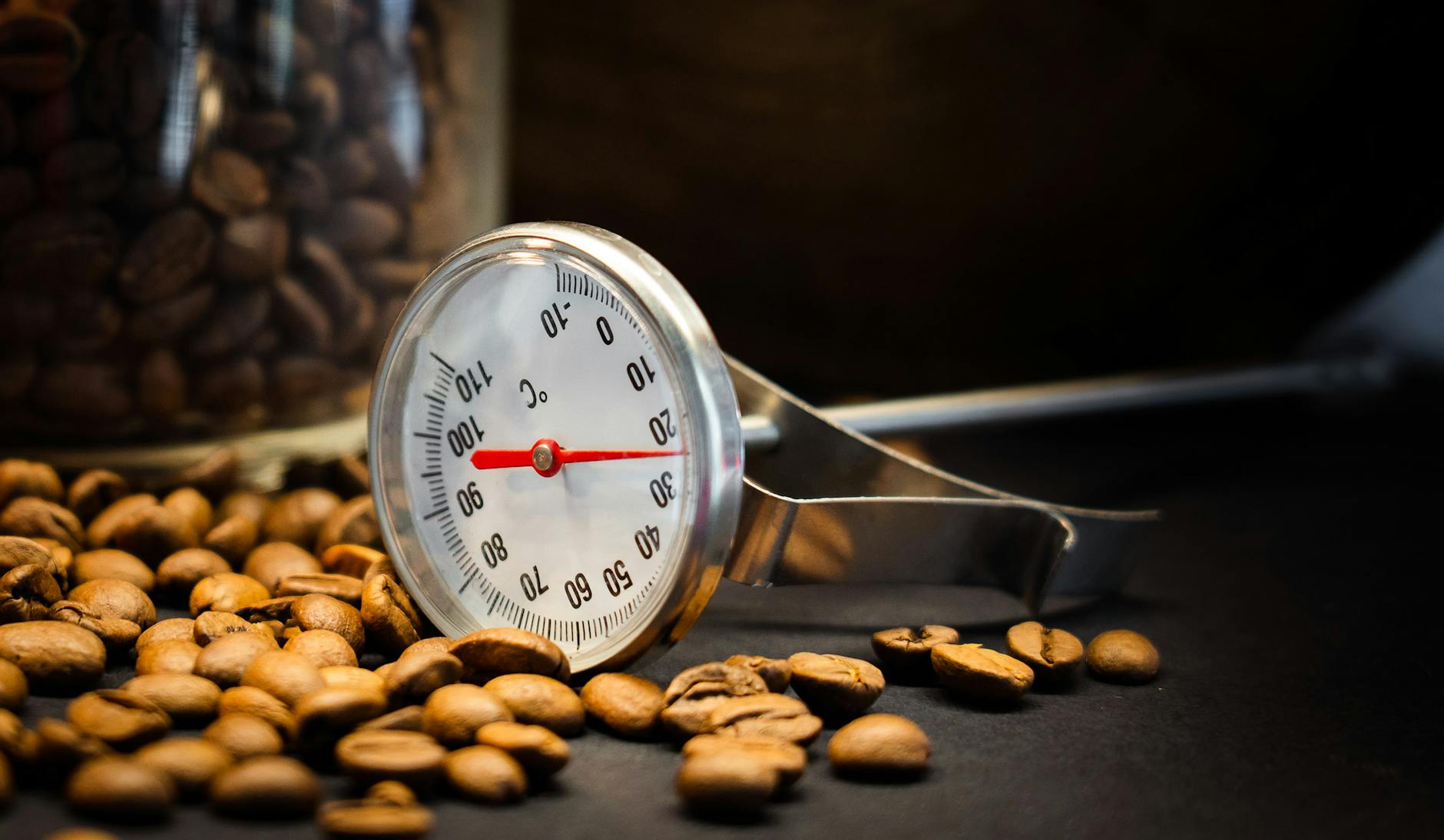
In the relentless pursuit of the perfect espresso shot, baristas and coffee enthusiasts alike obsess over a multitude of variables. From grind size and dose to tamping and extraction time, every step is meticulously controlled. Among these, two titans often dominate the conversation: pressure and temperature. For decades, the iconic 9 bars of pressure have been hailed as the gold standard for espresso. However, a deeper understanding of coffee chemistry reveals a more nuanced reality. While pressure is the force that makes espresso possible, it is the precise and unwavering stability of temperature that truly dictates the quality and flavor profile of the final extraction. This article will explore why mastering temperature is the foundational key to unlocking a coffee’s full potential, often overshadowing the role of pressure.
The role of temperature in chemical extraction
At its core, brewing coffee is a process of chemical extraction. Water acts as a solvent, dissolving a myriad of flavorful compounds from the roasted coffee grounds. The efficiency and selectivity of this process are governed directly by temperature. Different compounds within the coffee bean dissolve at different rates and at different temperatures. Think of temperature as the primary director of flavor.
A lower brewing temperature, for instance, favors the extraction of acids. This can result in a bright, vibrant shot, but if the temperature is too low, it will be overwhelmingly sour and underdeveloped, tasting grassy or vegetal. On the other end of the spectrum, higher temperatures are much more efficient at dissolving sugars and heavier organic compounds. This is where we find the sweet, rich, and complex notes of chocolate and caramel. Go too high, however, and you begin to extract bitter, astringent compounds, leading to a harsh, burnt, and unpleasant cup. The key is not just finding the right temperature for a specific coffee, but maintaining it with absolute stability throughout the entire 25-30 second extraction.
Why pressure is important, but more forgiving
Pressure is the indispensable enabler of espresso. The standard 9 bars of atmospheric pressure are necessary to force water through a finely ground, densely packed puck of coffee in a short amount of time. This process is what creates espresso’s signature viscosity, rich body, and persistent crema. Without sufficient pressure, you simply cannot achieve the concentration and texture that define the drink. Modern techniques like pressure profiling, which involves varying the pressure during the shot, have further demonstrated its influence on flow rate, body, and the reduction of channeling.
However, the role of pressure is more mechanical than chemical. It primarily affects the rate of extraction, not the specific compounds being extracted. While a significant drop or spike in pressure will ruin a shot, minor fluctuations are far less detrimental to the taste than small temperature swings. A shot pulled at 8.5 bars versus 9.5 bars might have a slightly different flow rate or mouthfeel, but its fundamental flavor profile, dictated by temperature, will remain largely intact. Pressure exposes flaws in puck preparation, but it is temperature that determines the raw flavor ingredients available in the cup.
The chaos of an unstable extraction
Now, let’s see how these two variables interact during a shot. Imagine an espresso machine with poor temperature stability. The shot begins, but the water hitting the coffee is a few degrees too cool because the heating element hasn’t kept up. In these first few seconds, you are primarily extracting sour, acidic compounds. As the shot progresses, the machine overcompensates, and the temperature spikes a few degrees above your target. Now, you are pulling out bitter and astringent compounds. The final result is a chaotic and muddled cup that is simultaneously sour and bitter, lacking the sweetness and clarity that should have been extracted in the middle.
This is the critical difference. An unstable temperature doesn’t just produce a bad shot; it produces a confused one with contradictory flavors. A stable temperature, however, allows for a predictable and layered extraction. It methodically dissolves the right compounds in the right order, resulting in a balanced, complex, and repeatable shot of espresso where the origin characteristics of the coffee can truly shine.
Comparing the impact of instability
To put it in perspective, let’s look at the tangible effects of fluctuations in both temperature and pressure on the final cup. While both variables are part of a complex system, their primary areas of influence are distinct. A barista can often compensate for slight pressure inconsistencies with a minor adjustment to the grind size, but it’s nearly impossible to “fix” the taste defects caused by a volatile temperature mid-extraction.
| Variable Fluctuation | Primary Impact | Common Taste Defect | Corrective Potential |
|---|---|---|---|
| Temperature Swing (+/- 2°C) | Chemical Solubility | Sour and Bitter (Unbalanced) | Very Low (Flavor is “baked in”) |
| Pressure Fluctuation (+/- 1 bar) | Flow Rate & Body | Thin Body or Channeling | Moderate (Adjust grind/dose) |
As the table illustrates, the consequences of poor temperature control are far more damaging to the core flavor of the espresso. Advanced machine technology like PID controllers, saturated group heads, and dual boilers are all designed with one primary goal: to deliver water at a precise and unwavering temperature, from the first drop to the last.
In conclusion, while the force of 9 bars of pressure is the engine of espresso, temperature stability is the unwavering hand on the steering wheel, guiding the extraction to its desired destination. Pressure dictates the speed and texture of the journey, but temperature determines the scenery and the final flavor experience. A shot pulled with slightly inconsistent pressure may be imperfect, but a shot pulled with unstable temperature is fundamentally flawed, yielding a muddled mix of undesirable compounds. For anyone seeking to elevate their coffee from good to exceptional, the focus must first be on achieving rock-solid thermal stability. It is the bedrock upon which all other variables are built and the single most critical factor in unlocking the true, delicious potential hidden within every coffee bean.
 No products in the cart.