

The sweet science: Why sugar tastes different in espresso vs. filter coffee
Ever notice how a spoonful of sugar seems to vanish instantly into a tiny cup of espresso, yet the taste of sweetness can feel muted compared to when you stir it into a large mug of filter coffee? It’s a common experience for coffee drinkers, often dismissed as a simple matter of taste. However, the reality is far more interesting, involving a fascinating interplay of physics, chemistry, and our own sensory perception. The difference isn’t just in your head; it’s rooted in the fundamental properties of these two very different coffee preparations. This article will delve into the science behind why sugar dissolves and tastes so distinctly different in espresso versus filter coffee, exploring everything from temperature and concentration to how the coffee’s own flavor profile changes the game.
The physics of dissolution: A tale of temperature and concentration
At its core, dissolving sugar is a physical process. Sugar crystals (sucrose) need to be broken down and dispersed evenly within a liquid, in this case, coffee. Two primary factors govern how quickly this happens: temperature and the concentration of the liquid itself.
Temperature plays a crucial role. Hotter liquids have more energy, causing water molecules to move faster and collide with the sugar crystals more forcefully, breaking them apart efficiently. Both espresso and filter coffee are brewed with hot water, typically between 90-95°C (195-205°F). An espresso shot is delivered hot and fast, meaning the initial contact between sugar and coffee is at a very high temperature, leading to a rapid surface-level dissolution. You see it disappear almost instantly. A larger cup of filter coffee, while also hot, has a greater thermal mass, meaning it holds its temperature longer, allowing for a slower but more sustained dissolution process.
However, concentration throws a fascinating curveball. Espresso is a highly concentrated beverage, packed with dissolved coffee solids (a high TDS, or Total Dissolved Solids). This means there are fewer “free” water molecules available to interact with and dissolve the sugar. Think of it as a crowded room; it’s harder for a new person to move around. Filter coffee, being more dilute, has an abundance of available water molecules, making it a more efficient solvent for a larger quantity of sugar. So while espresso’s heat gives it an initial speed advantage, its concentration can limit the overall efficiency of dissolution.
How the brewing method shapes the coffee’s body
The differences in temperature and concentration are a direct result of the brewing methods, which also create distinct physical characteristics in the final cup. An espresso is born from high pressure forcing hot water through a finely ground, tightly packed puck of coffee. This process takes only about 25-30 seconds, but it extracts a huge amount of oils and solids, creating a viscous, syrupy liquid topped with crema. This high viscosity and the emulsified oils can physically slow down the dispersal of sugar throughout the small volume of liquid, even after it has started to dissolve.
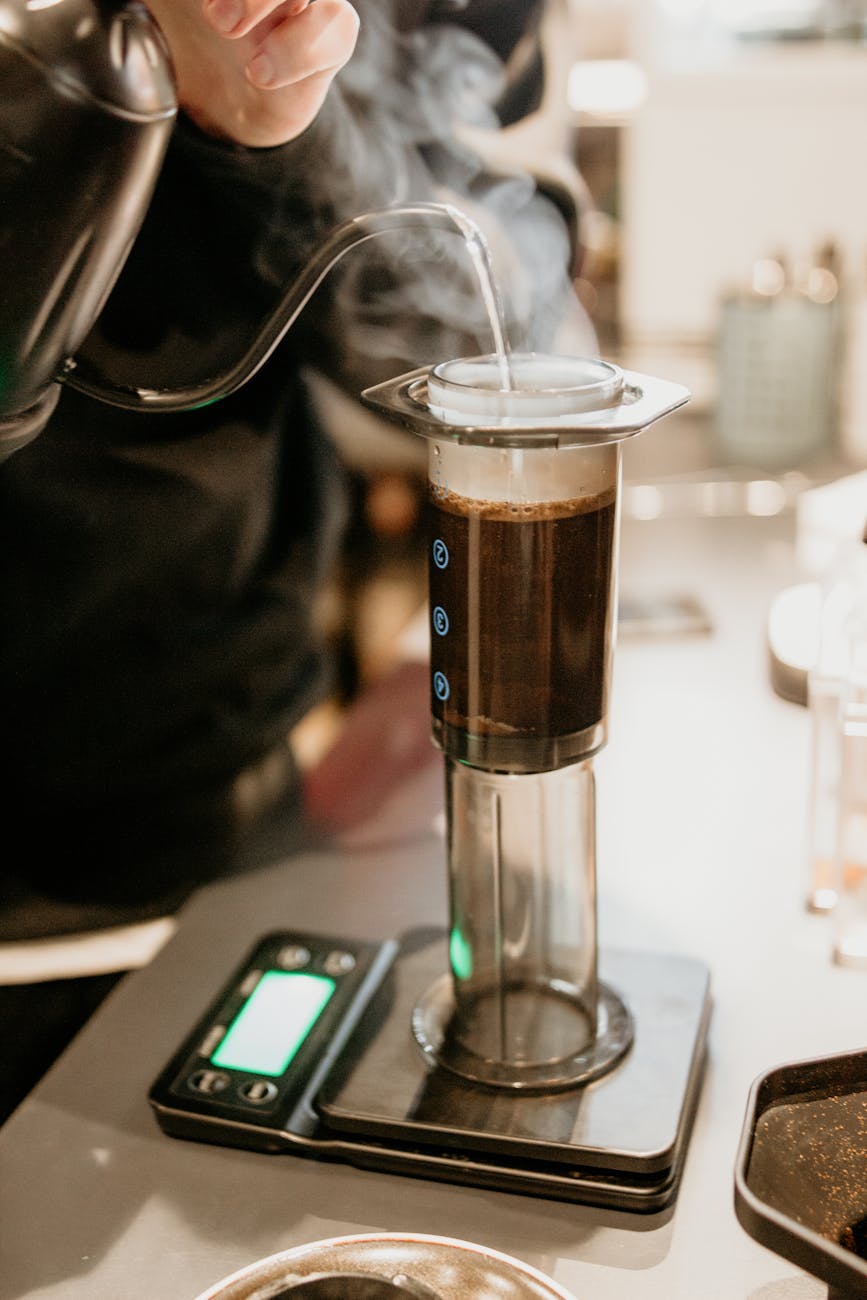
In contrast, filter coffee relies on gravity. Hot water slowly drips through a coarser grind of coffee over several minutes. This gentle, prolonged extraction results in a beverage with a much lower concentration of oils and solids. The resulting liquid is far less viscous, or “thinner,” than espresso. This lack of physical resistance allows sugar molecules, once dissolved, to disperse easily and evenly throughout the entire cup, ensuring a consistent sweetness from the first sip to the last.
It’s not just dissolution, it’s taste perception
Perhaps the most significant factor is how the inherent flavor of the coffee interacts with the added sweetness. This is where our senses come into play. Espresso is defined by its intensity; it delivers a powerful punch of bitterness, acidity, and deep, roasty flavors. When you add sugar, that sweetness has to compete with this aggressive flavor profile. The strong bitter notes in espresso can effectively mask the perception of sweetness, making the same amount of sugar seem less impactful. Your palate is so overwhelmed by the coffee’s complexity that the sugar struggles to stand out.
Filter coffee, on the other hand, typically has a more delicate and nuanced flavor profile. Its notes are often brighter, with more clarity and less bitterness. In this less intense environment, sugar doesn’t have to fight for attention. Instead, it can balance the coffee’s gentle acidity and enhance its subtle flavors. Because there’s less to compete with, the sweetness is perceived as more prominent and integrated, leading to the feeling that the coffee is “sweeter” even with the same amount of sugar.
A side-by-side comparison
To better understand these interacting factors, it helps to see them laid out directly. The way sugar behaves is a direct consequence of the environment it is introduced to.
| Feature | Espresso | Filter Coffee |
|---|---|---|
| Brewing Method | High pressure, short time | Gravity, long time |
| Concentration (TDS) | Very high (8-12%) | Low (1.2-1.5%) |
| Viscosity | High (syrupy) | Low (watery) |
| Initial Dissolution Speed | Very fast due to initial heat | Moderate and steady |
| Flavor Profile | Intense, bitter, complex | Delicate, nuanced, acidic |
| Perceived Sweetness | Muted or masked by coffee’s intensity | Prominent and balanced |
This table highlights that while espresso seems like it should be the perfect medium for dissolving sugar due to its temperature, its other properties—high concentration, viscosity, and an overpowering flavor profile—all work to change how we ultimately experience that sweetness.
In conclusion, the mystery of the “disappearing” sugar in your coffee is solved not by one single factor, but by a confluence of them. Espresso’s intense heat provides a flash dissolution, but its thick, concentrated nature and powerful flavor profile both hinder the full dispersal of sugar and mask its taste on our palate. Conversely, filter coffee provides a more welcoming environment. Its larger volume of less-concentrated liquid allows sugar to dissolve thoroughly and evenly. More importantly, its delicate flavor profile allows the sweetness to shine through, balancing and complementing the coffee rather than competing with it. So, the next time you sweeten your cup, take a moment to appreciate the complex science at play. It’s a perfect example of how physics and perception stir together to create a unique taste experience.

 No products in the cart.