

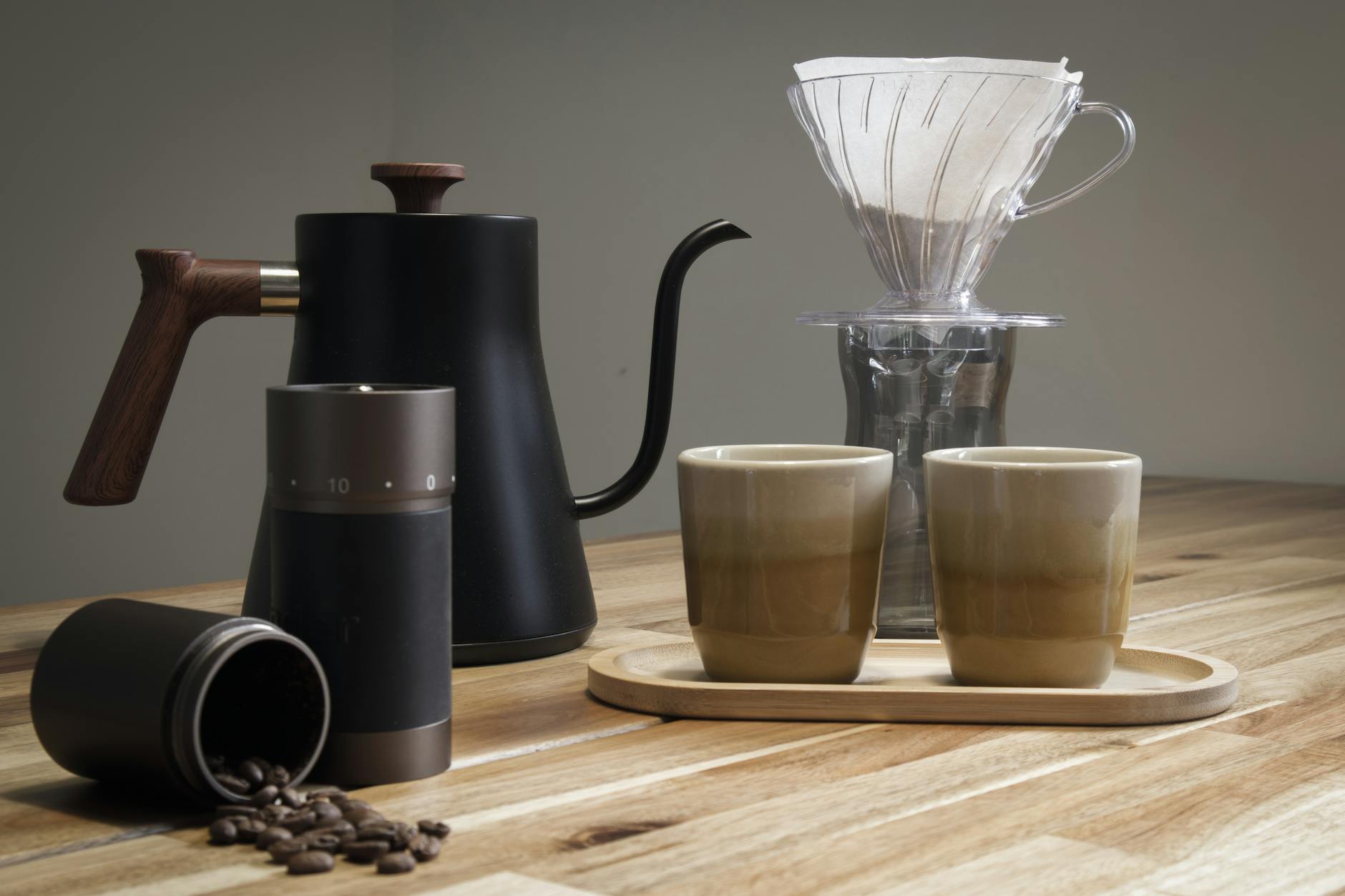
The pursuit of the perfect cup of coffee is a journey filled with variables, from bean origin to brewing method. Yet, one of the most critical and often overlooked factors is the grinding process itself. Specifically, the heat generated by your grinder’s burrs can silently sabotage the flavor potential of your expensive beans. While many coffee enthusiasts focus on grind size, few consider the speed at which they feed beans into the machine. This article will explore the science behind why slow feeding is a crucial technique to prevent grinder burrs from heating up. We will delve into the physics of friction, how a controlled feed rate mitigates heat buildup, and ultimately, how this simple adjustment can preserve delicate aromatics and lead to a more delicious, consistent extraction in your final cup.
The science of heat generation in coffee grinding
To understand why slow feeding works, we first need to grasp why grinders generate heat in the first place. The process of grinding coffee is fundamentally about deconstruction. You are taking a hard, dense material—a roasted coffee bean—and shattering it into hundreds of smaller particles. This act of breaking and shearing requires a significant amount of energy, and a primary byproduct of this energy transfer is heat. There are two main sources of this heat.
The most significant source is friction. As beans are pulled into the burrs, they rub against the metal surfaces and, just as importantly, against each other. The immense pressure required to fracture the beans creates intense frictional heat right at the point of grinding. The second source is the grinder’s motor. Like any electric motor, it produces heat as it operates. This heat can travel up the drive shaft and transfer directly to the burrs, warming them even before the grinding starts. However, the friction from the beans themselves is the most volatile and impactful source of heat, and it is the variable we can most directly control with our technique.
How slow feeding reduces friction and heat
Now that we’ve identified friction as the main culprit, the solution becomes clearer. The amount of friction generated is directly proportional to the load on the burrs at any given moment. This is where the difference between traditional hopper grinding and slow feeding becomes stark. When you fill a hopper and turn on the grinder, the burrs are immediately inundated with a large volume of beans. The grinding chamber is packed, creating a high-pressure environment with constant, intense bean-on-bean and bean-on-burr contact. The motor strains under this heavy load, and the friction skyrockets, causing a rapid increase in burr temperature.
Slow feeding, often practiced by those who single dose, completely changes this dynamic. By introducing beans into the running burrs gradually, you fundamentally reduce the workload. Instead of grinding a dense mass of coffee, the burrs are only working on a few beans at a time. This has several key effects:
- Reduced load: The instantaneous force required from the motor is much lower and more consistent, leading to less motor strain and heat transfer.
- Less bean-on-bean friction: With fewer beans in the chamber, there is more space, and the primary grinding action comes from the burrs themselves, not from beans being smashed against each other.
- Improved heat dissipation: As the burrs rotate, they have moments with less material between them, allowing air to circulate and carry some heat away. This brief “cooling” period per rotation prevents a cumulative temperature spike.
Essentially, you are spreading the same amount of work over a slightly longer period, which keeps the system from overheating.
The tangible benefits for your coffee
Minimizing heat during grinding isn’t just a technical exercise; it has a direct and profound impact on the taste of your coffee. Roasted coffee is full of delicate, volatile aromatic compounds that create the complex flavors and aromas we love. Heat is the enemy of these compounds. When burrs become too hot, they essentially begin to “cook” the grounds as they are being produced. This can cause the most fragile and desirable flavor notes—like bright florals or sweet fruity esters—to evaporate before they ever reach your brewer. The result is a flatter, less vibrant, and often more generic-tasting coffee.
Furthermore, excessive heat affects grind consistency. Hot burrs can make the coffee particles slightly softer and more pliable, leading to a “smearing” action rather than a clean shattering. This produces a higher quantity of microscopic particles, or “fines.” An excess of fines leads to an uneven extraction, where the tiny particles over-extract and release bitter compounds, while the larger particles under-extract, contributing sourness. By keeping the burrs cool through slow feeding, you promote a more brittle fracture of the bean, resulting in a more uniform particle size distribution and a cleaner, sweeter, and more balanced extraction.
Practical application and a comparative look
Implementing slow feeding is simple, especially for home baristas who already practice single dosing—weighing out a specific dose of beans for each shot. Instead of dumping the entire dose into the grinder at once, simply pour the beans in slowly and steadily while the motor is running. This “drizzling” technique allows the burrs to process the coffee at a manageable rate. Some high-end grinders even have built-in augers or feed mechanisms that accomplish this automatically, recognizing its importance for grind quality.
This technique contrasts with the typical workflow in a busy café, where speed is essential. Commercial grinders use large, powerful motors and massive flat burrs designed to handle high thermal loads. For them, grinding a 20-gram dose in three seconds is a priority. For the home enthusiast seeking the highest quality, however, taking ten seconds to slowly feed that same dose can yield a noticeably superior result.
Here is a simple comparison:
| Feature | Hopper Feeding (Fast) | Slow Feeding (Single Dosing) |
| Burr Load | High and immediate | Low and consistent |
| Heat Generation | Rapid and high | Gradual and minimal |
| Flavor Preservation | Risk of losing volatile aromatics | Excellent preservation of delicate notes |
| Grind Consistency | Higher potential for fines | Promotes uniformity and fewer fines |
| Static Buildup | Often higher due to aggressive grinding | Often reduced due to gentle grinding |
Controlling the feed rate is one of the most accessible ways to upgrade your grinding without spending any money.
In conclusion, managing temperature during grinding is a cornerstone of achieving exceptional coffee. The primary source of this performance-killing heat is the friction generated by the immense load of beans being forced through the burrs at once. As we have explored, the simple technique of slow feeding directly addresses this problem by reducing the instantaneous workload on the grinder. This minimizes friction, keeps the burrs cool, and in turn, preserves the delicate volatile compounds responsible for coffee’s wonderful aromas and flavors. The benefits extend to improved grind consistency and reduced static, leading to a cleaner, sweeter, and more predictable extraction. For any coffee lover who single doses, experimenting with a slower, more deliberate feed rate is a free and powerful way to unlock more potential from every single bean.
 No products in the cart.