

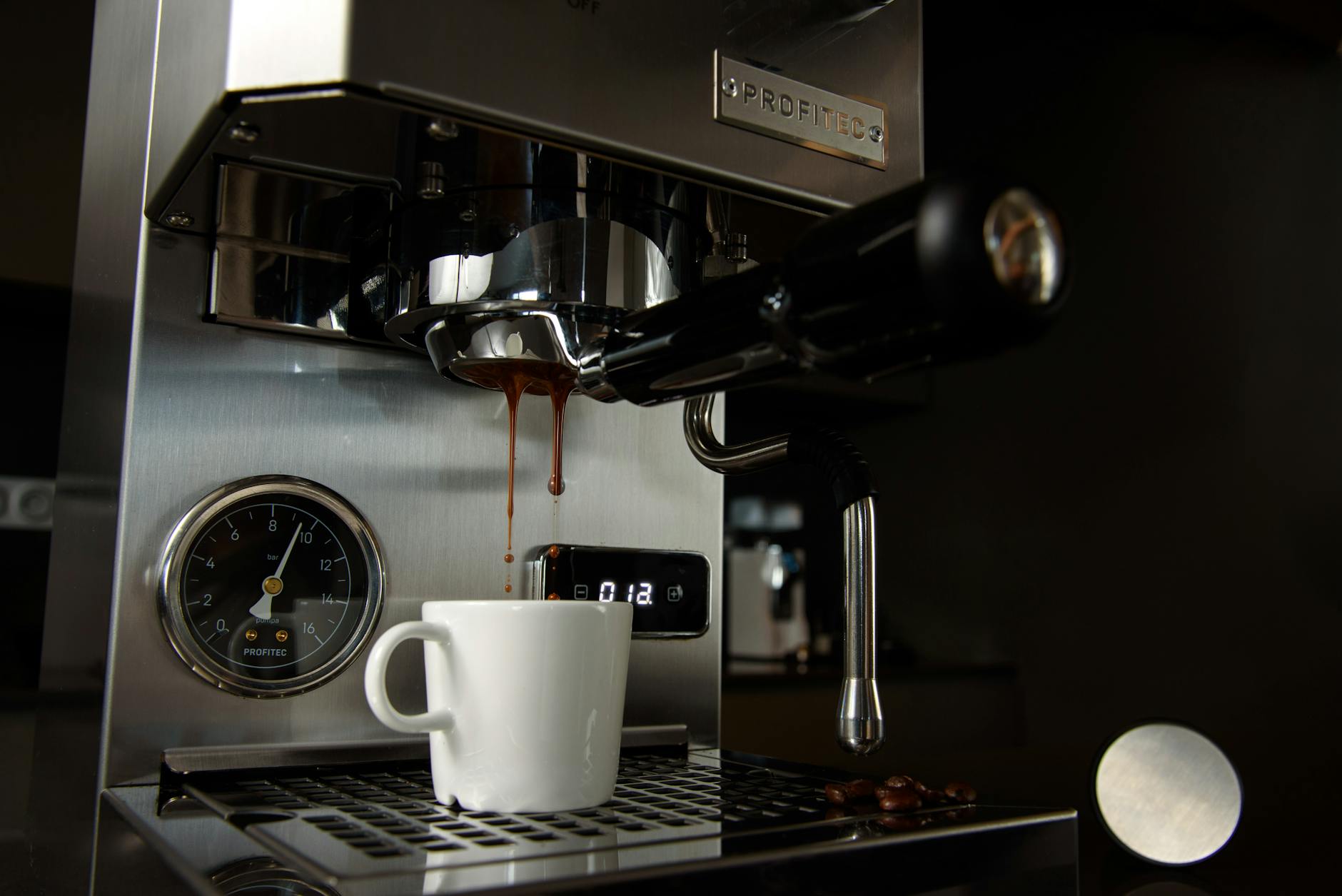
There’s nothing more frustrating for a home barista than doing everything right—weighing the beans, timing the shot, using a great machine—only to be met with a thin, sour, and bitter espresso. This disappointing result is often caused by a phenomenon called channeling, where water blasts through the coffee puck unevenly. While many factors can cause channeling, one of the most overlooked culprits is hiding in plain sight: the age of your coffee beans. Old, stale beans behave dramatically differently from their fresh counterparts during extraction. This article will dive deep into the science of why old coffee beans lead to channeling and, more importantly, provide you with the actionable techniques you need to fix it and pull better shots.
What is espresso channeling?
Before we can fix the problem, we need to understand it. In a perfect world, when you brew espresso, water is forced through a compacted puck of ground coffee at high pressure. This water should flow through the entire puck evenly, extracting all the delicious solids and oils at the same rate. This is called an even extraction.
Channeling is the opposite. It occurs when water finds a path of least resistance—a crack, a fissure, or a less dense area—and rushes through that “channel” instead of saturating the whole puck. As a result, the coffee in the channel gets over-extracted (imparting bitter flavors), while the rest of the puck remains under-extracted (imparting sour, acidic flavors). You end up with a messy shot that tastes like a confusing, unpleasant mix of both.
You can spot channeling in a few ways:
- Visually (with a bottomless portafilter): You’ll see tiny jets or “squirters” of espresso shooting out, or the extraction will look uneven, with some areas turning blond far too quickly.
- By taste: The shot will have a signature “sour and bitter” taste, lacking the sweetness and body of a well-pulled espresso.
- By shot time: Often, a channeled shot will run very fast, as the water isn’t meeting enough resistance.
The science behind aging coffee beans
To understand why old beans are so prone to channeling, we need to look at what happens to them after they’re roasted. A coffee bean isn’t an inert rock; it’s an organic product undergoing constant chemical changes.
The most important change is degassing. When coffee is roasted, a significant amount of carbon dioxide (CO2) gets trapped inside the bean’s cellular structure. Over the first few days and weeks after roasting, this CO2 slowly seeps out. This gas is crucial for a good extraction. When hot, pressurized water hits fresh coffee grounds, the remaining CO2 helps slow the water down, creating resistance and allowing for a more even saturation. It’s also a key component in producing rich, stable crema.
As beans age past their peak (typically 3-4 weeks post-roast), they lose most of this CO2. They also become much drier and more brittle. This brittleness affects how they grind. Old beans tend to shatter into a less uniform mix of particle sizes, often producing an excess of super-fine particles (fines) alongside larger boulders. This lack of uniformity is a recipe for disaster in an espresso puck.
How old beans directly cause channeling
Now we can connect the dots. The physical and chemical changes in old beans create a perfect storm for channeling.
First, the lack of CO2 means the coffee puck has less natural resistance. There’s no gas to help swell the grounds and slow the water down. The water hits the puck and wants to find the quickest way through. Second, the inconsistent grind from brittle beans creates a structurally weak puck. The mix of fines and boulders doesn’t compact into a stable, homogenous mass. Instead, it creates hidden areas of low density.
When the 9 bars of pressure from your espresso machine hit this weak, unstable puck, the water immediately exploits those low-density spots. A channel forms, and the high-pressure water erodes it further, widening the path. This is why a shot made with old beans can start dripping and then suddenly gush out uncontrollably. The puck structure literally collapses, and an even extraction becomes impossible.
How to fix channeling from old beans
The best solution is always to use fresh beans, ideally within 7 to 21 days of the roast date. But if you’re stuck with an older bag, don’t despair. You can make adjustments to your technique to compensate for the bean’s age and mitigate channeling.
Your primary goal is to increase resistance and create a more uniform puck. Here’s how:
- Grind finer. This is your most powerful tool. Grinding finer increases the surface area of the coffee and allows the particles to compact more tightly, creating more resistance for the water to push through. Make small, incremental adjustments until your shot time is in the desired range (e.g., 25-30 seconds).
- Perfect your puck prep. With old beans, meticulous puck prep is non-negotiable. Use a Weiss Distribution Technique (WDT) tool—even a simple needle or paperclip—to break up all clumps and evenly distribute the grounds. This eliminates pre-existing weak spots that could turn into channels.
- Ensure a level tamp. After distributing, tamp firmly and, most importantly, perfectly level. An uneven tamp will create one side of the puck that is less dense, inviting a channel.
- Consider pre-infusion. If your machine has pre-infusion capabilities, use it. A long, low-pressure pre-infusion gently saturates the dry, brittle puck, allowing it to swell and become more stable before the full 9 bars of pressure hit.
Here is a summary of the issues and their corresponding solutions:
| Problem with old beans | Technique to fix it | Why it works |
|---|---|---|
| Low CO2 / Less Resistance | Grind Finer | Increases the density of the coffee puck, physically slowing down the water flow. |
| Inconsistent Grind / Clumps | Use a WDT Tool | Breaks up clumps and creates a homogenous coffee bed, removing weak points. |
| Brittle Puck Structure | Use Pre-infusion | Gently saturates the puck, preventing high pressure from immediately fracturing it. |
| Fast Shot Time | Increase Dose (Slightly) | Adds more coffee to the basket, increasing the depth and density of the puck. |
In conclusion, the battle against channeling often begins long before you pull the shot—it starts with your choice of coffee beans. Old beans, having lost their essential CO2 and become brittle, create a fragile and unstable puck that is highly susceptible to channeling. This leads to the dreaded sour and bitter flavors that ruin an otherwise good morning. By understanding the science, you can fight back. Grinding finer to increase resistance and focusing on flawless puck preparation with tools like a WDT are your best defenses. While nothing truly replaces the quality and forgiveness of fresh coffee, these adjustments can help you salvage older beans and still produce a balanced, enjoyable cup of espresso.


 No products in the cart.