

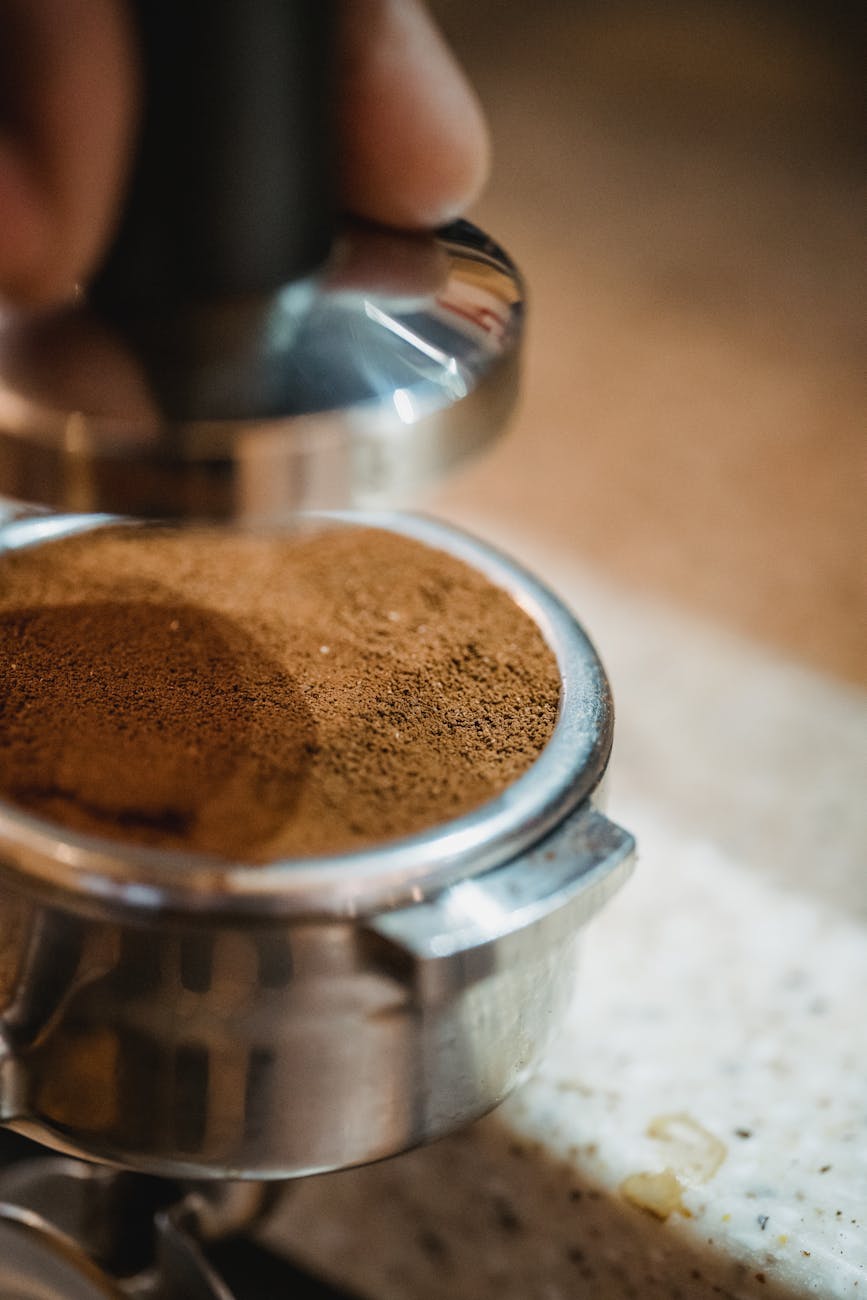
Why your light roast espresso needs a precision basket
The world of specialty coffee has embraced light roasts for their vibrant, complex, and often fruity or floral flavor profiles. They represent the coffee bean in a form closer to its origin, showcasing the unique terroir of its farm. However, anyone who has tried to pull a shot of light roast espresso at home knows the challenge. It’s a delicate dance that often ends in a sour, under-extracted cup. While many factors contribute to a great shot, one piece of equipment is often overlooked yet critically important: the portafilter basket. Moving from a standard, stock basket to a precision-engineered one is not just an upgrade; it’s a fundamental shift in approach required to unlock the true potential of light roast coffee.
The challenge of extracting light roast coffee
To understand why precision baskets are so crucial, we first need to appreciate why light roasts are notoriously difficult to work with for espresso. Unlike their darker-roasted counterparts, light roast beans are significantly different on a physical level. The roasting process breaks down the bean’s cellular structure, making it more brittle and soluble. Light roasts, having spent less time in the roaster, are:
- Denser and harder: The bean’s structure is more intact, making it more difficult to grind uniformly and requiring more force from the water to penetrate.
- Less soluble: The chemical compounds that create flavor and sweetness haven’t been developed as much and are harder to dissolve into the water during the brief window of an espresso extraction.
- Less porous: This density means water has a harder time flowing evenly through the puck of coffee grounds.
These characteristics create a perfect storm for extraction problems. The primary issue is channeling, where water finds paths of least resistance and bypasses large sections of the coffee puck. This results in a shot that is simultaneously under-extracted (from the bypassed grounds, causing sourness) and over-extracted (from the channels, causing bitterness). The result is an unbalanced and unpleasant cup.
What separates a precision basket from a standard one?
At a glance, a standard basket and a precision basket look similar. They are both metal filters that hold the coffee grounds. However, the difference lies in the manufacturing process and the resulting quality of the filtration holes. A standard basket, typically included with most espresso machines, is made by stamping a sheet of metal. This process can lead to irregularly shaped, sized, and spaced holes. Some holes might be partially blocked, while others are jagged or oblong.
A precision basket, on the other hand, is manufactured with much tighter tolerances. The holes are created using methods like laser-cutting or photo-etching, ensuring every single hole is perfectly circular, uniformly sized, and precisely spaced across the entire surface. This meticulous engineering creates a filter bed that is completely consistent. Furthermore, many precision baskets feature straight, non-tapered side walls, which can help promote a more even puck density from top to bottom.
How precision baskets enable better extraction
The uniformity of a precision basket directly addresses the core challenges of light roast espresso. With every hole being identical, water pressure is distributed evenly across the coffee puck’s surface. This dramatically reduces the likelihood of channeling because there are no “weak spots” or areas of lower resistance for the water to exploit. An even flow ensures that all of the coffee grounds are saturated and extracted at a similar rate, leading to a more homogenous and balanced extraction.
This improved flow dynamics allows for the most critical adjustment needed for light roasts: grinding finer. With a standard basket, grinding finer often chokes the machine or worsens channeling as the water struggles to pass through the dense, compacted puck. Because a precision basket promotes such an even flow, you can grind significantly finer without these negative effects. A finer grind increases the total surface area of the coffee particles, which is essential for extracting the less soluble flavor compounds locked inside dense, light roast beans. More surface area means the water can work more efficiently to dissolve those delicate floral, fruity, and sweet notes.
Putting it into practice: Dialing in your shot
Switching to a precision basket requires a change in your espresso recipe and workflow. You can’t simply swap it in and expect perfect results. The goal is to leverage its ability to handle a finer grind to achieve a higher extraction yield.
Puck preparation becomes more important than ever. Because precision baskets are so consistent, they will highlight any flaws in your distribution or tamping. Using a Weiss Distribution Technique (WDT) tool to break up clumps and evenly distribute the grounds is highly recommended. A level, consistent tamp is also essential.
You will need to adjust your grinder much finer than you are used to. From there, you can play with the brew ratio. While a 1:2 ratio (e.g., 18g of coffee in, 36g of liquid out) is a common starting point, light roasts often taste better with longer ratios like 1:2.5 or even 1:3. This gives the water more contact time to pull out the desired sweetness and complexity.
| Parameter | Standard basket approach | Precision basket approach |
|---|---|---|
| Grind setting | Coarser to avoid choking | Significantly finer to increase surface area |
| Puck prep | Important | Critical (WDT is essential) |
| Common issue | Channeling and sourness | Highlights flaws in distribution |
| Brew ratio | Often limited to 1:2 – 1:2.2 | Enables longer ratios (1:2.5 – 1:3) |
| Resulting flavor | Often sharp, sour, and unbalanced | Balanced, sweet, and complex |
Conclusion
Pulling a great shot of light roast espresso is a pursuit of clarity and balance, aiming to capture the delicate flavors of the bean’s origin. The physical properties of these denser, less soluble beans make them inherently resistant to even extraction. While a standard basket can get you by with darker roasts, its manufacturing inconsistencies create a significant barrier to success with light roasts, often leading to channeling and sour shots. A precision basket, with its perfectly uniform holes, transforms the extraction process. It provides the foundation of even water flow necessary to grind finer, increase surface area, and properly extract the complex sugars and acids from the coffee. It isn’t just a minor accessory; it is a fundamental tool for any coffee enthusiast serious about mastering the art of light roast espresso.


 No products in the cart.