

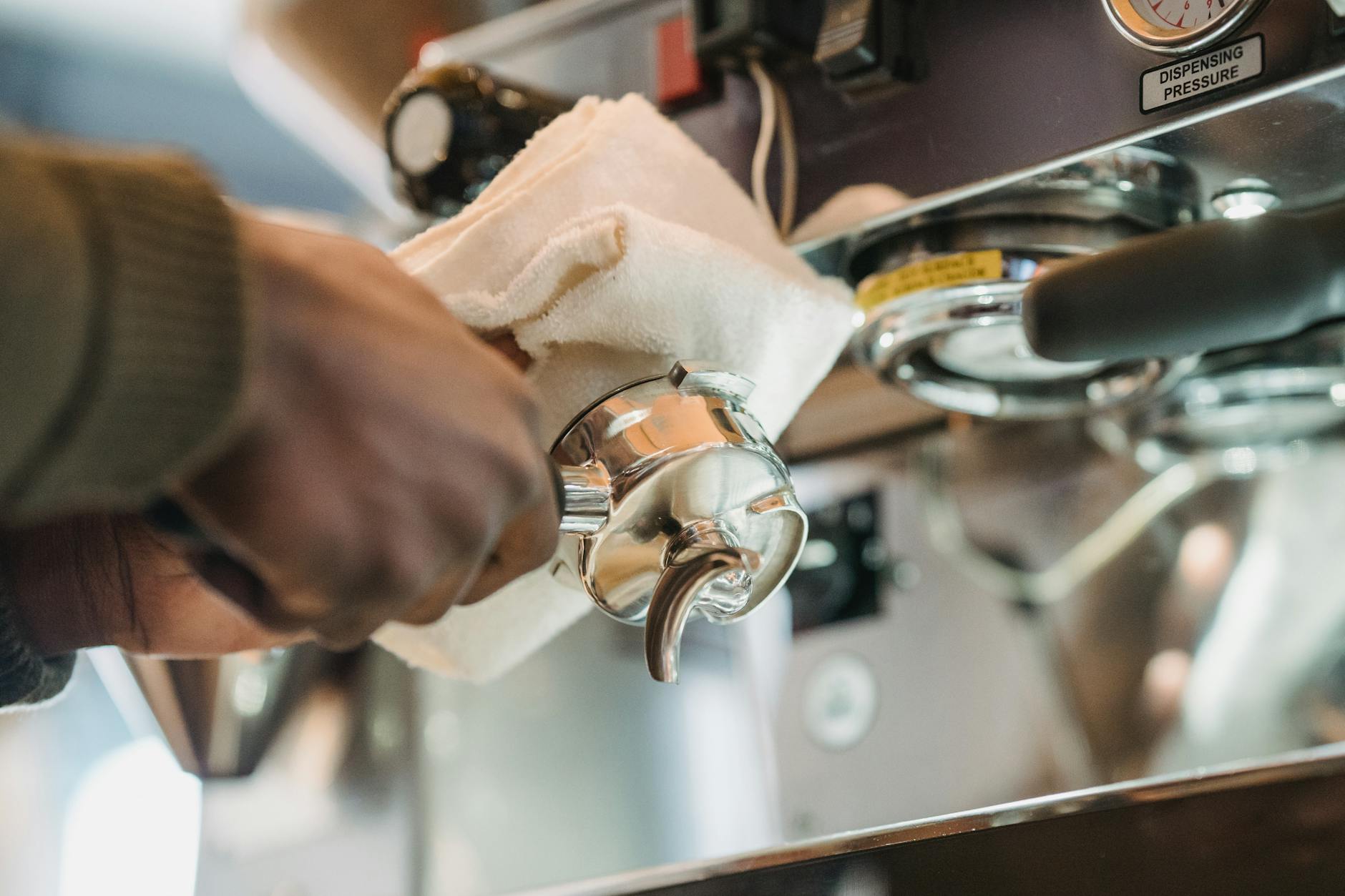
Why E61 machines require more maintenance than other group types
The Faema E61 group head is an undisputed icon in the world of espresso. Patented in 1961, its exposed chrome design and mechanical lever are instantly recognizable, gracing countless prosumer and café machines. It’s celebrated for its excellent thermal stability and its inherent ability to perform a gentle pre-infusion, leading to more forgiving and balanced extractions. However, this classic piece of engineering comes with a trade-off that every potential owner should understand: it demands significantly more maintenance than more modern or simpler group head designs. This article will delve into the specific mechanical and thermal properties of the E61 group that make it a more hands-on component, exploring why its complexity is both its greatest strength and its primary maintenance challenge.
The mechanical complexity of the brew lever assembly
At the heart of the E61’s higher maintenance needs is its purely mechanical operation. Unlike a modern machine that uses an electronic solenoid valve to start and stop the flow of water with the flick of a switch, the E61 relies on a system of levers, cams, and valves. When you lift the brew lever, you are physically moving a cam inside the group head. This cam pushes on valve pins, which in turn open a pre-infusion valve to allow low-pressure water in, and then a main brew valve to begin the full-pressure extraction.
This intricate dance involves several moving parts made of brass and steel, all operating under high heat and pressure. These components include:
- The cam lever: The external lever that actuates the internal cam.
- The cam: An oblong-shaped piece that pushes on the valve pins.
- Brew and pre-infusion valves: Small, spring-loaded valves that control water flow.
- Drain valve: A third valve that releases pressure from the portafilter at the end of the shot (the signature “swoosh” of an E61).
Because these are all physical, moving parts rubbing against each other, they require regular lubrication with a food-safe grease. Without it, the lever action becomes stiff and squeaky, and the brass components can experience premature wear. Furthermore, the small rubber gaskets on each valve will harden and perish over time, leading to leaks—either back into the drip tray or, more frustratingly, from the group head itself during a shot. This stands in stark contrast to a solenoid group, where the primary wear item is a single electronic valve that is often replaced as a whole unit, a much less frequent task.
The challenge of the thermosiphon loop
The E61’s legendary temperature stability comes from its thermosiphon system. The group head itself is not independently heated; instead, it acts like a radiator for the main boiler. A continuous loop of copper tubing runs from the boiler, through the intricate pathways of the massive brass group head, and back to the boiler. Hot water naturally rises, circulates through the group to heat it, cools slightly, and then sinks back to the boiler to be reheated. This passive system keeps the group head at a stable, brew-ready temperature.
While brilliant from a thermal engineering perspective, this constant circulation of hot water makes the E61 group a magnet for limescale. As water is heated, minerals like calcium and magnesium precipitate out and form hard deposits. The narrow, winding pathways inside the group head are prime locations for this scale to build up. Over time, this buildup can restrict water flow, insulate the group head causing temperature instability, and—most critically—cause the mechanical components to seize. The cam and valves described in the previous chapter can become completely encased in scale, making the lever impossible to move and causing valves to stick open or shut. Descaling an E61 group is a much more involved process than descaling a simple boiler, often requiring the full disassembly of the group head to manually clean the parts and pathways.
Gaskets, lubrication, and the routine rebuild
The combined effect of mechanical action and scale buildup means that routine maintenance is not just a suggestion for E61 owners; it’s a necessity. While every espresso machine needs a new group head gasket every 6 to 12 months, the E61’s needs go much further. The very design necessitates what is often called a “group head rebuild” on a regular basis.
A typical preventative maintenance schedule for a home E61 user includes:
- Backflushing with detergent: Weekly or bi-weekly to clean out coffee oils from the brew path and drain valve.
- Cam lubrication: Every 3 to 6 months. This involves removing the lever assembly to apply a fresh coat of food-safe lubricant to the cam and valve pins to ensure smooth operation.
- Gasket replacement: Beyond the main portafilter gasket, the small gaskets on the internal valves will eventually fail. A full set is often replaced every 12 to 24 months to prevent leaks.
Failure to perform this maintenance leads to predictable problems. A dry cam causes a stiff, squeaking lever. A worn drain valve gasket results in a constant, slow drip from the bottom of the group head. A scaled-up gicleur (a small jet that controls water flow) leads to weak, sputtering extractions. These are all part of the E61 ownership experience and are far less common on machines with saturated or solenoid-based groups where the moving parts are fewer and more isolated from the brew water path.
A comparative look at maintenance needs
To put the E61’s demands in context, it’s helpful to compare its maintenance tasks directly with other common group head designs. The differences in complexity and frequency of care become immediately apparent.
| Group type | Key maintenance tasks | Typical frequency | Common issues from neglect |
|---|---|---|---|
| E61 Group | Cam lubrication, valve gasket replacement, group descaling, portafilter gasket replacement. | Lubrication (3-6 mo), Valve Gaskets (1-2 yrs), Descaling (1-3 yrs, water dependent). | Stiff/squeaky lever, group head leaks, water flow blockage, temperature instability. |
| Saturated Group | Portafilter gasket replacement, cleaning gicleur/flow restrictor, solenoid valve check. | Gasket (6-12 mo), Gicleur Cleaning (1-2 yrs), Solenoid (2-5 yrs). | Leaking portafilter, inconsistent shot flow, failure to start/stop brew cycle. |
| Semi-Saturated/Solenoid Group | Portafilter gasket replacement, 3-way solenoid valve cleaning or replacement. | Gasket (6-12 mo), Solenoid (2-5 yrs). | Leaking portafilter, loss of pressure release, clogged brew path. |
As the table illustrates, the maintenance for an E61 is far more mechanical and hands-on. While other groups primarily require replacing seals and occasionally a self-contained electronic component, the E61 demands the regular disassembly, cleaning, and lubrication of its core moving parts.
Conclusion
The E61 group head earned its place in coffee history for good reason. Its thermal mass and mechanical pre-infusion provide a unique and rewarding brewing experience that many enthusiasts actively seek out. However, that classic 1960s design comes with 1960s-era maintenance requirements. The combination of its intricate, manually-operated valve system and its scale-prone thermosiphon loop creates a machine that needs—and rewards—regular, hands-on attention. Unlike more modern designs that have isolated the mechanical parts from the water path or simplified them altogether, the E61 is an integrated system where heat, water, and movement are in constant interaction. For those who enjoy tinkering and the ritual of maintaining their equipment, the E61 is a perfect match. But for the user seeking a low-maintenance appliance, understanding these inherent needs is crucial before investing in this piece of espresso history.



 No products in the cart.