

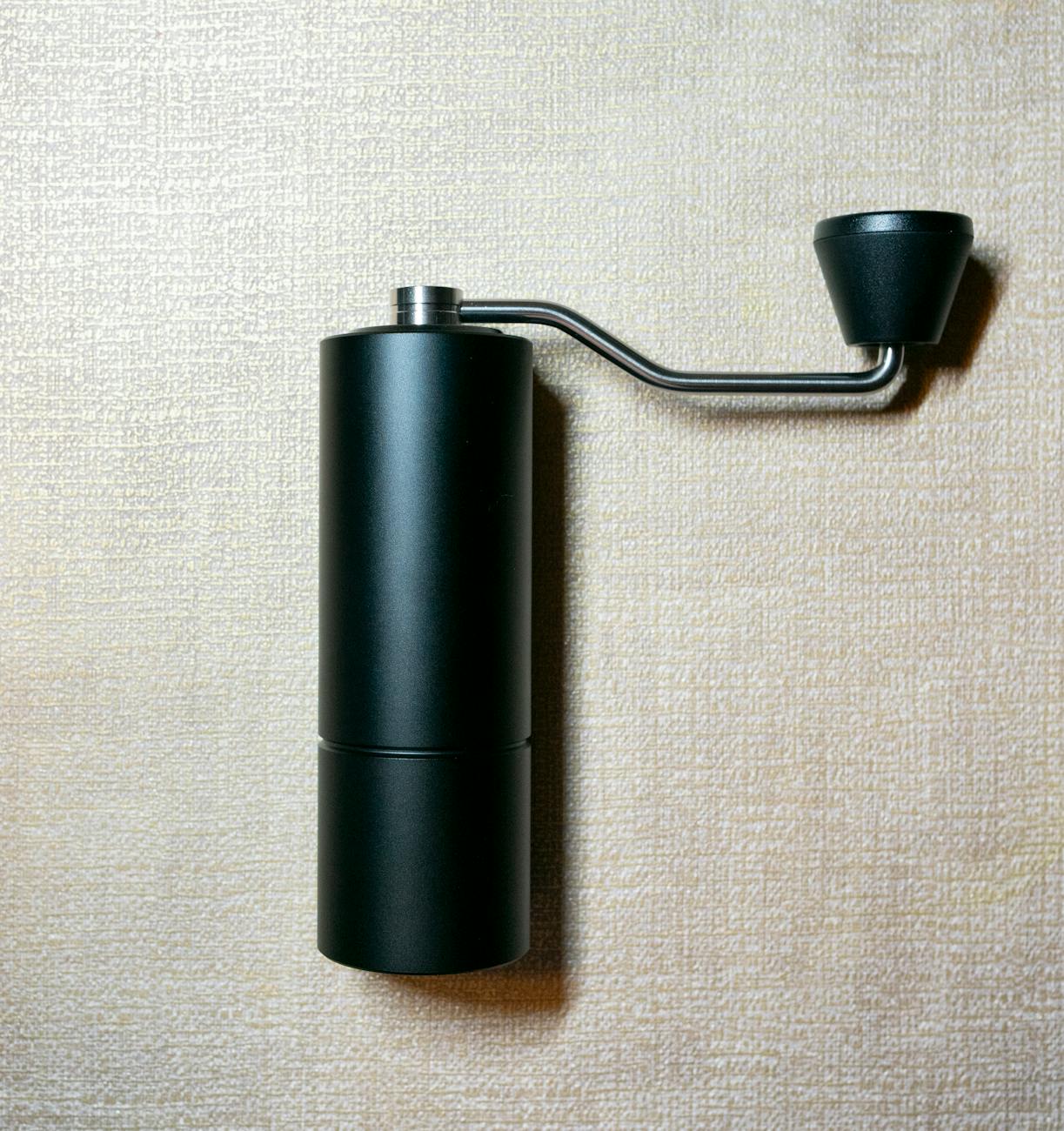
Master your grinder: How to use Gaggiuino data for the perfect dial-in
Dialing in a new coffee grinder or a fresh bag of beans can feel like a dark art. The traditional dance of adjusting the grind, weighing the dose, timing the shot, and tasting the result often leads to a sink full of wasted espresso and mounting frustration. While a scale and timer are essential tools, they only tell you the beginning and end of the story. The Gaggiuino modification for the Gaggia Classic Pro changes the game entirely. By providing a live, second-by-second stream of data on pressure, flow, and temperature, it opens a window into the heart of the extraction process. This article will guide you on how to interpret this valuable data to make your grinder dial-in process faster, more precise, and remarkably consistent.
Beyond the scale and timer: What Gaggiuino adds to the equation
For years, the standard for dialing in espresso has been to aim for a specific brew ratio (like 1:2, meaning 18 grams of coffee in, 36 grams of espresso out) within a target time frame (typically 25-30 seconds). If the shot runs too fast, you grind finer. Too slow, you grind coarser. This method works, but it’s a reactive process that treats the portafilter like a black box. You know the inputs and outputs, but you have no idea what’s happening during the extraction itself. This is why two shots with identical parameters can taste noticeably different.
Gaggiuino illuminates this black box by introducing three critical, real-time metrics:
- Live pressure profiling: Instead of guessing, you see the exact pressure being applied to the coffee puck throughout the entire shot. You can watch it gently ramp up during pre-infusion and hold steady at your target, like 9 bars.
- Live flow rate: This metric shows you how quickly water is moving through the coffee. It’s a direct indicator of the puck’s resistance, revealing issues that time and yield alone cannot.
- Precise temperature control: Gaggiuino incorporates a PID controller, which eliminates temperature fluctuations as a variable. This ensures that any changes you see in the shot are due to your grind and prep, not a cold grouphead.
By using this data, you can move from making blind adjustments to informed decisions based on the actual physics of the extraction.
Interpreting the Gaggiuino graph for grinder adjustments
The core of the Gaggiuino experience is the graph it produces for every shot, plotting pressure and flow over time. Learning to read this graph is the key to a quick and accurate dial-in. It tells you a clear story about your grind setting. If you understand the narrative, you know exactly which way to turn the grinder dial.
Let’s look at three common scenarios you’ll encounter:
- Scenario 1: The grind is too coarse. Your shot will run fast, but the graph tells you why. You’ll see the pressure struggle to build to your target of 9 bars, or perhaps it will hit the target and then quickly fall off. Correspondingly, the flow rate graph will show a high and rapid flow of water. This means the water is gushing through the puck with little resistance. The solution is simple and clear: grind finer.
- Scenario 2: The grind is too fine. The machine will sound like it’s struggling, and you might only get a few drips. The graph will show the pressure ramping up extremely quickly and staying pinned at the maximum your pump can produce. The flow rate will be a flat line near zero. The coffee puck is too dense and is “choking” the machine. The data confirms you’ve gone too far. The solution: grind coarser.
- Scenario 3: The “ideal” shot. The graph for a well-extracted shot has a characteristic shape. You’ll see a smooth pressure ramp-up, a stable hold at your target pressure for the majority of the shot, and a steady, gently tapering flow rate. This indicates that your grind size is providing the perfect amount of resistance for a balanced and even extraction.
| Scenario | Pressure Graph | Flow Rate Graph | Action |
|---|---|---|---|
| Too Coarse | Struggles to reach or hold target pressure | High and fast from the start | Grind Finer |
| Too Fine | Ramps up very fast, chokes the machine | Very low or near zero (a trickle) | Grind Coarser |
| Just Right | Smooth ramp up, stable hold at target | Steady, controlled flow that tapers slightly | Lock it in! |
Using flow rate to diagnose channeling and puck prep
Gaggiuino’s data goes even deeper than just setting the grind size. The flow rate graph is an incredibly powerful tool for diagnosing issues with your puck preparation. The most common of these is channeling, where water finds a crack or path of least resistance in the coffee puck. This leads to water rushing through one area while other areas are left under-extracted, resulting in a shot that tastes both sour and bitter.
On a traditional machine, you might only suspect channeling if the shot looks messy. With Gaggiuino, you can see it in the data. A sudden, sharp spike in the flow rate graph during the extraction is a tell-tale sign that a channel has just burst open. The pressure graph may also show a corresponding sudden dip as resistance is lost. Seeing this data in real-time gives you immediate feedback. If you see persistent channeling spikes across several shots despite a good-looking graph shape, it’s a signal to re-evaluate your technique. Are you using a WDT tool effectively? Is your tamp level? While an inconsistent grinder can contribute, Gaggiuino helps you first isolate and perfect your puck prep variables.
Achieving consistency with data-driven dialing
Once you pull a fantastic tasting shot and have the Gaggiuino data to match, you have created a “golden” profile. This graphical fingerprint is your key to long-term consistency. Instead of chasing the abstract concept of a “30-second shot,” you are now trying to replicate a specific pressure and flow curve. When you open a new bag of coffee, your goal is to adjust your grinder to recreate that ideal graph shape.
This method saves an immense amount of time and coffee. Often, you can tell within the first 10-15 seconds of a shot if it’s on the right track just by watching the graph build. If you see the pressure failing to ramp or the flow taking off too quickly, you don’t need to pull the full shot. You can stop it, make a small adjustment to the grinder, and try again. This iterative, data-informed process allows you to zero in on the perfect grind setting in just two or three attempts, rather than the five or six (or more) it might take with the traditional method.
In conclusion, the Gaggiuino modification elevates the Gaggia Classic Pro from a capable entry-level machine into a sophisticated diagnostic tool for espresso extraction. It transforms the grinder dial-in process from a frustrating guessing game based on lagging indicators like time and yield into a precise, data-driven science. By learning to interpret the live graphs for pressure and flow, you gain an unprecedented understanding of what is happening inside the portafilter. This allows you to quickly identify if your grind is too coarse or fine, diagnose puck preparation flaws like channeling, and ultimately achieve a new level of consistency. By aiming to replicate a “golden” shot profile, you waste less coffee, save time, and empower yourself to pull better espresso, every single time.

 No products in the cart.