

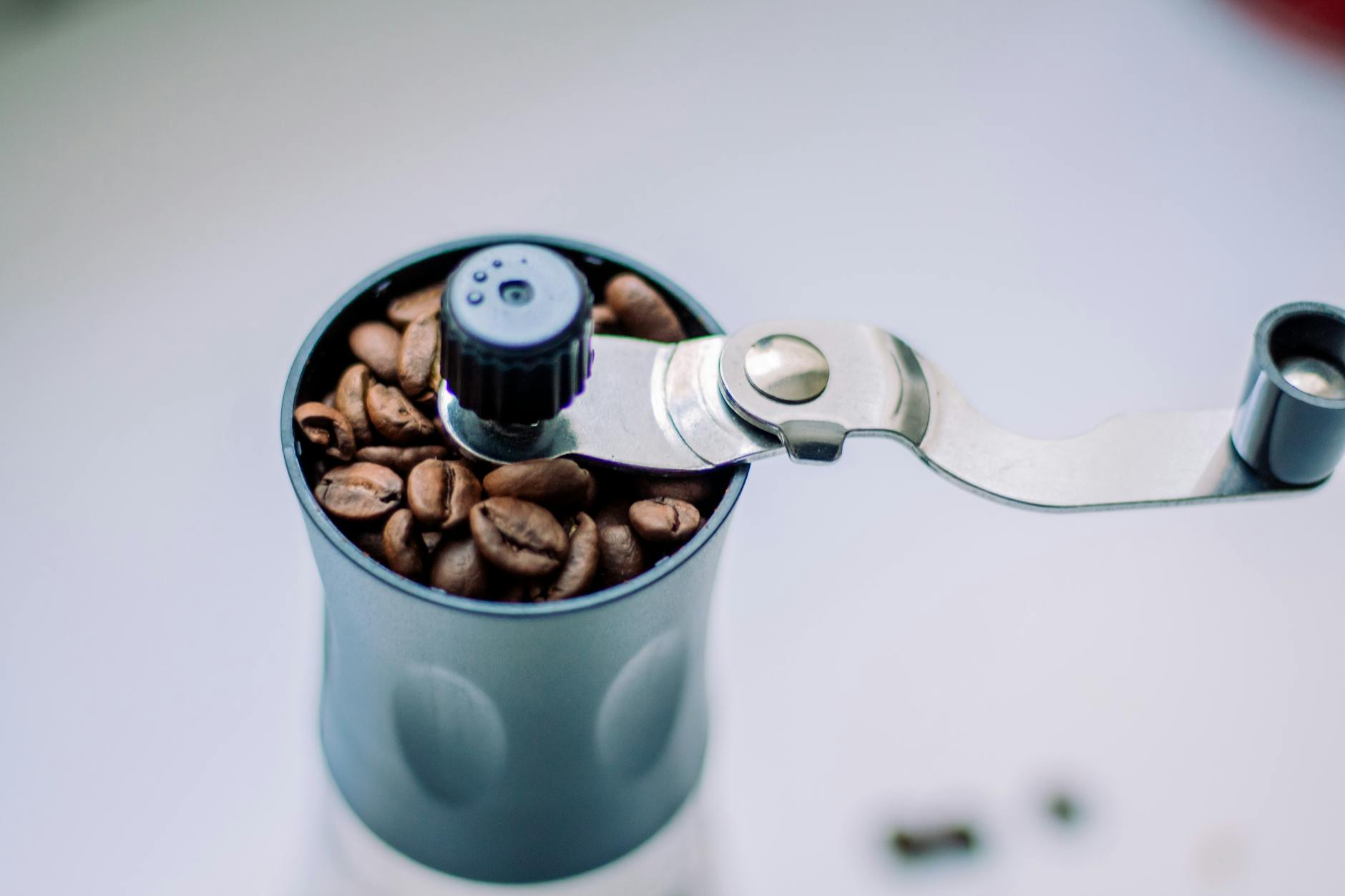
The hidden factor: A guide to bean density and your coffee grinder
Every coffee enthusiast knows the ritual: a new bag of beans means a new process of “dialing in” the grinder. We often blame the roast level, the origin, or even the weather for our brewing inconsistencies. But what if there’s a more fundamental, physical property at play? The answer lies in coffee bean density. This often-overlooked characteristic has a profound impact on how your beans shatter in the grinder, directly influencing extraction and the final taste in your cup. This guide will demystify the relationship between the physical density of your coffee beans and the optimal setting on your grinder, transforming your approach from guesswork to a more calculated, intuitive process for achieving the perfect brew.
What determines coffee bean density?
At its core, bean density is a simple measurement of mass per unit of volume. However, the factors that create this density are a complex story of a bean’s life from seed to roaster. It’s not just about how dark the coffee is roasted; it begins at the farm. Understanding these influences is the first step in predicting how a bean will behave in your grinder.
- Origin and altitude: Beans grown at higher altitudes mature more slowly. This extended maturation process in cooler temperatures results in harder, more compact, and denser beans. A high-grown Ethiopian coffee will be significantly denser than a lower-altitude Brazilian bean, for example.
- Processing method: How the coffee cherry is processed post-harvest also plays a role. Washed coffees, where the fruit is completely removed before drying, tend to have a higher density than natural or honey-processed coffees, where the bean dries with some or all of the fruit still attached.
- Roast level: This is the most significant and immediately apparent factor. During roasting, beans undergo physical and chemical changes. They lose water content, which reduces their mass, and they expand in size due to the buildup of gasses, a process similar to popcorn. This expansion, coupled with mass loss, drastically decreases the bean’s density. A light roast is therefore much denser than a dark, oily one.
How density affects the grinding process
Now that we understand what makes a bean dense, we can explore why it’s so important for grinding. The key is to connect density with hardness. Denser beans are harder beans. This physical hardness dictates how the bean interacts with your grinder’s burrs.
Imagine trying to crush a small rock versus a piece of charcoal. The rock (a high-density bean) will resist the force before shattering into relatively uniform, large pieces. The charcoal (a low-density bean) will crumble easily, creating a wider range of particle sizes, including a lot of very fine dust. Your coffee grinder experiences the same phenomenon. At the exact same grinder setting, a dense, light-roasted bean will offer more resistance and fracture differently than a porous, dark-roasted bean. The softer, darker bean will break apart more readily, often resulting in a greater number of fine particles, which can clog filters and lead to over-extraction.
This is the crucial takeaway: a single number on your grinder’s dial does not produce an identical grind profile for every coffee. The bean’s density is a critical variable that changes the output, even when the input setting remains the same.
Adjusting your grind for optimal extraction
Understanding the theory empowers you to make intelligent, proactive adjustments. Instead of starting from scratch with every new bag, you can make an educated guess based on the bean’s characteristics, saving you time, frustration, and coffee. The general rule is an inverse relationship: the denser the bean, the finer you need to set your grinder to achieve the same level of extraction.
For light roasts (high density), you must grind finer than your typical setting. Because these hard beans naturally create fewer fine particles, a finer setting is necessary to increase the total surface area of the coffee grounds. This allows the water to properly extract all the desirable sugars and acids, preventing a sour, under-extracted cup. Be mindful, however, as going too fine can still choke an espresso machine or stall a pour-over.
Conversely, for dark roasts (low density), you must grind coarser. These brittle, porous beans shatter easily and produce a high volume of fines. A coarser setting helps mitigate this, preventing the brew from becoming muddy, bitter, and over-extracted. It allows water to flow through more freely, leading to a more balanced cup.
| Bean Characteristic | Relative Density | Hardness | Recommended Grinder Adjustment |
|---|---|---|---|
| Light Roast / High Altitude / Washed | High | Hard | Grind finer than your baseline. |
| Medium Roast / Mid Altitude | Medium | Medium | Use as a baseline setting. |
| Dark Roast / Low Altitude / Natural | Low | Soft / Brittle | Grind coarser than your baseline. |
From theory to practice: Dialing in with density in mind
Let’s put this all together into a practical workflow. Start by establishing a baseline setting on your grinder that works well for a standard medium roast coffee. This is your reference point. When you open a new bag, don’t just start grinding. First, observe. Is it a light-colored, small, dense-looking bean? Or is it a dark, oily, and larger, more porous-looking bean?
Based on your observation, make a deliberate initial adjustment before your first brew. For that dense Ethiopian light roast, move your grinder a few clicks finer than your baseline. For the oily Italian dark roast, move it a few clicks coarser. This first step gets you much closer to the ideal grind size from the very beginning.
From there, use taste and time as your guides. For espresso, if your shot runs too fast and tastes sour, you know you need to go even finer. If it chokes the machine or tastes bitter, go coarser. For a pour-over, if your drawdown time is too quick and the coffee is weak, tighten the grind. If it stalls and tastes astringent, coarsen it. By starting with a density-informed adjustment, this final dialing-in process becomes a matter of small tweaks rather than large, frustrating jumps.
Conclusion
Mastering coffee brewing is about controlling variables, and bean density is a significant one that is too often ignored. As we’ve seen, a bean’s journey from a high-altitude farm to the final stages of the roasting process fundamentally shapes its physical structure. This density directly influences how it shatters in your grinder, making a single grind setting unreliable across different coffees. The core principle to remember is that denser, harder beans (typically lighter roasts) require a finer grind setting to ensure proper extraction. In contrast, less dense, more brittle beans (darker roasts) need a coarser setting to prevent bitterness. By incorporating this understanding into your routine, you can approach each new coffee with confidence, dialing in faster and more consistently than ever before.
 No products in the cart.