

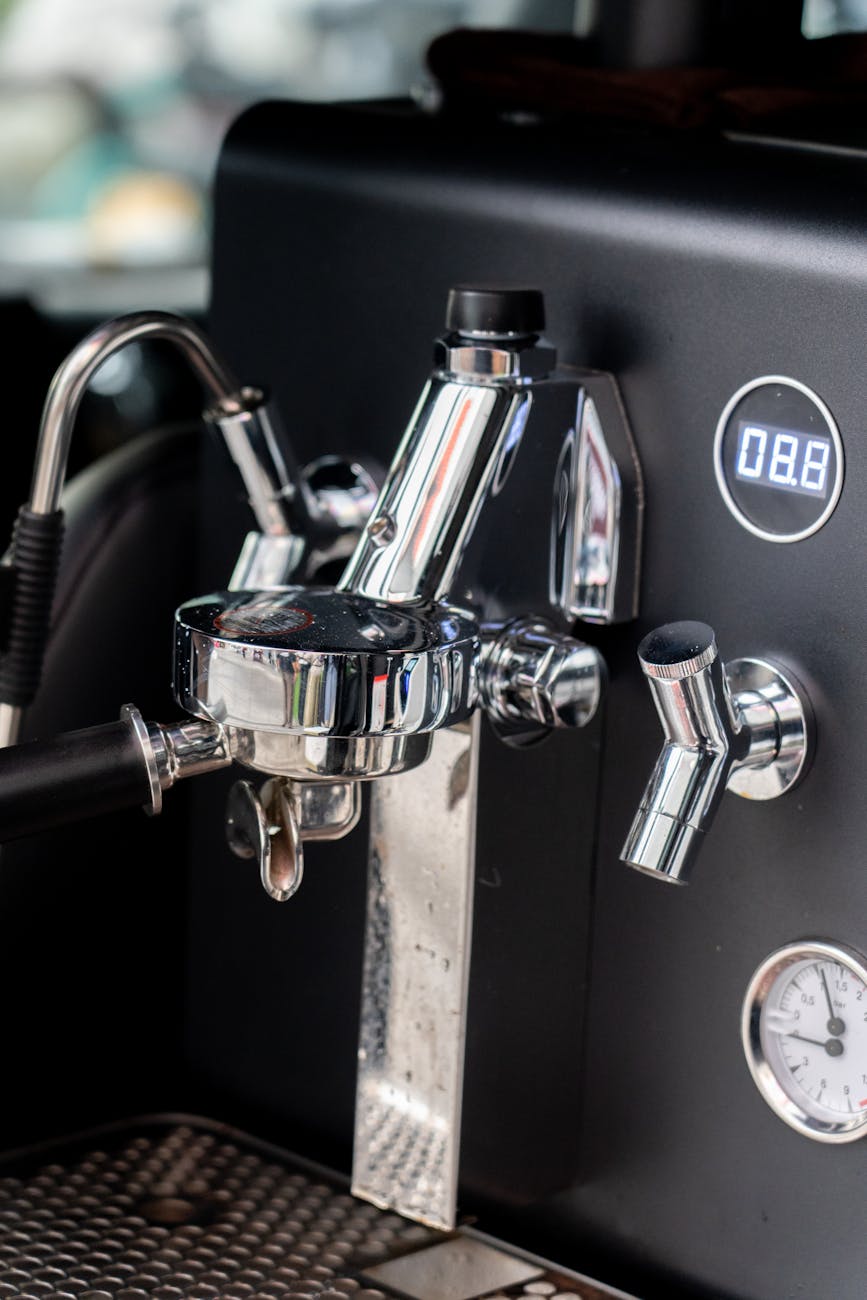
Understanding pressure release: Why the E61 exhausts after a shot
If you’ve ever used or been near a prosumer espresso machine with an E61 grouphead, you’re familiar with the satisfying “pssssh” sound it makes moments after the brew lever is lowered. This isn’t just an auditory quirk; it’s the sound of precision engineering at work. This sudden release of pressure and water into the drip tray is a hallmark of the E61 design and a critical function for both the quality of your espresso and the usability of the machine. But what is actually happening inside that iconic chrome grouphead? This article will demystify the process, exploring the mechanical magic of the three-way valve, why this pressure release is essential, and how it contributes to a cleaner, more efficient espresso workflow.
The mechanical heart of the E61
To understand the exhaust, you first need to understand the E61’s internal mechanics. Invented by Faema in 1961, this grouphead design is purely mechanical, operated by a lever and a series of internal cams and valves. It’s a brilliant piece of engineering that doesn’t rely on electronic solenoids like many modern machines. When you move the lever, you are physically moving a cam that opens and closes different valves within the grouphead. The key components involved in the pressure release are:
- The cam: An irregularly shaped spindle connected to the external brew lever. As you rotate the lever, the cam’s shape pushes on valve pins.
- The brew valve: This valve controls the flow of hot, pressurized water from the boiler and pump to the coffee puck.
- The pre-infusion valve: This allows a small amount of water to flow at low pressure when the lever is partially engaged, gently wetting the coffee grounds.
- The exhaust valve (or drain valve): This is the star of our show. It opens a path from the grouphead directly to the drip tray.
These parts work together in a carefully choreographed sequence. The genius of the E61 is how one simple lever action controls this complex process, managing water flow and pressure with mechanical precision.
Building and releasing the pressure
Let’s walk through the life of an espresso shot. When you lift the brew lever to the top position, the internal cam does two things simultaneously: it pushes open the brew valve and it closes the exhaust valve. This action seals the path to the drip tray and opens the floodgates for water at 9 bars of pressure to saturate the coffee puck and begin extraction. For 25 to 30 seconds, this immense pressure is contained within the grouphead and the portafilter, forcing water through the finely ground coffee to create espresso.
When you finish your shot and lower the lever, the magic happens. The cam rotates back, performing the opposite action: it allows the brew valve to close, instantly cutting off the water supply from the pump. At the very same moment, it opens the exhaust valve. This creates an escape route for all the pressurized water still trapped on top of the coffee puck. The sudden “pssssh” is the sound of that high-pressure water and steam depressurizing as it’s forcefully expelled through the exhaust port and down into your drip tray.
Why this pressure release is so important
So, why go through all this mechanical trouble? The pressure release, managed by this three-way valve system, serves two critical purposes that vastly improve the barista’s experience.
First, it prevents what’s known as “portafilter sneeze.” Without an exhaust, the 9 bars of pressure would remain trapped in the portafilter after the shot. If you were to immediately try and remove the portafilter, this pressure would violently expel hot water and coffee grounds everywhere. It’s messy and potentially dangerous. The E61’s exhaust system instantly vents this pressure, allowing you to remove the portafilter safely just seconds after brewing.
Second, it creates a dry coffee puck. The rapid depressurization effectively sucks the excess water out of the coffee grounds, leaving behind a firm, dry puck that can be knocked out of the portafilter in one clean piece. This makes cleanup significantly easier and faster, a crucial benefit in both a busy café and a home kitchen. Machines without a three-way valve often leave a soupy, wet mess in the basket.
The E61 versus other systems
Not all espresso machines handle pressure the same way. The E61’s mechanical three-way valve is a classic solution, but modern machines have adopted different, often electronically controlled, methods. Understanding the differences highlights the E61’s unique place in the espresso world.
| Grouphead type | Pressure release mechanism | Key characteristic |
|---|---|---|
| E61 Grouphead | Mechanical three-way valve | Lever-activated, excellent thermal stability, creates a dry puck. |
| Saturated Grouphead | Electronic three-way solenoid valve | Electronically activated with a button/paddle, very fast response, also creates a dry puck. |
| Basic Thermoblock | Often no three-way valve | Pressure dissipates slowly; results in a wet puck and risk of “portafilter sneeze”. |
While electronic solenoids found in machines with saturated groups (like many La Marzocco or Slayer models) perform the same function, they do so with an electronic switch instead of a mechanical lever. The end result is the same: instant pressure relief. However, the tactile feel and purely mechanical nature of the E61 remain a major draw for espresso purists and enthusiasts.
Conclusion
The iconic exhaust of an E61 grouphead is far more than just a characteristic sound. It is the audible proof of a sophisticated pressure management system that has defined high-quality espresso for over 60 years. By using a clever cam and valve system, the E61 seamlessly directs the flow of water to build pressure for extraction and then safely releases it afterward. This fundamental process solves the practical problems of portafilter sneeze and messy cleanup, leaving you with a dry, easily disposable puck. It’s a testament to brilliant, durable design, allowing for a clean, safe, and efficient workflow that helps you pull beautiful shots one after another. So, the next time you hear that “pssssh,” you’ll know it’s the sound of a perfectly executed espresso cycle.


 No products in the cart.