

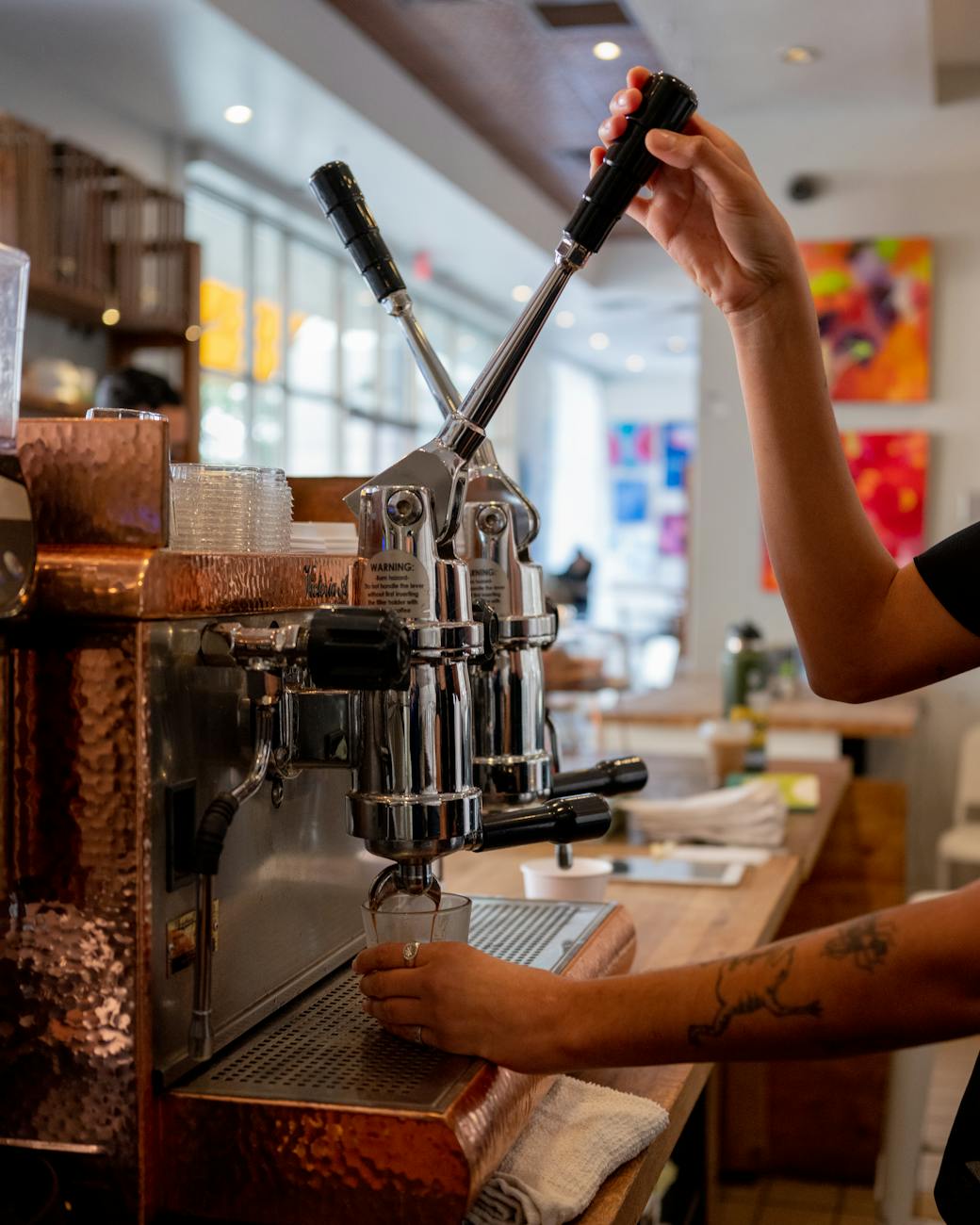
Understanding pressure profiling on manual lever espresso makers
The world of espresso can seem dominated by semi-automatic machines with their humming pumps and pre-set buttons. Yet, a growing community of coffee aficionados is turning to a more traditional, hands-on approach: the manual lever espresso maker. These beautiful machines offer more than just aesthetics; they provide a direct, tactile connection to the brewing process. The key to unlocking their full potential lies in a technique called pressure profiling. This is the art and science of intentionally manipulating the pressure of water as it passes through the coffee puck during extraction. Unlike a standard machine that holds a steady nine bars of pressure, a lever machine puts you, the barista, in complete control, allowing you to craft a shot uniquely suited to your beans.
What exactly is pressure profiling?
At its core, espresso is the result of forcing hot water through a finely ground, compacted bed of coffee. The force, or pressure, used in this process is a critical variable that dictates which flavor compounds are extracted from the coffee and at what rate. Most standard espresso machines use a pump to create a static pressure, typically around 9 bars, for the entire duration of the shot. Pressure profiling throws this static approach out the window.
Instead, it involves a dynamic application of pressure throughout the extraction. A typical pressure profile on a manual lever machine can be broken down into three key phases:
- Pre-infusion: This is the initial stage where water at a very low pressure (typically 1-3 bars) is introduced to the coffee puck. The goal is not yet to extract, but to gently saturate the grounds, allowing them to swell evenly. This reduces the risk of channeling, where water finds a path of least resistance and bypasses parts of the coffee, leading to an uneven and sour shot.
- Ramp-up and peak pressure: After pre-infusion, you begin to apply force to the lever, rapidly increasing the pressure. This is where the bulk of the extraction happens, pulling out the rich oils and solids that create espresso’s signature body and crema. While 9 bars is a traditional peak, lever machines allow you to experiment with lower or higher pressures depending on the coffee.
- Ramp-down: In the final phase of the shot, the pressure is gradually decreased. On a spring-piston lever, this happens naturally as the spring expands. On a direct lever, you manually ease off the pressure. This gentle finish can help to reduce the extraction of bitter and astringent compounds that tend to appear at the end of a shot, resulting in a cleaner, sweeter cup.
The taste in the cup: Why profiling matters
Understanding the phases of a pressure profile is one thing, but connecting them to the final taste of your espresso is where the magic truly happens. Each adjustment you make to the pressure curve directly impacts the balance of sweetness, acidity, and bitterness. For instance, a longer, gentler pre-infusion can dramatically increase the perceived sweetness and complexity of a light-roast, single-origin coffee. By fully saturating the dense puck before applying high pressure, you ensure a more uniform extraction, allowing its delicate floral or fruity notes to shine through without harsh acidity.
Conversely, for a darker, classic Italian-style roast, you might use a shorter pre-infusion and a declining pressure profile that starts at 8-9 bars and tapers off to 5-6 bars. This method extracts the rich, chocolatey, and caramel notes quickly at the beginning while the declining pressure prevents the over-extraction of bitter, ashy flavors that can plague dark roasts. By tailoring the profile to the bean, you move beyond a one-size-fits-all approach and begin to craft espresso with intention, highlighting the very best characteristics of each coffee you use.
Common pressure profiles for lever machines
While the possibilities for experimentation are endless, there are a few foundational pressure profiles that serve as excellent starting points. Mastering these will give you the intuition needed to create your own. Each profile is suited for different types of coffee beans and desired flavor outcomes. The key is to start with a profile, taste the result, and then think about which variable you could change to improve it. Did it taste sour? Try a longer pre-infusion. Was it too bitter? Try a lower peak pressure or a faster ramp-down.
| Profile name | Key characteristic | Ideal for | Taste impact |
|---|---|---|---|
| Classic declining | Short pre-infusion, 9-bar peak, slow decline to ~5 bars. | Medium to dark roasts, classic espresso blends. | Full body, rich crema, balanced bitterness, and chocolatey notes. |
| Low and slow | Extended low-pressure pre-infusion (10-20 sec), lower peak (6-7 bars). | Light roasts, single origins, and dense coffees. | Highlights sweetness, clarity, and complex acidity. Reduces sourness. |
| Blooming espresso | Low-pressure pre-infusion followed by a pause (zero pressure) before ramping up. | Freshly roasted, gassy coffees. | Allows CO2 to escape, preventing channeling and improving extraction evenness. |
| Gentle ramp | A very slow and gradual increase in pressure throughout the shot. | Finely ground or less forgiving coffees. | A very soft and delicate shot with muted acidity and a smooth texture. |
Mastering your machine: Tips for success
Putting pressure profiling into practice requires getting to know your specific type of lever machine. A direct lever machine, like a Flair or La Pavoni, gives you the most direct feedback. You provide 100% of the force, and you can feel the resistance of the coffee puck through the lever. Success here relies on developing a feel for the shot. Use a bathroom scale under the machine initially to learn what 6, 8, or 9 bars of force feels like. A bottomless portafilter is your best friend, as it will instantly show you if your puck preparation is leading to channeling.
On the other hand, a spring-piston lever, like a Londinium or Profitec Pro 800, automates the extraction pressure via a large internal spring. Here, your control is focused almost entirely on the pre-infusion phase. By holding the lever in the down position, you can control how long the puck is saturated at low line pressure before releasing the lever to let the spring do its work. The profile is naturally a declining one, but mastering the pre-infusion is the key to getting a perfect shot. Regardless of the machine, consistency in your preparation—grind size, distribution, and tamping—is paramount. Without a consistent puck, your pressure profiling efforts will be for nothing.
Ultimately, pressure profiling with a manual lever machine transforms making espresso from a repetitive task into a creative pursuit. It’s an interactive dance between barista and machine, where small changes in pressure and timing can unlock entirely new dimensions of flavor from your favorite beans. The learning curve can be steep, but the reward is an unparalleled connection to your coffee and the ability to brew espresso that is truly, uniquely your own. By understanding the fundamentals of how pressure affects extraction and by experimenting with different profiles, you can move beyond simply making coffee and start crafting extraordinary sensory experiences, one pull at a time.
 No products in the cart.