

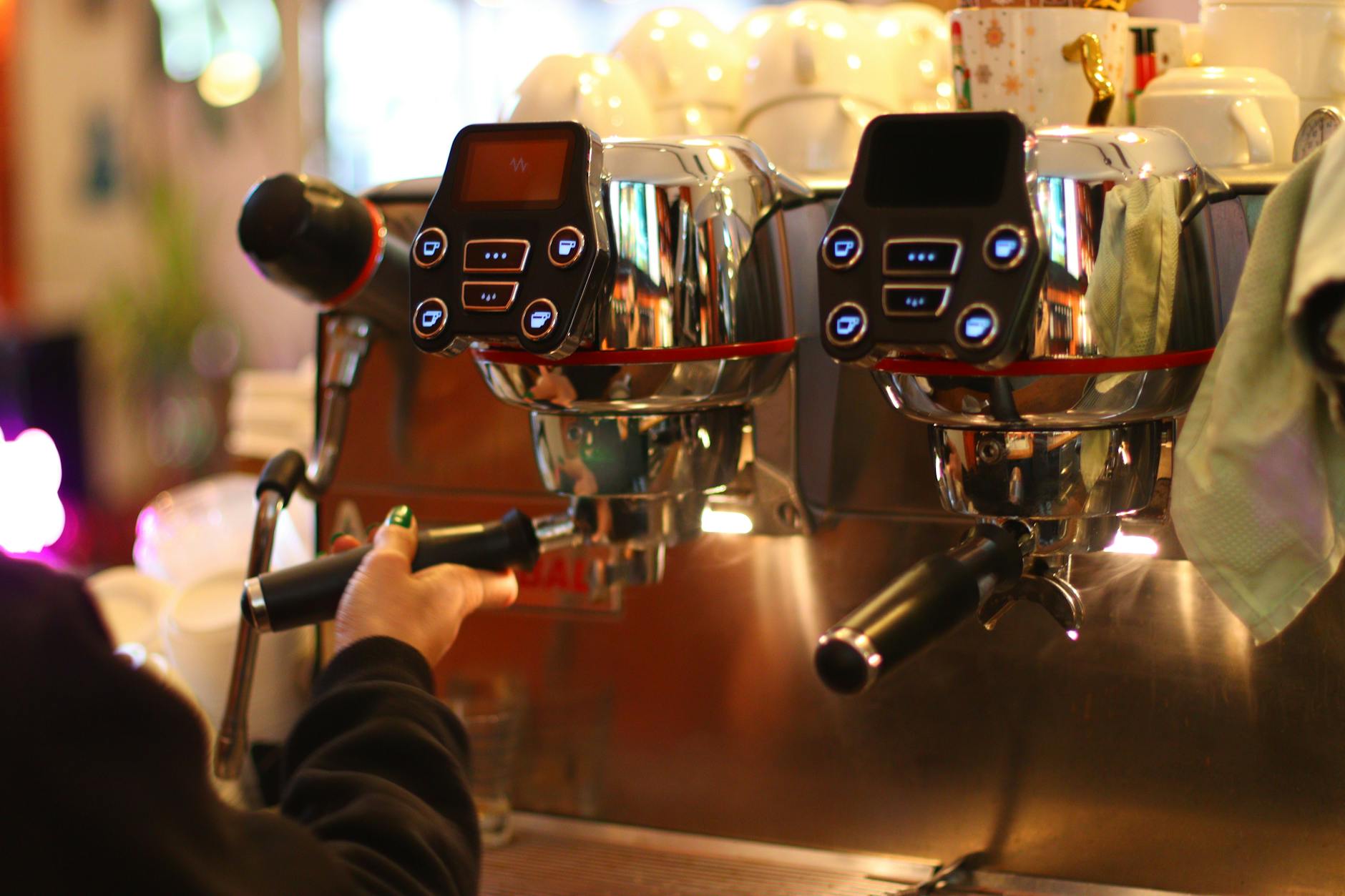
Mastering your Gaggiuino: A guide to tuning for roast level and bean density
Welcome to the next level of home espresso. If you’ve installed a Gaggiuino mod on your Gaggia Classic, you’ve already unlocked incredible potential, transforming a consumer machine into a powerhouse of precision. But the real magic isn’t just in the hardware; it’s in learning how to use it. The Gaggiuino gives you granular control over every variable of extraction, from temperature to pressure and flow. This guide will delve into the art and science of tuning these variables specifically for different coffee beans. We’ll explore how roast level and bean density fundamentally change how coffee extracts and provide you with actionable strategies to dial in the perfect shot, whether you’re working with a bright, acidic light roast or a rich, chocolaty dark roast.
Understanding the core variables: Roast and density
Before you touch any settings on your Gaggiuino, it’s crucial to understand why you need to. Not all coffee beans are created equal. Two primary factors dictate how they will behave during extraction: roast level and density. These two characteristics are often intertwined. A lighter roast is typically much denser, less porous, and less soluble than a dark roast. Think of it like trying to dissolve a sugar cube versus granulated sugar; one takes more work.
Here’s what that means for your espresso puck:
- Light roasts: Being denser and less soluble, these beans offer more resistance to water. They require more energy—in the form of heat or time—to extract their complex, often acidic and floral flavors. Pushing water through them at a standard 9 bars from the start can easily lead to channeling and a sour, under-extracted shot.
- Dark roasts: These beans have been roasted longer, making them more brittle, porous, and highly soluble. They offer far less resistance to water and give up their flavors easily. A gentle approach is needed here, as too much heat or aggressive pressure can quickly lead to over-extraction, resulting in bitter, ashy, and hollow-tasting espresso.
Your Gaggiuino is the perfect tool to manage these differences. By adjusting your profile, you’re not just pulling a shot; you’re tailoring the extraction process to the unique needs of the bean.
Your Gaggiuino toolkit: Temperature, pressure, and flow
The Gaggiuino mod gives you precise control over the three pillars of espresso extraction. Understanding how to use each tool is the key to unlocking a bean’s potential. Instead of a one-size-fits-all approach, you now have a dynamic toolkit to create bespoke extraction profiles.
Temperature control is your first lever. The integrated PID controller in the Gaggiuino allows you to set and maintain a stable brew temperature with incredible accuracy. As a general rule, lighter roasts benefit from higher temperatures (around 92-96°C or 198-205°F) to increase solubility and extract those delicate flavors. Conversely, dark roasts do better with lower temperatures (around 88-92°C or 190-198°F) to prevent scorching the grounds and extracting bitter compounds.
Pressure and flow profiling is where the Gaggiuino truly shines. You can move beyond a simple 9-bar extraction and design a profile with distinct phases:
- Pre-infusion: Gently saturating the puck at a low pressure (e.g., 2-4 bars) or a low flow rate. This helps settle the coffee bed, reduce channeling, and begin extraction evenly.
- Ramp-up: The transition from pre-infusion to your target extraction pressure.
- Peak pressure: The main extraction phase, which doesn’t always have to be 9 bars. You can hold it steady or have it slowly decline.
- Ramp-down: Tapering off the pressure towards the end of the shot to reduce the extraction of bitter solubles as the puck’s integrity degrades.
By manipulating these phases, you can build a profile that perfectly complements the bean’s characteristics, which we’ll explore next.
Building profiles for light roasts and high-density beans
Taming a light roast is often seen as the final boss of home espresso, but the Gaggiuino makes it achievable. The goal is to maximize solubility and achieve an even extraction without creating channels in the dense, resistant puck. This calls for a profile that is gentle at the start and provides enough energy to get the job done.
A classic “blooming” or “slayer-style” shot profile works wonders here. Start with a long, low-pressure pre-infusion. A target of 2-3 bars of pressure for 10-20 seconds (or until you see the first drips) allows the water to fully saturate the puck without fracturing it. This is critical for dense beans.
After pre-infusion, you can gently ramp up the pressure. However, instead of a flat 9-bar profile, consider a declining pressure profile. You might peak at 8 or 9 bars and then slowly taper the pressure down to 6-7 bars over the remainder of the shot. Why? As the puck extracts, it becomes less resistant. Reducing the pressure later in the shot prevents water from rushing through and creating channels, while also limiting the extraction of astringent compounds that tend to appear at the end of a pull.
Combine this pressure strategy with a higher brew temperature (e.g., 94°C / 201°F) and a slightly finer grind than you would use for a medium roast. You may also need to adjust your ratio to 1:2.5 or even 1:3 to achieve a balanced extraction.
Adapting profiles for medium and dark roasts
While light roasts require finesse and energy, dark roasts require a gentle hand. These beans are highly soluble and can easily be pushed into over-extraction. Your goal is to extract the deep, rich, chocolatey, and nutty flavors without pulling out the accompanying ashy bitterness.
For medium to dark roasts, a more traditional profile is often best, but with Gaggiuino-level precision. Start with a much shorter and gentler pre-infusion than you would for a light roast. A 4-8 second pre-infusion at 3-4 bars is typically sufficient to settle the puck.
From there, a ramp-up to a steady 9 bars (or even 8 bars for very dark, oily roasts) is a great starting point. Unlike light roasts, you don’t need a long, declining profile. The solubility of these beans means you can extract the good stuff quickly and efficiently. Holding a flat pressure and cutting the shot based on your target yield (often a classic 1:2 ratio) will give you a full-bodied, rich, and syrupy shot. Lower your brew temperature to the 88-92°C (190-198°F) range to avoid scorching the delicate grounds. The key with dark roasts is to do less; the coffee will give up its flavor easily, so don’t force it.
| Parameter | Light Roast (High Density) | Dark Roast (Low Density) |
|---|---|---|
| Brew Temperature | 92°C – 96°C (198°F – 205°F) | 88°C – 92°C (190°F – 198°F) |
| Pre-infusion | Long (10-20s) at low pressure (2-3 bar) | Short (4-8s) at low pressure (3-4 bar) |
| Pressure Profile | Gentle ramp, declining peak (e.g., 9 bar -> 6 bar) | Standard ramp, flat peak (e.g., 8-9 bar) |
| Typical Ratio | 1:2.5 to 1:3 | 1:1.5 to 1:2 |
| Grind Size | Finer | Coarser |
Remember, this table is a starting point. Use it as a guide and always let your taste be the final judge.
Conclusion
The Gaggiuino mod transforms your machine from a blunt instrument into a surgeon’s scalpel. By understanding the fundamental properties of your coffee—its roast level and density—you can move beyond generic recipes and start crafting espresso with intention. For dense light roasts, use the Gaggiuino’s capabilities to deliver a long, gentle pre-infusion and a controlled pressure profile to unlock their complex flavors. For porous dark roasts, use precision to apply a softer touch, with lower temperatures and more traditional profiles to capture their richness without bitterness. The journey with a Gaggiuino is one of continuous learning and experimentation. Use these principles as your guide, taste everything, take notes, and don’t be afraid to tweak your profiles. That is how you will truly master your machine and brew exceptional espresso at home.


 No products in the cart.