

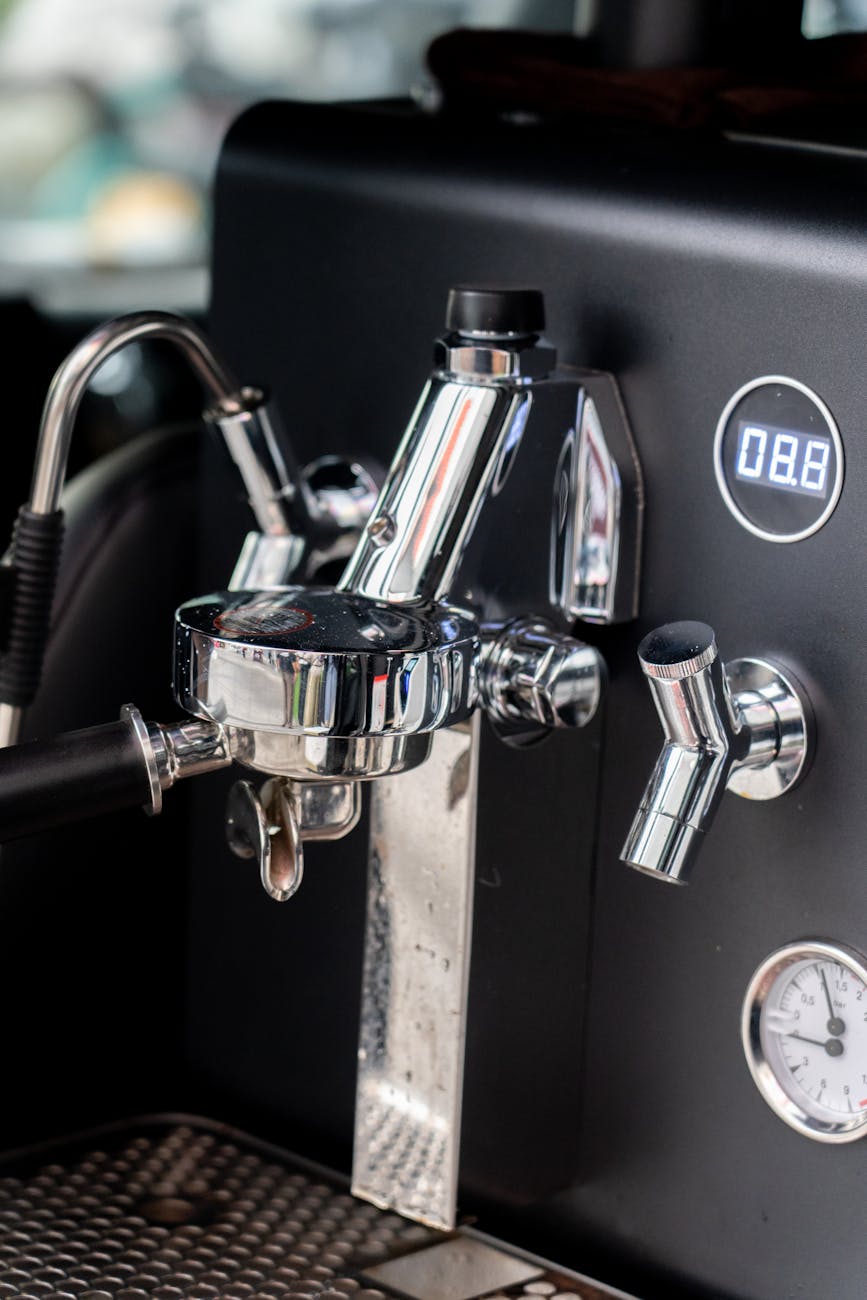
Tuning your Gaggia Classic PID parameters for peak espresso performance
The Gaggia Classic is a legendary machine, beloved by home espresso enthusiasts for its robust build and immense potential for modification. One of the single most impactful upgrades is the addition of a PID (Proportional-Integral-Derivative) controller, which transforms its temperature stability from erratic to rock-solid. While most PID kits come with a handy autotune function that provides a decent baseline, true espresso perfection lies in manual tuning. This article will guide you through the process of understanding and adjusting your PID parameters. We will demystify the roles of P, I, and D, and provide you with the knowledge to fine-tune your Gaggia Classic for ultimate consistency and peak performance in the cup.
Understanding the PID controller and why it matters
Before you can tune your machine, it is essential to understand what you are adjusting. A PID controller is a sophisticated thermostat that continuously calculates an “error” value—the difference between the current boiler temperature and your desired setpoint. It then works to minimize this error by pulsing the heating element. It does this using three distinct terms:
- P (Proportional): This is the primary workhorse. It reacts to the present error. The larger the temperature difference, the harder the proportional term tells the heater to work. A high P-value leads to a fast heat-up but can cause the temperature to wildly overshoot the target. A low P-value is slow and may struggle to reach the setpoint. Think of it as the gas pedal in your car.
- I (Integral): This term looks at the past accumulated error. It corrects for the small, persistent temperature offset, often called “droop,” that the P-term alone can’t fix. It ensures the machine doesn’t just get close to the target but actually hits and holds it. If your machine consistently settles a degree or two below your target, the I-term is what needs adjusting.
- D (Derivative): This is the predictive element, looking at the future. It measures the rate at which the temperature is changing and applies a braking force to prevent the P and I terms from overshooting the target. It is responsible for dampening oscillations, making the temperature curve smooth as it approaches the setpoint.
For espresso, this level of control is paramount. A stable temperature ensures consistent, repeatable extractions, eliminating the sourness from a too-cold shot or the bitterness from a too-hot one. Fine-tuning these three values gives you direct control over your machine’s thermal behavior.
The autotune function: a solid starting point
Nearly every PID kit, whether from Auber Instruments, Shades of Coffee, or another supplier, includes an autotune function. This is an intelligent process where the controller actively learns the thermal properties of your Gaggia Classic’s small boiler. By cycling the heater on and off and measuring the response, it calculates a set of P, I, and D values that it believes will provide stable performance.
Initiating an autotune cycle is usually a simple process involving holding a button or navigating a menu (always consult your specific PID’s manual). The machine will heat up past the setpoint and cool down several times. This can take anywhere from 10 to 30 minutes. The resulting values are an excellent, safe baseline. For many users, the autotune settings are perfectly adequate.
However, autotune is often conservative. It prioritizes stability and avoiding overshoot above all else. This can sometimes result in a tune that is a bit sluggish, especially when it comes to recovering temperature after a shot. When you pull a shot, cold water enters the boiler, and you want the PID to react quickly to bring it back to temp for the next shot. This is where manual tuning can provide a significant advantage, creating a more responsive and aggressive profile.
Manual tuning methods for the perfectionist
Manual tuning is an iterative process of making small adjustments and observing the results. The goal is to find the perfect balance between a quick ramp-up to temperature, minimal overshoot, and a rapid recovery after brewing. While complex methods like the Ziegler-Nichols exist, a more practical, intuitive approach works best for a home espresso machine.
Start with your autotune values as a baseline. It is crucial to change only one parameter at a time and observe its effect. Watch the temperature display on your PID as the machine heats up from cold and after pulling a shot’s worth of water through the group head.
- Adjusting P: If the machine heats up too slowly or struggles to recover after a shot, try increasing the P-value in small increments (around 5-10%). If the machine significantly overshoots the target temperature (e.g., set to 93°C but it hits 96°C before settling), decrease the P-value.
- Adjusting I: If you notice the temperature consistently settles just below your setpoint (e.g., it holds at 92.5°C when set to 93°C), you need more integral action. Increase the I-value slightly. Conversely, if the temperature oscillates slowly and continuously around the setpoint, the I-value may be too high, so you should decrease it.
- Adjusting D: The D-term is a powerful damper. If the machine overshoots the target aggressively on the initial heat-up, increase the D-value to apply the brakes sooner. Be careful, as too much D can make the system sluggish and slow to respond. It is often the parameter that needs the least adjustment from the autotune value.
To give you an idea of a starting point if you’re tuning from scratch, you can use a classic PID formula table. First, you’d find the “Ultimate Gain” (Ku) by setting I and D to zero and increasing P until you get stable oscillation. Then you measure the oscillation period (Pu). These values can be used in the table below, but for most users, adjusting from the autotune values is much simpler.
| Tuning Type | P Calculation | I Calculation | D Calculation |
|---|---|---|---|
| P only | 0.50 * Ku | 0 | 0 |
| PI | 0.45 * Ku | 1.2 * (P / Pu) | 0 |
| PID (Classic) | 0.60 * Ku | 2 * (P / Pu) | P * Pu / 8 |
Interpreting the results and finding your sweet spot
The numbers on the screen only tell half the story. The true test of your PID tune is how it performs in a real-world workflow. A perfectly tuned Gaggia Classic should exhibit a few key behaviors. On its initial heat-up, it should reach your target temperature quickly, with an overshoot of no more than one or two degrees, before settling firmly at the setpoint.
The most critical test, however, is shot recovery. After the machine is fully heated and stable, run the pump for 25-30 seconds to simulate pulling a shot. Watch the PID display closely. The temperature will drop as cold water enters the boiler. How quickly does it stop dropping, reverse course, and return to your setpoint? A good tune will have the heater kicking in aggressively to bring the temperature back within about 30-60 seconds. This is what allows for back-to-back shots that are consistent in quality and taste.
Your “sweet spot” is a tune that feels responsive to your needs. It holds idle temperature with precision (e.g., +/- 0.5 degrees) but reacts with controlled aggression when it needs to. The reward for your patience is a machine that behaves predictably every single time you use it, removing temperature as a variable and allowing you to focus purely on the coffee itself.
Conclusion
Upgrading a Gaggia Classic with a PID controller is a game-changer, but taking the time to manually tune its parameters is what truly unlocks its full potential. By understanding the distinct roles of the Proportional, Integral, and Derivative terms, you can move beyond the safe baseline of an autotune and tailor the machine’s thermal behavior to your exact needs. The process is one of patience, involving small, incremental changes and careful observation of the results, particularly in shot recovery time. The ultimate reward is a machine that delivers unwavering temperature stability, providing the foundation for consistently delicious and repeatable espresso. This journey from stock machine to a finely tuned instrument is what makes the Gaggia Classic such a rewarding platform for the dedicated coffee enthusiast.
 No products in the cart.