

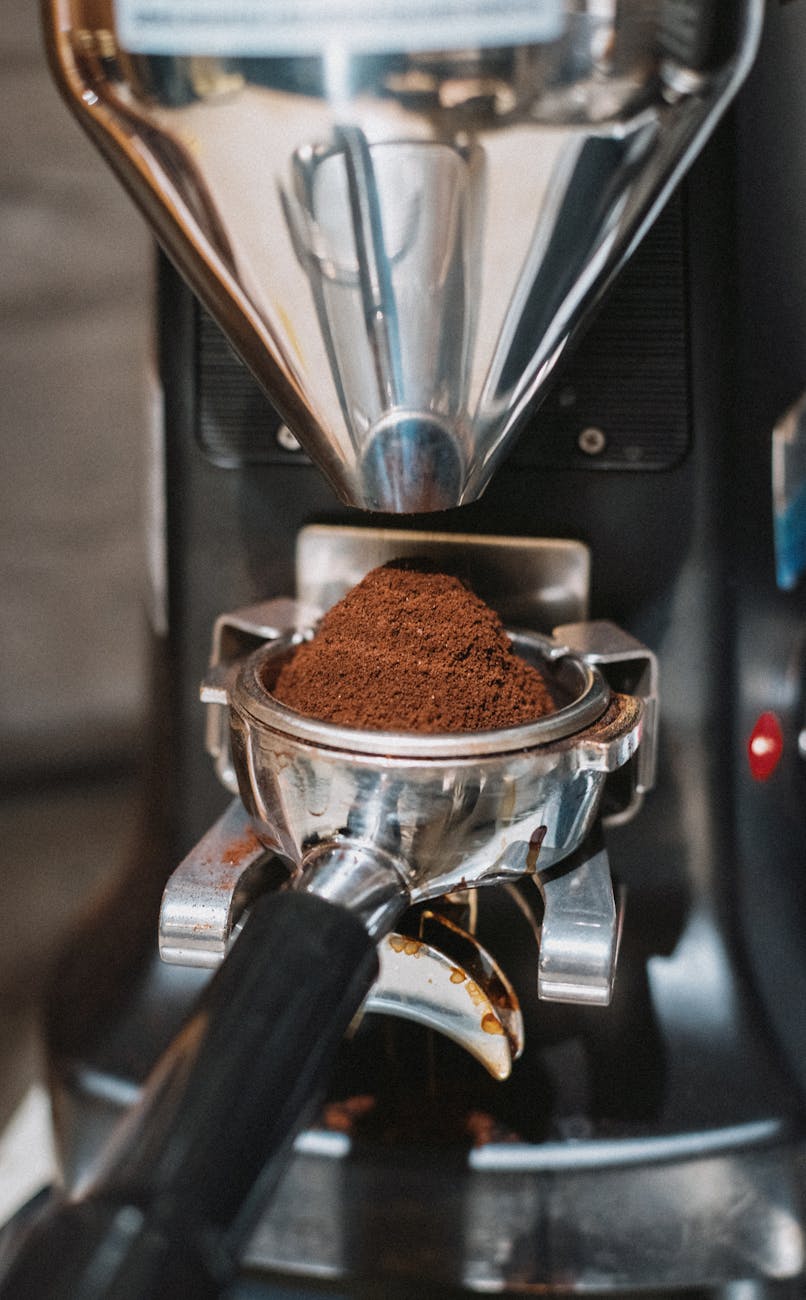
The Gaggia Classic is a legend in the home espresso world. For decades, it has served as a gateway for countless enthusiasts, offering a taste of true, café-quality espresso without an astronomical price tag. However, this capable machine demands respect and understanding. A common frustration for new owners is the persistently sour, acidic espresso shot. This sharp, unpleasant taste is a classic sign of under-extraction, where the water hasn’t pulled enough soluble compounds from the coffee grounds. This guide is designed to be your comprehensive troubleshooting manual. We will walk you through a systematic process, from the coffee bean itself to the machine’s inner workings, to diagnose and eliminate sourness from your Gaggia Classic espresso for good.
It all starts with the grind
Before you even touch your Gaggia Classic, the first and most critical variable to examine is your coffee grind. Sour espresso is almost always a symptom of under-extraction, and the most common cause of under-extraction is a grind that is too coarse. When coffee grounds are too large, water rushes through them too quickly, failing to dissolve the sugars and oils that balance out the natural acids. This results in a fast-flowing, blonde shot that tastes overwhelmingly sour.
Your grinder is arguably more important than your espresso machine. A cheap blade grinder or a low-quality burr grinder designed for drip coffee will not work for the Gaggia Classic. You need a capable espresso grinder that can produce fine, consistent particles and allows for micro-adjustments.
- Grind finer: This is the golden rule. If your shot runs in under 20 seconds for a standard double shot, your primary action should be to adjust your grinder to a finer setting. This increases the surface area of the coffee and provides more resistance, slowing down the water flow and allowing for proper extraction.
- Consistency is key: An inconsistent grind with both large and small particles (boulders and fines) will lead to channeling, where water finds the path of least resistance, under-extracting some parts of the puck and over-extracting others, creating a muddled, often sour-bitter taste.
Don’t be afraid to make small, incremental adjustments. The difference between a sour “gusher” and a balanced shot can be a single, tiny step on your grinder’s adjustment dial. This process is known as dialing in, and it’s a fundamental skill for any espresso maker.
Mastering your puck preparation
Once you’ve settled on a finer grind setting, the next step is ensuring that the coffee grounds are perfectly prepared in the portafilter basket. An unevenly distributed or poorly tamped puck of coffee will ruin a shot, even with the perfect grind. The goal of puck preparation is to create a dense, level, and homogeneous bed of coffee that provides uniform resistance to the high-pressure water from your Gaggia Classic. Any imperfections can lead to channeling, where water punches holes through the weakest parts of the puck, leading to severe under-extraction and sourness.
Follow these steps for better puck prep:
- Distribution: After grinding into your portafilter, the grounds will likely be in a fluffy, uneven mound. Use a Weiss Distribution Technique (WDT) tool—essentially a set of fine needles—to break up clumps and evenly distribute the grounds. This is one of the most impactful, low-cost upgrades you can make to your routine.
- Leveling: Before tamping, gently tap the side of the portafilter to settle the grounds, then use a distribution or leveling tool to create a perfectly flat surface. This ensures that the tamper will apply even pressure across the entire puck.
- Tamping: Tamp firmly and, most importantly, level. The amount of pressure is less important than its even application. A crooked tamp will create a sloped puck, encouraging water to flow faster down one side, which again, causes channeling and a sour shot.
Paying close attention to these details transforms your coffee puck from a liability into a reliable variable, allowing you to focus on other elements of the extraction.
Controlling brew ratio, time, and temperature
With your grind and puck prep sorted, it’s time to look at the brewing process itself. Three key variables—ratio, time, and temperature—work together to determine the final taste of your espresso. For the Gaggia Classic, managing these requires a hands-on approach.
Brew ratio and time: A good starting point for a traditional double espresso is a 1:2 ratio. This means for every 1 gram of dry coffee grounds (dose), you want 2 grams of liquid espresso (yield). For example, if you use an 18-gram dose, you should aim for a 36-gram yield. Use a coffee scale to measure this accurately. The time it takes to reach this yield should ideally be between 25-30 seconds, starting from the moment you press the brew button. If your 36g shot finishes in 15 seconds, it’s under-extracted and will be sour. The solution is to go back to chapter one and grind finer.
Temperature surfing: The Gaggia Classic uses a simple thermostat, which can lead to significant temperature swings. Brewing with water that is too cool is another prime cause of sour, under-extracted shots. To get a more consistent and higher brew temperature, you can “temperature surf.”
A common method is to:
- Turn on the brew switch with no portafilter until water comes out, then turn it off. This fills the boiler.
- Wait for the brew-ready light to turn on.
- Place a cup under the group head and turn the brew switch on for 5-10 seconds to flush overly hot water from the boiler.
- The ready light will turn off. Lock in your portafilter.
- When the ready light turns back on, immediately start your shot. This ensures you are brewing at the top of the boiler’s heating cycle, providing a hotter, more stable temperature.
| Symptom | Likely cause | Immediate solution |
|---|---|---|
| Shot is sour and pulls in less than 20 seconds. | Grind is too coarse. | Grind finer. Increase resistance to slow the shot down. |
| Shot starts dark but quickly turns very blonde; tastes watery and sour. | Channeling in the puck. | Improve puck prep. Use a WDT tool and ensure a level tamp. |
| Shot time and ratio are correct (e.g., 18g in, 36g out in 28s) but still tastes sour. | Brew temperature is too low. | Temperature surf to brew at a hotter, more stable temperature. Check your machine is fully warmed up (15-20 mins). |
Considering the machine: Pressure and maintenance
If you have meticulously worked through grind, puck prep, and brew variables and are still facing sour shots, it might be time to look at the machine itself. Out of the box, the Gaggia Classic platform is set to a very high brew pressure, often 12-15 bars. While this high pressure creates a powerful steam wand, it can be unforgiving for espresso extraction, making channeling more likely and compressing the “sweet spot” for your grind setting. Traditional espresso is brewed at around 9 bars.
Fortunately, this is a well-known characteristic, and the Gaggia community has developed a simple solution: the OPV (Over-Pressure Valve) mod. You can either purchase a kit with springs calibrated to 9, 6.5, or 5 bars, or carefully adjust the stock valve on some models. Lowering the pressure to the standard 9 bars makes the machine much more forgiving, widens the range of workable grind settings, and can significantly reduce the harshness and acidity in your shots by promoting a more even extraction.
Finally, never underestimate the importance of basic maintenance. A machine clogged with scale or old coffee oils cannot perform correctly. Scale buildup on the heating element can insulate it, leading to lower and inconsistent brew temperatures—a direct cause of sourness. Run a descaling solution through your machine regularly and backflush with a cleaner like Cafiza to keep the group head and shower screen free of rancid coffee oils.
Taming the Gaggia Classic and eliminating sour espresso is a journey of methodical troubleshooting. It’s a process of elimination that begins not with the machine, but with your beans and your technique. By starting with the most likely culprit—a coarse grind—and systematically refining your process through puck preparation and managing your brew ratio, you will solve the problem nine times out of ten. Understanding the Gaggia’s specific quirks, like its temperature instability and high factory pressure, provides the final pieces of the puzzle. Mastering temperature surfing and considering a 9-bar OPV mod can elevate your espresso from good to truly exceptional. Remember, a sour shot is simply feedback. Listen to it, make one adjustment at a time, and you will be rewarded with sweet, balanced, and delicious espresso.

 No products in the cart.