

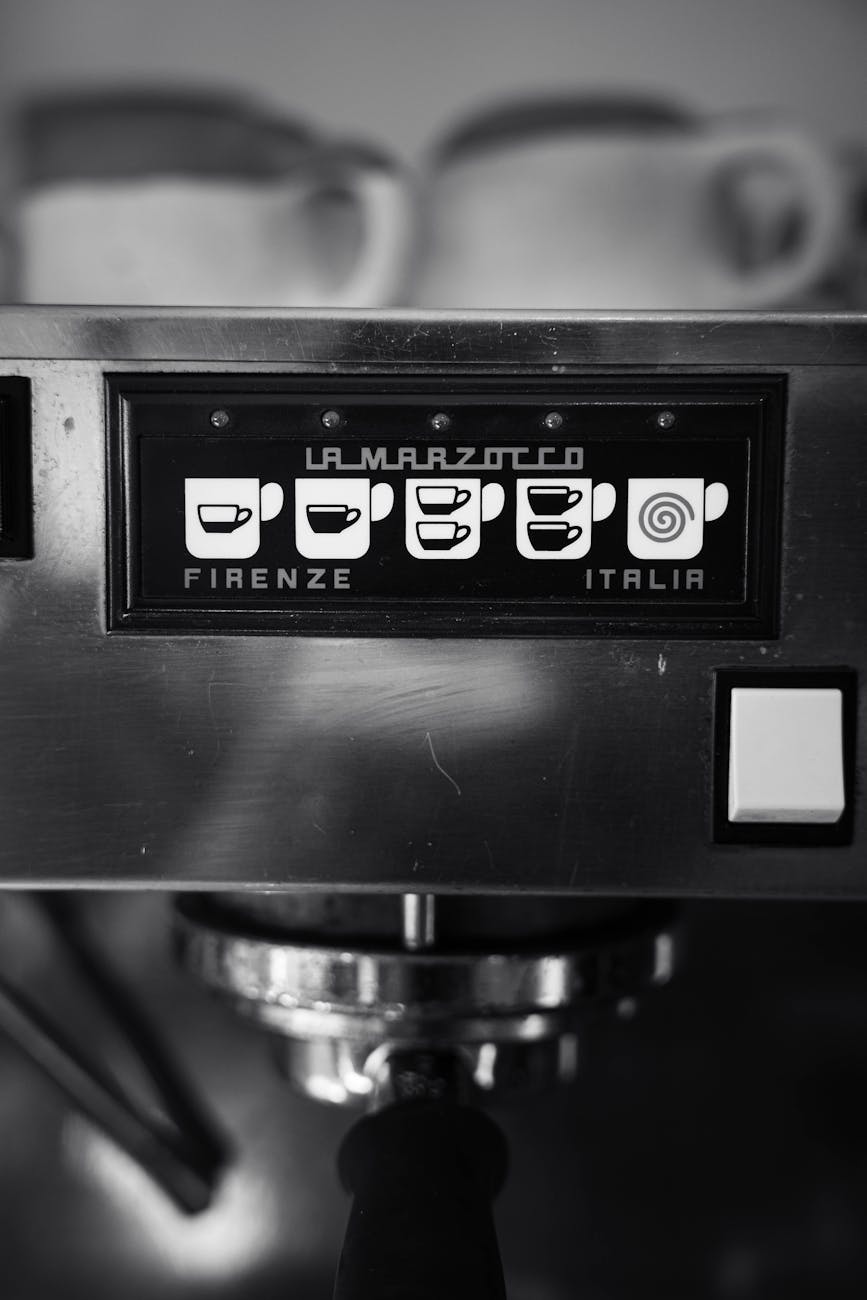
Troubleshooting sour espresso on a La Marzocco: A guide to extraction tuning
There are few things more disappointing for a coffee enthusiast than investing in a world-class machine like a La Marzocco, only to pull a shot of espresso that tastes overwhelmingly sour. That sharp, acidic, and puckering sensation is a common frustration, but it’s not a fault of your machine. In fact, it’s a clear signal that your coffee is under-extracted. A La Marzocco offers unparalleled precision and stability, making it the perfect tool to diagnose and solve this issue. This guide will walk you through the process of extraction tuning, transforming those sour shots into the rich, sweet, and balanced espresso your machine was built to produce. We will delve into the core variables you can control, from the fundamentals to more advanced techniques.
Understanding the enemy: Why your espresso tastes sour
Before you can fix a problem, you need to understand its cause. In espresso, sourness is the dominant flavor of under-extraction. Think of coffee extraction as a timeline of dissolving flavors. When hot, pressurized water hits the coffee grounds, it begins to strip out different compounds in a specific order:
- First, the acids: These are highly soluble and extract very quickly. They are responsible for the bright, fruity notes in coffee, but are unpleasantly sour on their own.
- Next, the sugars: These compounds take longer to dissolve and are responsible for the sweetness, body, and balance in your shot. This is the sweet spot you are aiming for.
- Last, the bitters: These are the least soluble compounds. If you extract for too long (over-extraction), they become dominant and your espresso will taste bitter and astringent.
A sour shot means you stopped the process too early. The water flowed through the coffee puck so quickly that it only had time to grab the fast-extracting acids, leaving the desirable sugars behind. Your La Marzocco’s job is to provide a stable foundation of temperature and pressure; your job is to manipulate the coffee and grind to ensure the water has enough time to create a balanced extraction.
The big three: Dose, yield, and time
The foundation of any good espresso is the recipe, which is defined by three interconnected variables: dose, yield, and time. Mastering these is the first and most important step in eliminating sourness. Think of them as the primary dials you can turn to control extraction.
Dose refers to the weight of dry coffee grounds you put in your portafilter basket. For most standard double baskets, this is typically between 18-21 grams. An inconsistent dose will lead to inconsistent shots. More importantly, under-dosing a basket can leave too much headspace, encouraging water to create channels and flow through too fast, causing under-extraction.
Yield is the weight of the liquid espresso in your cup. Using a scale to measure yield is non-negotiable for consistency. The relationship between your dose and your yield is your brew ratio. A common starting point is a 1:2 ratio. For an 18-gram dose, you would aim for a 36-gram yield.
Time is how long it takes to achieve your target yield, starting from the moment you engage the pump. A good target for a balanced shot is typically between 25 and 35 seconds. If you hit your 36-gram yield in only 18 seconds, you have a classic “fast shot,” and it will almost certainly be sour. The goal is to adjust other variables to extend this time, allowing for proper extraction.
Refining your technique: Grind size and distribution
If your shot is running too fast and tasting sour, how do you slow it down? The answer almost always lies in your grind size. This is the most powerful tool you have for controlling the flow rate and, therefore, the extraction time. The principle is simple: a finer grind creates more surface area and a more compact coffee bed, providing more resistance for the water to push through. This slows down the flow and increases contact time.
If your 18g dose produces a 36g yield in 18 seconds, your coffee is ground too coarse. The solution is to make a small adjustment to your grinder to make the coffee finer. This will slow the shot down. Make one small adjustment at a time, pull another shot, and measure the result. Your goal is to get that same 18g dose and 36g yield to fall within that 25-35 second window.
However, a perfect grind can be ruined by poor puck preparation. Clumps in the grounds or an uneven surface will create channels—paths of least resistance—where water can rush through, bypassing most of the coffee. This causes localized under-extraction, leading to sourness. To fix this, use a distribution tool (like a WDT tool) to break up clumps and evenly distribute the grounds before tamping with firm, level pressure. A well-prepared puck is critical for a uniform extraction.
Advanced variables and troubleshooting
Once you have mastered the relationship between grind size and shot time, you can begin to explore the more subtle variables that your La Marzocco gives you precise control over. Chief among these is brew temperature. The temperature of the water directly affects its ability to dissolve solids. If you have dialed in your grind and your shot is still leaning slightly sour, especially with a lighter roasted coffee, increasing the brew temperature can help. Try raising it by 1°C (about 2°F). This will increase the rate of extraction and can help pull out more of those sweet compounds to balance the acidity.
Conversely, if you find yourself tipping into bitterness, a slightly lower temperature might help. The stability of a La Marzocco’s saturated group head and PID controller makes these small, repeatable adjustments possible. Below is a simple table to guide your troubleshooting process.
| Problem | Primary Cause | Solution 1 (Start Here) | Solution 2 | Solution 3 (Fine-Tuning) |
|---|---|---|---|---|
| Shot tastes overwhelmingly sour and watery. Shot time is less than 25 seconds. | Severe Under-extraction | Grind Finer. This is the most effective way to slow down your shot and increase contact time. | Ensure your puck prep is good. Use a WDT tool to break up clumps and ensure an even tamp. | Check that your dose is correct for the basket size. |
| Shot tastes bright but lacks sweetness. Shot time is in range (25-35s). | Slight Under-extraction | Increase Yield. Try pulling the shot slightly longer, for example from a 1:2 ratio to a 1:2.2 ratio (e.g., 18g in, 40g out). | Grind slightly finer to extend contact time while keeping the same yield. | Increase Brew Temperature. Raise it by 1°C (2°F) to increase solubility and extract more sugars. |
Conclusion
A sour espresso from a machine as capable as a La Marzocco is not a sign of failure, but rather a clear piece of feedback: your coffee is under-extracted. By understanding that sourness comes from a brew process that was too short, you can begin to take control. The solution lies in a methodical approach to extraction tuning. Start with the fundamentals of your espresso recipe—dose, yield, and time—and use your grinder as the primary tool to achieve a target shot time of 25-35 seconds. Perfect your technique by ensuring excellent puck preparation to prevent channeling. Once mastered, you can use the precision of your La Marzocco to make micro-adjustments to temperature. This journey from sour to sweet is what home barista mastery is all about, and it will unlock the delicious, balanced, and complex espresso your machine was built to create.
 No products in the cart.